






Definition & Meaning
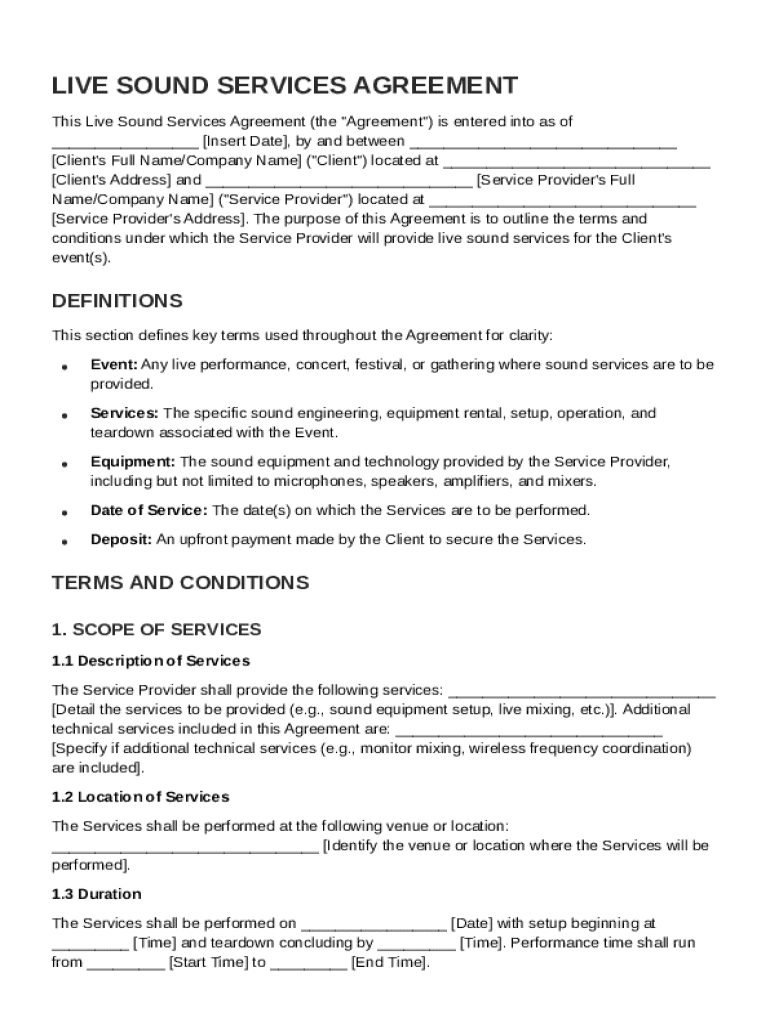
A Live Sound Contract Template is a structured document used to formalize agreements between a service provider offering live sound services and a client requiring such services for an event. This contract typically outlines the terms and conditions of the service, including the scope of services, payment terms, roles, and responsibilities. It's crucial for both parties to agree on the specifics in order to avoid misunderstandings and ensure smooth execution of services.
Key Features
- Scope of Services: Details the specific audio equipment and technical support to be provided.
- Payment Terms: Clearly states the compensation arrangement, including deposit requirements and payment schedules.
- Responsibilities: Lists obligations for both the service provider and the client, ensuring clear expectations.
How to Use the Live Sound Contract Template
Using a Live Sound Contract Template involves several steps to ensure that all necessary details are covered and both parties are in agreement. This contract is crucial for legally binding the terms of service.
Using the Template
- Download the Template: Access and download the template from a document management platform like DocHub.
- Customize the Contract: Fill out specific sections with details relevant to the event and service agreement, such as dates, fee structures, and responsibilities.
- Review with the Client: Both parties should review the contract to ensure all clauses accurately reflect the agreed terms.
Practical Tips
- Use DocHub's Editing Tools: Leverage features like text insertion and annotation to tailor the template to precise specifications.
- Collaboration: Utilize DocHub’s ability to share documents with clients for real-time collaboration and instant feedback.
Key Elements of the Live Sound Contract Template
The core of a Live Sound Contract Template is composed of several essential elements that outline the terms of service, authority, and responsibilities.
Core Components
- Service Description: A detailed list of the services to be provided, including equipment setup and technical support specifics.
- Duration and Venue Details: Specifies the location and timeframe for the services, ensuring logistical clarity.
- Cancellation Policy: Outlines conditions under which either party can cancel the agreement, including any penalties or fees.
- Liability and Insurance: Addresses liability issues and insurance requirements, protecting both parties from potential claims.
Legal Use of the Live Sound Contract Template
The Live Sound Contract Template serves as a legally binding agreement when properly executed, providing clear guidelines for the provision of live sound services.
Legal Considerations
- Governing Law: Specifies the legal jurisdiction under which disputes will be resolved.
- Signature Requirements: Both parties must sign the contract for it to be legally enforceable.
- Audit Trail: DocHub’s platform tracks document edits and signings, providing a thorough audit trail for legal reference.
Scenarios
- Event Disputes: If a discrepancy occurs during the event, the contract serves as a reference to quickly resolve the matter.
- Breach of Contract: Specifies remedies in case of non-compliance with agreed terms.
Important Terms Related to Live Sound Contract Template
Understanding specific terminology within the Live Sound Contract is crucial for clarity and compliance.
Glossary of Terms
- Service Provider: The individual or company providing audio services.
- Client: The individual or organization receiving the services.
- Technical Rider: A document listing all technical requirements for sound, lighting, and staging.
- Force Majeure: A clause that absolves parties from liability in unforeseen circumstances like natural disasters.
Examples
- Technical Rider might include requirements such as soundboard specifications and microphone types.
- Force Majeure could cover scenarios where an event is canceled due to inclement weather.
Steps to Complete the Live Sound Contract Template
Completing a Live Sound Contract involves accurate and comprehensive documentation of all service aspects.
Step-by-Step Guide
- Document Party Details: Fill in names and contact information for both the service provider and client.
- Define Services: Clearly describe the audio services and equipment provided.
- Set Payment Terms: Specify payment amounts, due dates, and methods.
- Review Legal Clauses: Ensure understanding of all legal sections including liability and cancellation policies.
- Collaborate and Edit: Use DocHub for real-time edits and collaboration with the client.
- Sign and Archive: Once reviewed, both parties should sign, and the document should be stored securely.
Additional Tips
- Utilize E-Signatures: DocHub allows easy electronic signature collection, saving time and maintaining a secure audit trail.
- Back-Up Files: Always store a backup of the final signed contract for future reference.
Who Typically Uses the Live Sound Contract Template
The Live Sound Contract Template is essential for professionals and businesses providing audio services for events.


Common Users
- Event Planners: Often use this contract to coordinate with audio professionals for seamless event execution.
- Sound Technicians: Freelancers or employees providing sound services frequently require this agreement to outline their service terms.
- Venues: Locations that offer audio services as part of event hosting can use this template to formalize arrangements with clients.

Examples
- An event planner organizing a corporate gala would use this contract to hire a sound technician for precision audio needs.
- A venue that includes sound services in its rental agreement might require such a template to define the responsibilities of the sound engineers involved.
Integration and Software Compatibility
Using DocHub to manage your Live Sound Contract allows seamless integration with various digital tools and platforms.
Compatibility Overview
- Google Workspace: Directly import and export documents to and from Google Drive, maintaining seamless workflow continuity.
- Document Formats: Compatible with multiple file formats like DOC, PDF, and PPT, ensuring flexibility in document handling.
- E-Signature Platforms: Works seamlessly with electronic signature tools, ensuring legally binding and efficient sign off.
Benefits
- Time savings from avoiding unnecessary file conversions or platform switching.
- Enhanced productivity for teams using Google Workspace.