
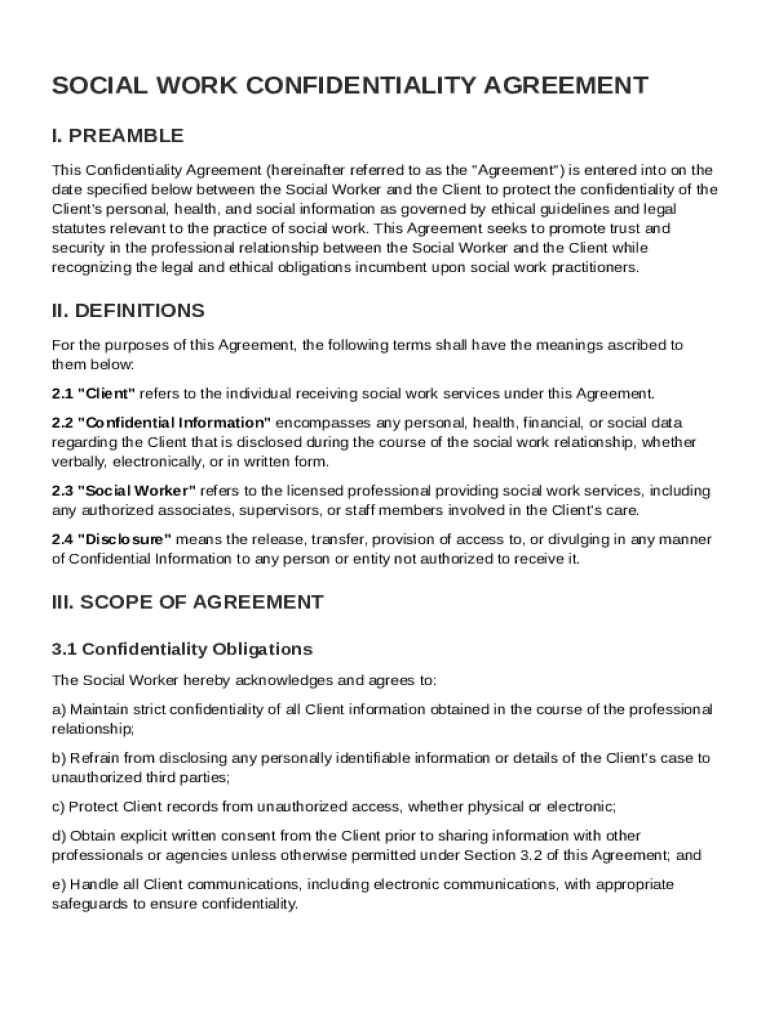







Definition & Meaning
The Social Work Confidentiality Agreement Template is a legally binding document that outlines the obligations of social workers to protect their clients' confidential information. This agreement ensures that personal, health, and social data shared by clients during sessions remain undisclosed to unauthorized parties. It serves as a critical tool for maintaining trust, defining the scope of confidentiality, and setting protocols for situations where disclosure might be necessary, such as legal obligations or emergencies.
Key Features
- Confidentiality Obligations: Social workers are required to keep client information private, adhering to ethical and legal standards.
- Exceptions: Specifies situations where confidentiality may be waived, such as harm to self or others, legal subpoenas, or mandatory reporting laws.
- Client Rights: Clients have rights to access, modify, and request corrections to their records.
Key Elements of the Social Work Confidentiality Agreement Template
Main Components
-
Introduction and Purpose
- Establishes the intent to protect client information and outlines the foundation of a secure therapeutic relationship.
-
Definitions
- Clearly defines terms such as "confidential information," "disclosure," and "client consent" for consistent understanding.
-
Obligations and Responsibilities
- Details the duties of the social worker in maintaining confidentiality and the protocols for handling client data.
-
Exceptions to Confidentiality
- Lists specific scenarios where confidentiality may be breached, with clear guidelines on how these situations should be handled.
-
Client Access and Rights
- Protocols for clients to access their records and procedures for them to request amendments.
-
Duration and Termination
- Specifies how long confidentiality obligations last and conditions under which they may cease.
How to Use the Social Work Confidentiality Agreement Template
Practical Steps
-
Customizing the Template
- Fill in the relevant sections with specific details about your practice and client demographic.
- Include any state-specific legal requirements to ensure full compliance.
-
Reviewing with Clients
- Present and explain the confidentiality agreement to clients during the initial consultation.
- Answer any questions and clarify exceptions or scenarios where confidentiality might not be maintained.
-
Obtaining Client Consent
- Ensure clients sign the agreement, indicating their understanding and acceptance of its terms.
Important Considerations
- Clarity and Transparency: Use simple language to make sure clients clearly understand their rights and the limits of confidentiality.
- Documentation: Keep signed agreements securely filed in each client's record for future reference.
Important Terms Related to the Social Work Confidentiality Agreement Template
Definitions
- Informed Consent: A client's voluntary agreement to the terms after fully understanding the implications of the confidentiality agreement.
- Breach of Confidentiality: Unauthorized disclosure of client information, which violates the agreement and legal standards.
Contextual Clarifications
- Professional Ethics: Set of professional guidelines that require social workers to protect client data.
- Legal Exceptions: Refer to statutory obligations that can affect confidentiality, such as court orders.
Legal Use of the Social Work Confidentiality Agreement Template
Compliance and Standards
- HIPAA Regulations: Ensure compliance with the Health Insurance Portability and Accountability Act, which regulates the sharing of health information.
- State Laws: Abide by state-specific laws governing the confidentiality of social work practice.
Application
- Practitioners: Used by licensed social workers, psychotherapists, and counselors.
- Institutions: Often implemented by social service agencies and therapy centers to protect client data.
Examples of Using the Social Work Confidentiality Agreement Template
Real-World Scenarios
- Emergency Situations: When a client is at risk of harming themselves or others, the agreement outlines how to report without breaching confidentiality.
- Legal Contexts: When required by court order to disclose client information, the agreement provides guidelines for compliant data sharing.
Case Studies
- Therapy Sessions: Illustrates the use of the agreement in a counseling setup involving minors where parental consent is also required.
- Social Work in Healthcare: How confidentiality agreements are applied in hospital settings to protect patient information while facilitating necessary treatments.
Steps to Complete the Social Work Confidentiality Agreement Template
Detailed Instructions
-
Pre-Fill Basic Information
- Include the name, address, and contact details of the social worker or agency.
-
Outline Specific Terms
- Customize sections regarding the scope of confidentiality and exceptions that are pertinent to your practice.
-
Gather Client Signatures
- Ensure each client reads, understands, and signs the document to acknowledge agreement.
-
Store Safely
- Keep all signed agreements in a secure, confidential location, compliant with privacy regulations.
State-Specific Rules for the Social Work Confidentiality Agreement Template
Variations and Adaptations
- Consistency with State Laws: Adjust provisions based on local statutes that might influence confidentiality restrictions or reporting requirements.
- Professional Licensing Boards: Follow specific guidelines provided by state boards governing social work practices to ensure ethical compliance.
Examples
- California: Mandates specific disclosures related to child abuse or elder neglect.
- New York: Includes detailed mental health directives as part of confidentiality considerations.
Who Typically Uses the Social Work Confidentiality Agreement Template


User Profiles
- Professional Social Workers: Both in private practice and within agencies.
- Institutions and Organizations: Nonprofits and hospitals that offer social services.
- Educational Institutions: Schools employing licensed social workers to provide student services.
Use Cases
- Initial Client Intake: At the start of a social work relationship to establish terms.
- Policy Updates: When changes in laws or organizational policies require new agreements.




