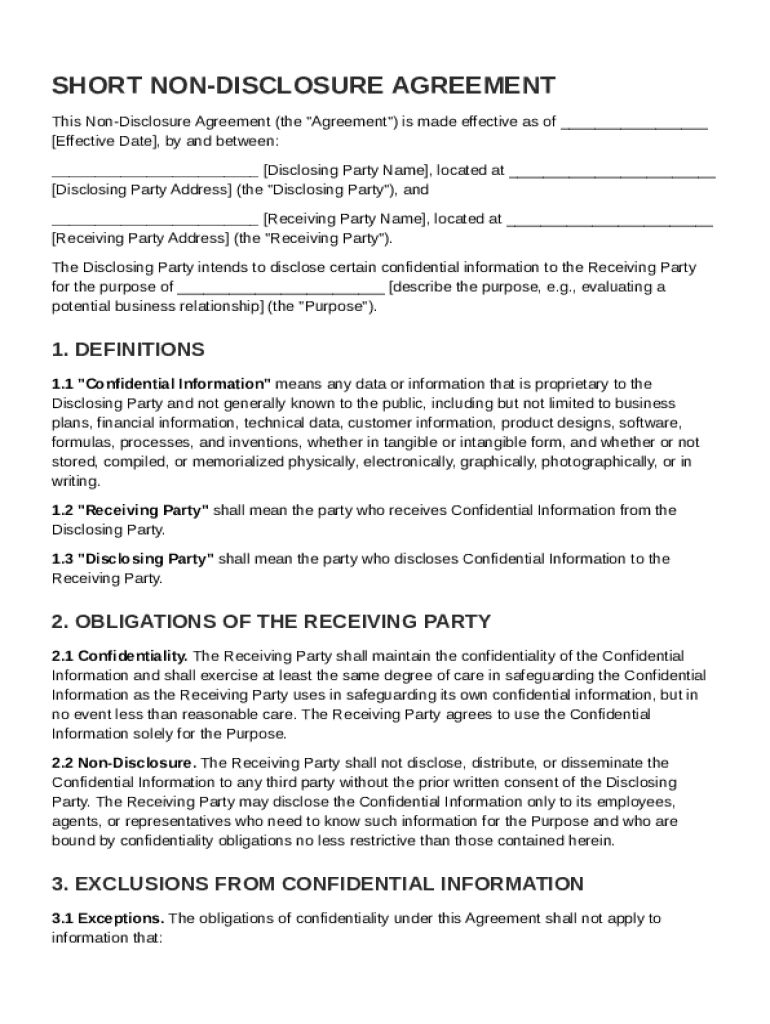







Definition & Meaning
A Short Non-Disclosure Agreement (NDA) is a legally binding contract that establishes a confidential relationship between parties. It outlines how confidential information is to be shared, specifically between a Disclosing Party and a Receiving Party. The primary purpose of this agreement is to protect sensitive information from being disclosed to unauthorized third parties. The document typically specifies the nature of the confidential information, obligations for maintaining secrecy, and the duration for which confidentiality is maintained.
Elements of Confidential Information
- Trade Secrets: Proprietary processes that provide a competitive advantage.
- Business Plans: Future strategies and project outlines.
- Client Lists: Details of existing or potential clients.
- Financial Data: Revenue, expenses, and other economic insights.
Duration and Termination
The agreement specifies a fixed period during which confidentiality must be maintained. This duration can often extend beyond the termination of the partnership or the completion of the project for which the NDA was created.
Key Elements of the Short Non-Disclosure Agreement Template
The Short NDA template is a streamlined version of a traditional NDA, focusing on essential components to ensure simplicity and clarity.
Primary Components
- Parties Involved: Clearly defines the Disclosing and Receiving parties.
- Scope of Confidentiality: Outlines what information is considered confidential.
- Obligations: Specifies the responsibilities of the Receiving Party concerning information handling.
- Exclusions: List of information not deemed confidential or exempt under certain conditions.
Supporting Provisions
- Governing law: Identifies the legal jurisdiction applicable to the agreement.
- Remedies for Breach: Legal recourse in case of a violation.
- Miscellaneous Clauses: Include severability, entire agreement, and amendment clauses ensuring comprehensive coverage.
How to Use the Short Non-Disclosure Agreement Template
Using the Short NDA template involves several key steps to ensure that it is correctly filled out and legally enforceable.
Steps to Utilize the Template
- Identity the Parties: Clearly list the full legal names of the Disclosing and Receiving parties.
- Define Confidential Information: Be specific in detailing what information will be protected under the agreement.
- Establish Obligations and Exclusions: Clearly outline the duties of the Receiving party and list any exclusions.
- Set Duration and Scope: Define the period during which the NDA is active and applicable jurisdiction.
Practical Tips
- Use plain language to avoid confusion or misinterpretation.
- Ensure both parties review the document thoroughly before signing.
- Consider seeking legal advice to modify sections that may require specific legal language.
Important Terms Related to Short Non-Disclosure Agreement Template
Understanding the terminologies within an NDA is crucial for both parties to uphold the validity of the agreement.
Common Terms
- Confidential Information: Information deemed sensitive or secret.
- Receiving Party: The party that receives the confidential information.
- Disclosing Party: The party that shares the confidential information.
- Exclusions: Information categories not protected as confidential.
Usage Clarification
- Breach: Any violation of the terms can incur legal consequences.
- Liability: Responsibilities that the parties agree to uphold in case of breach.
Legal Use of the Short Non-Disclosure Agreement Template
A properly executed Short NDA ensures that the Disclosing party's confidential information is protected under US law, specifically related to breach and remedies.
Legal Compliance
- ESIGN Act: Ensures electronic signatures on the NDA are legally binding.
- Intellectual Property Protection: Prevents misuse or theft of proprietary content.
Enforcement
- Validity in courts if crafted clearly and all parties have acknowledged their roles explicitly.
- The inclusion of governing law specifies which state's law will be adhered to or consulted during legal disputes.
Who Typically Uses the Short Non-Disclosure Agreement Template
The Short NDA is versatile and widely used across various industries and by diverse entities.


Common Users
- Startups: To protect emerging business ideas or technology.
- Consultants and Freelancers: Ensuring client information remains confidential.
- Business Partnerships: Prior to or during collaboration to safeguard mutual interests.
- Educational Institutions: When involving external parties in research undertakings.

Scenarios
- Prior to sharing new market strategies with potential partners.
- When hiring external developers to work on proprietary software.
Steps to Complete the Short Non-Disclosure Agreement Template
Completing the template requires attention to specific areas to ensure its legal standing and comprehensive protection.
Step-by-Step Process
- Enter Party Details: Fill in the names and contact information of both parties.
- Describe Confidential Information: Provide a detailed description of the protected information.
- State Obligations and Exclusions: Clearly delineate the Receiving Party’s obligations and potential exclusions.
- Include Duration and Legal Jurisdiction: Establish both the length of confidentiality and applicable state laws.
Points to Ensure
- Both parties should initial on every page to confirm agreement to each section.
- Ensure a mutually agreeable witness or notary when necessary.
Examples of Using the Short Non-Disclosure Agreement Template
The application of the Short NDA extends across multiple real-world scenarios exemplifying its versatility.
Scenarios
- Technology Sector: Sharing software code with developers temporarily hired for a project.
- Healthcare Industry: Collaborating with an external firm for drug research.
- Entertainment Field: Protecting script or storyline details during pre-production discussions.
Impact
These examples illustrate how an NDA can safeguard secrets while allowing necessary collaboration and innovation across industries.