







Definition and Purpose of Form 656-B
Form 656-B, known as the Offer in Compromise Booklet, serves as a comprehensive guide for taxpayers wishing to settle their tax liabilities through an Offer in Compromise (OIC). This program allows qualifying individuals to pay less than the full amount of their tax debt. It provides instructions on the application process, details on eligibility requirements, and information on taxpayer rights and resources.
Offer in Compromise Overview
- The OIC program is designed for taxpayers unable to pay their full tax liability due to financial hardship.
- Detailed instructions on how to evaluate eligibility and complete the necessary forms are provided in the booklet.
- Resources for additional assistance, like the Taxpayer Advocate Service, are also included.
Key Elements of the Offer in Compromise Booklet
The booklet is structured to assist applicants through each stage of the OIC process. It provides:
- Eligibility Requirements: Criteria that must be met to qualify for an OIC, including financial assessment.
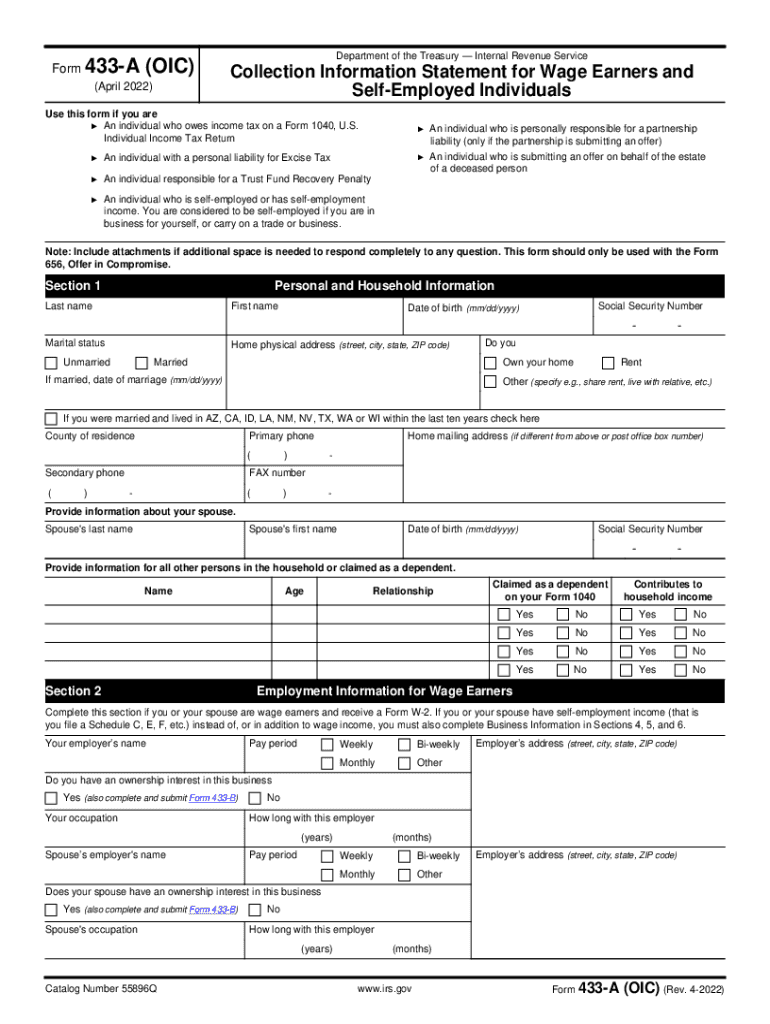
- Application Forms: Necessary forms such as Form 656, Form 433-A, and Form 433-B, with guidance on how to fill them.
- Payment Options: Details on various payment plans such as lump sum or periodic payments.
Forms and Documentation
- Form 433-A (OIC): Used for individual taxpayers to disclose financial information.
- Form 433-B (OIC): For businesses to provide a comprehensive view of their financial situation.
Eligibility Criteria for Form 656-B
Determining eligibility is a critical step before applying for an OIC.
- Current Filing Requirements: All tax returns must be filed before submitting an offer.
- Federal Tax Deposits: Employees must continue making federal tax deposits, if applicable.
- Ability to Pay: The IRS evaluates the taxpayer's income, expenses, and asset equity.


Financial Requirements and Assessments
- Calculation of Offer Amount: Based on the ability to pay, income, expenses, and asset equity.
- Reasonable Collection Potential (RCP): The IRS determines what they can reasonably collect, influencing the offer decision.
Steps to Complete the Offer in Compromise Forms
Accurate completion of the forms is crucial in the OIC process.
- Gather Required Documents: Collect financial documentation to complete the forms accurately.
- Fill Out Form 656: Provide personal and financial information, along with the proposed offer.
- Complete Form 433-A or 433-B: Disclose all income, expenses, and assets.
- Include the Application Fee: Generally required unless qualifying for low-income exceptions.
- Submit to IRS: Send the application along with supporting documents via mail or electronically, as specified.
Important IRS Guidelines
The IRS provides specific guidance for those considering an OIC:
- Strict Adherence to Terms: Failure to comply with the terms can result in the rejection of the offer.
- Appealing a Denied Offer: Taxpayers have the right to appeal a denial within 30 days.
Compliance and Monitoring
- Post-approval Compliance: Taxpayers must adhere to filing and payment rules to maintain agreement terms.
- Regular Follow-ups: The IRS may request additional financial documentation during the review process.
Penalties for Non-Compliance
Non-compliance with the terms outlined in the Form 656 Booklet and related forms can lead to severe consequences.
- Reinstatement of Original Debt: If an agreement is defaulted, the IRS may reinstate the original tax liability.
- Additional Penalties and Interest: Failures to meet the offer agreement can result in further penalties.
Digital vs. Paper Submission Methods
While traditional paper submissions remain accepted, digital options offer enhanced convenience and processing speed.
- Online Submission: Allows for faster processing and tracking of applications.
- Secure Data Transfer: Ensures the confidentiality and integrity of personal and financial information.
Advantages of Digital Submissions
- Time-Saving: Reduces processing time and delivery delays.
- Ease of Access: Allows applicants to submit from any location with internet access.
Commonly Encountered Taxpayer Scenarios
The Offer in Compromise can be beneficial under various financial circumstances:
- Self-Employed Individuals: Those with fluctuating income can use the OIC to manage tax debts.
- Retirees: Individuals with fixed incomes facing overwhelming tax liabilities may find relief.

Real-World Application Examples
- Business Owners: Partnerships and LLCs with financial constraints can also apply.
- Educational Assistance: Students or recent graduates who incurred tax debt may qualify under specific conditions.
Application Process and Approval Timeline
Understanding the timeline can aid in preparing expectations for the OIC process.
- Evaluation Period: Typically takes six months but can vary depending on individual circumstances.
- Notification Process: Applicants will receive a formal notice of acceptance or rejection of their offer.
Key Considerations During Processing
- Regular Updates: Stay informed on the status of the application by communicating with the IRS.
- Expedited Processing: Some offers might be processed faster if all documentation is provided timely and accurately.
This detailed exploration of Form 656-B offers a comprehensive view into its significance within the OIC program, equipping users with the necessary information to navigate the process effectively.


