Definition & Meaning
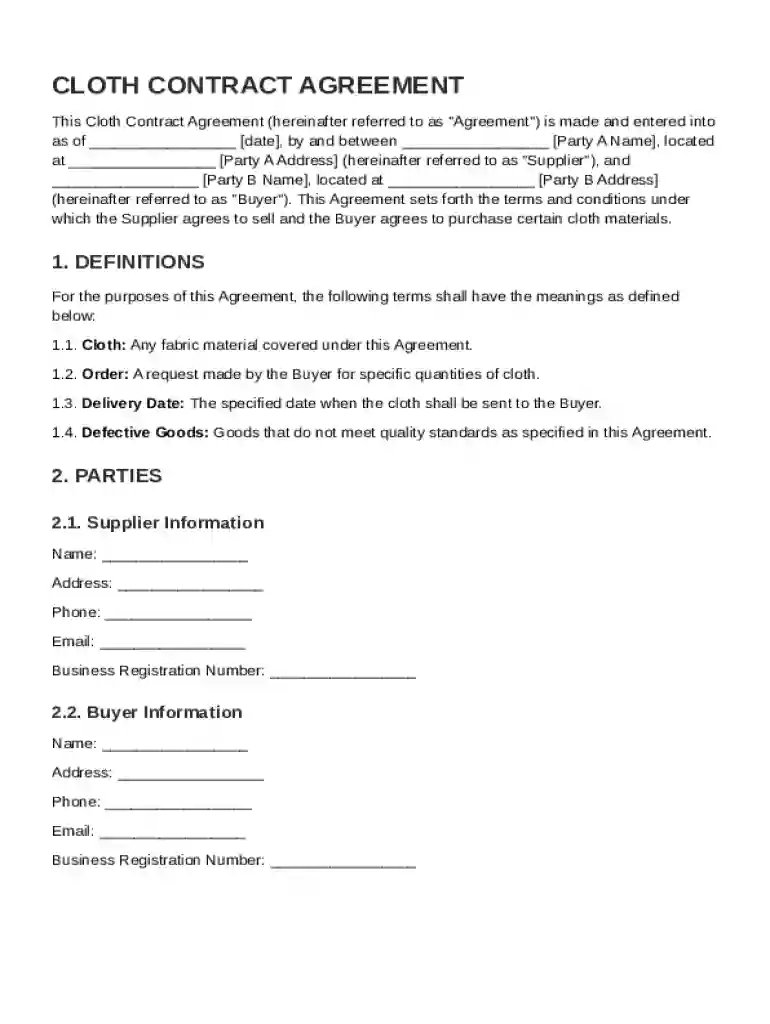
The "Cloth Contract Template" is a standardized agreement utilized in the textile industry to outline the terms and conditions between a supplier and a buyer regarding the sale and purchase of cloth materials. This document serves as a legal framework, ensuring both parties understand their responsibilities and commitments. It includes specifics such as the type and quantity of cloth, pricing, delivery schedules, and quality standards. This structure helps mitigate disputes by providing clear expectations and protecting the interests of all involved parties.
Key Elements of the Cloth Contract Template
The Cloth Contract Template is composed of several essential elements designed to provide comprehensive coverage of the transaction details. These elements typically include:
- Parties Information: Identifies the supplier and the buyer, including their legal names and contact details.
- Scope of Work: Describes the specifications and quantities of the cloth to be purchased.
- Pricing and Payment Terms: Details the cost of goods, payment methods, and schedules.
- Delivery and Shipping Details: Specifies delivery timelines and the responsibilities of both parties in transportation.
- Quality Assurance Standards: Outlines the expectations for product quality and inspection processes.
- Confidentiality Clauses: Ensures proprietary information is protected.
- Termination Conditions: Establishes conditions under which the agreement can be dissolved.
- Governing Law: Indicates the legal jurisdiction that will govern the contract.
How to Use the Cloth Contract Template
Using the Cloth Contract Template involves a straightforward process to customize it according to specific needs. Here is a step-by-step guide:
- Gather Information: Collect all necessary details about both parties, the cloth specifications, and agreed terms.
- Customize Terms: Tailor the template to include specific details like product descriptions, quantities, and pricing.
- Review Legal Jargon: Evaluate the template for any complex legal language that might require clarification.
- Seek Legal Advice: Consider having a legal professional review the template to ensure compliance with applicable laws.
- Finalize and Sign: Once both parties agree on the terms, finalize and sign the document to make it legally binding.
Legal Use of the Cloth Contract Template
The Cloth Contract Template serves a crucial role in ensuring transactions adhere to legal standards. It formalizes agreements, reducing the risk of misunderstandings or disputes. Legally, this document must comply with contract laws pertinent to the jurisdiction in which the parties operate. Essential considerations include:
- Legally Binding Language: Ensures the terms are enforceable in a court of law.
- Compliance with Trade Laws: Adheres to industry-specific regulations and standards.
- Provisions for Dispute Resolution: Outlines methods for resolving conflicts outside of court, such as mediation or arbitration.
Important Terms Related to Cloth Contract Template
Several key terms are critical within the scope of a cloth contract, and understanding them can greatly impact the execution and negotiation of the contract:
- Force Majeure: A clause that frees both parties from liabilities or obligations when an unforeseen event occurs beyond their control.
- Indemnity: A provision requiring one party to compensate the other for certain costs and damages.
- Breach of Contract: Occurs when one party fails to fulfill their end of the agreement.
- Warranties: Guarantees provided concerning the quality or longevity of products sold.
Steps to Complete the Cloth Contract Template
Completing the Cloth Contract Template involves a methodical approach to ensure all essential elements are addressed. Here are the steps:
- Fill Out Party Information: Start by accurately completing details about the supplier and buyer.
- Define Scope and Specifications: Clearly describe the products, including size, color, and material specifics.
- Outline Payment Details: Establish the price, payment method, and schedule.
- Set Delivery Terms: Agree on delivery methods, costs, and timelines.
- Include Legal Clauses: Ensure all relevant legal terms and conditions are incorporated.
- Review and Sign: Both parties should thoroughly review the completed template for accuracy before signing.
Business Types That Benefit Most from Cloth Contract Template
Different business entities benefit from using a Cloth Contract Template, particularly those involved in the textile supply chain. These include:
- Textile Suppliers: Those providing raw materials or finished cloth products can use contracts to solidify buyer agreements.
- Retailers and Merchandisers: Outfits buying large quantities of textile materials find structured agreements crucial for inventory and budget planning.
- Manufacturers: Companies making garments from purchased cloth can use contracts to ensure material quality and delivery timelines.
- Event Planners and Decorators: Any business leveraging cloth for decorative purposes in events can benefit from clear purchase agreements.
Digital vs. Paper Version of the Cloth Contract Template
Modern practices endorse both digital and paper versions of the Cloth Contract Template, each offering unique benefits:
-
Digital Version:
- Convenience: Easily editable and shareable, especially useful for remote transactions.
- Security: Documents secured with encryption and e-signature technology.
- Sustainability: Reduces paper use and is environmentally friendly.
-
Paper Version:
- Traditional Validation: Some industries or parties prefer physical documents for formal agreements.
- No Technology Required: Useful in locations with limited digital infrastructure or technology access.
Understanding the differences and applications for each version ensures that the contract is handled in a way that best suits the needs and capabilities of the parties involved.