Cloth Consignment Contract Template 2026

Get Form
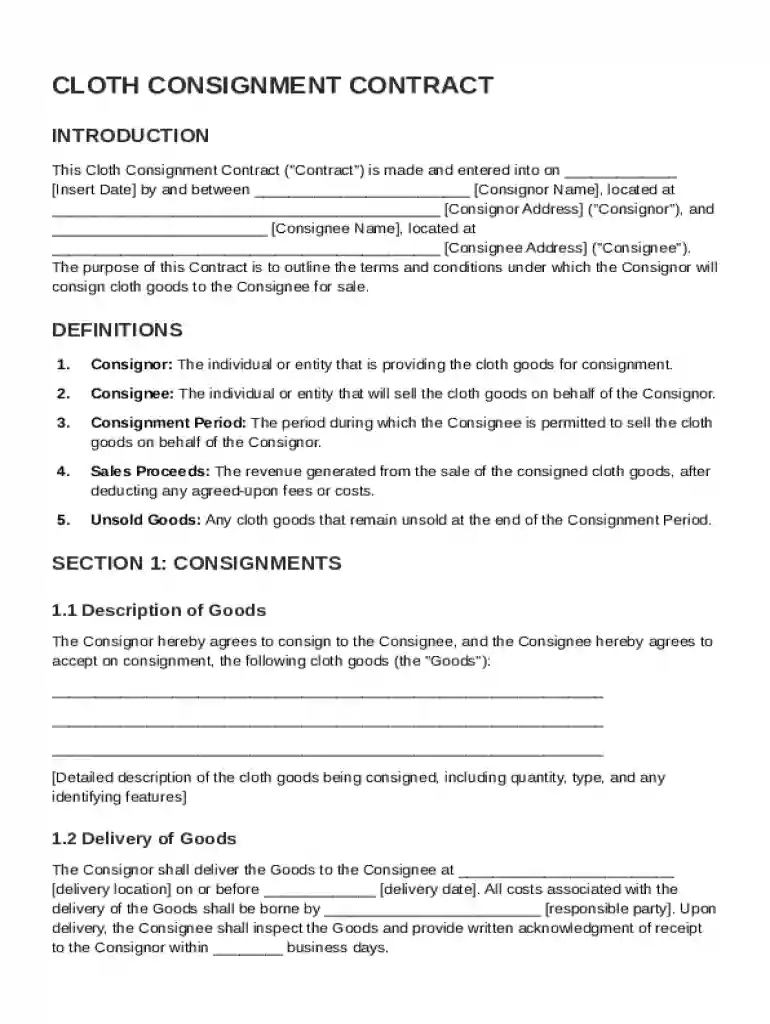
Cloth Consignment Contract Template Preview on Page 1

Here's how it works

01. Edit your form online
Type text, add images, blackout confidential details, add comments, highlights and more.

02. Sign it in a few clicks
Draw your signature, type it, upload its image, or use your mobile device as a signature pad.

03. Share your form with others
Send it via email, link, or fax. You can also download it, export it or print it out.

Definition & Meaning

A Cloth Consignment Contract Template is a legal document that outlines the agreement between two parties: the consignor and the consignee. The consignor is the individual or business that provides the cloth goods to be sold, while the consignee is responsible for selling these goods on behalf of the consignor. This template serves as a guideline to detail the responsibilities, terms of consignment, and the conditions under which the consignment operates. It ensures clear communication and understanding between both parties to prevent any misunderstandings related to sales, returns, compensation, and the handling of goods.

  • Consignor: The owner of the cloth goods.
  • Consignee: The person or business selling the goods.

Key Elements of the Cloth Consignment Contract Template

The template includes several crucial elements to ensure a complete understanding between involved parties:

  • Definitions: This section explains the terms used within the contract, providing clarity to both parties.
  • Responsibilities: Details who is responsible for different aspects of the consignment, such as marketing, storage, and any damages to the goods.
  • Payment Terms: Outlines how and when the consignor will be paid for the goods sold.
  • Term Duration: Specifies the timeline of the consignment agreement.
  • Reporting Procedures: Includes protocols for sales and inventory reports that need to be communicated.

Steps to Complete the Cloth Consignment Contract Template

  1. Gather Information: Identify all relevant parties involved, including contact information and business details.
  2. Detail Goods Information: Specify the types of cloth goods, including quantity, quality, and any notable characteristics.
  3. Determine Payment Terms: Reach an agreement on the method and schedule of payment, including any commission or fees.
  4. Assign Responsibilities: Clearly outline the responsibilities of both the consignor and consignee regarding storage, sales, and return policies.
  5. Establish Term Duration: Set the beginning and end dates of the consignment period.
  6. Review and Sign: Both parties review the completed document for accuracy and sign to confirm their agreement to the terms.

Who Typically Uses the Cloth Consignment Contract Template

The template is utilized by a variety of individuals and businesses, including:

  • Fashion Designers: Those looking to sell their clothing lines through third-party retailers.
  • Retail Stores: Stores that wish to offer diverse products without purchasing inventory upfront.
  • Textile Manufacturers: Companies that supply cloth to designers or clothing brands for resale.
  • Sustainability-focused Businesses: Organizations promoting second-hand selling and recycling through consignment.
decoration image ratings of Dochub

Important Terms Related to Cloth Consignment Contract Template

Understanding specific terms within the contract is vital for its effective use:

  • Commission Rate: The percentage or flat fee charged by the consignee for selling goods.
  • Consignment Inventory: Goods placed with the consignee for sale, remaining the property of the consignor until sold.
  • Return Policy: Rules governing the return of unsold goods to the consignor.
  • Termination Clause: Conditions under which the agreement can be ended by either party.

Legal Use of the Cloth Consignment Contract Template

The legal framework of the Cloth Consignment Contract Template must be adhered to for it to be enforceable:

  • Governing Law: The contract must identify which state’s laws govern the agreement.
  • Legally Binding: Signatures from authorized representatives of both parties ensure the contract is binding.
  • Compliance: Ensure all terms comply with state and federal regulations regarding consignment sales.
  • Dispute Resolution: Clearly state the method for resolving any disputes that arise from the contract.

State-Specific Rules for the Cloth Consignment Contract Template

Laws can differ significantly from state to state, affecting several aspects of the consignment contract:

  • Sales Tax Requirements: Different states have varied sales tax regulations that must be adhered to.
  • Consumer Protection Laws: Regulations protecting buyers that may affect how goods are sold on consignment.
  • Remedies for Breach: State laws provide differing remedies and statutes of limitations for breaches of contract.

Digital vs. Paper Version

The Cloth Consignment Contract Template is available in both digital and paper forms, offering flexibility:

  • Digital Version:

    • Accessibility: Easily shared via email or cloud storage.
    • Editing: Simple to edit and update electronically.
    • Electronic Signatures: Can be signed digitally, enhancing convenience.
  • Paper Version:

    • Physical Record: Provides a tangible copy for physical filing.
    • Formal Presentation: Can be used for formal presentations or meetings requiring hard copies.

By understanding the full scope of the Cloth Consignment Contract Template, users can effectively manage consignment agreements and anticipate potential challenges, ensuring a smooth and profitable operation.

be ready to get more

Complete this form in 5 minutes or less

Get form

Got questions?

We have answers to the most popular questions from our customers. If you can't find an answer to your question, please contact us.
Contact us
A consignment agreement is a legal contract between a consignor and a consignee, where the consignor provides goods to the consignee for sale. It details the terms and conditions for handling, selling, and potentially returning the goods, ensuring both parties interests are protected.
Consignment offers a win-win payment structure for both sellers and stores. Heres how a typical consignment arrangement works: You bring your items to a consignment store. The store agrees to sell it on your behalf. You both sign an agreement outlining the terms of the sale.
Depending on the consignment shop and the item being sold, the seller may concede 25% to 60% of the sales price in consignment fees. Consignment arrangements typically are in effect for a set period of time. After this time, if a sale is not made, the goods are returned to their owner.
How to make a Consignment Agreement Item information. Provide a physical description of the item for sale, including its condition. Party information. Contract and cancellation terms. Fee information. Payment information. Security interest. Storage and delivery information. Dispute resolution.
An example consignment agreement is one where you are selling something for someone else. You can purchase items from a wholesaler, sell them at your store or online shop and then send the money back to the product owner after taking out your commission fee.

Security and compliance

At DocHub, your data security is our priority. We follow HIPAA, SOC2, GDPR, and other standards, so you can work on your documents with confidence.
Learn more
ccpa2
pci-dss
gdpr-compliance
hipaa
soc-compliance
be ready to get more

Complete this form in 5 minutes or less

Get form

People also ask

A consignment sales proposal should include several essential elements: an introduction that outlines the purpose and scope of the proposal, a detailed description of the products being offered, the terms and conditions of the consignment agreement, pricing and payment terms, responsibilities of both the consignor and
What Should a Consignment Note Include? Details of the Consignor (Sender): Name, address, and contact details. Details of the Consignee (Receiver): Name, address, and contact details (often, a delivery address if different from the main business address). Carrier Information: Who is transporting the goods?

Related links