
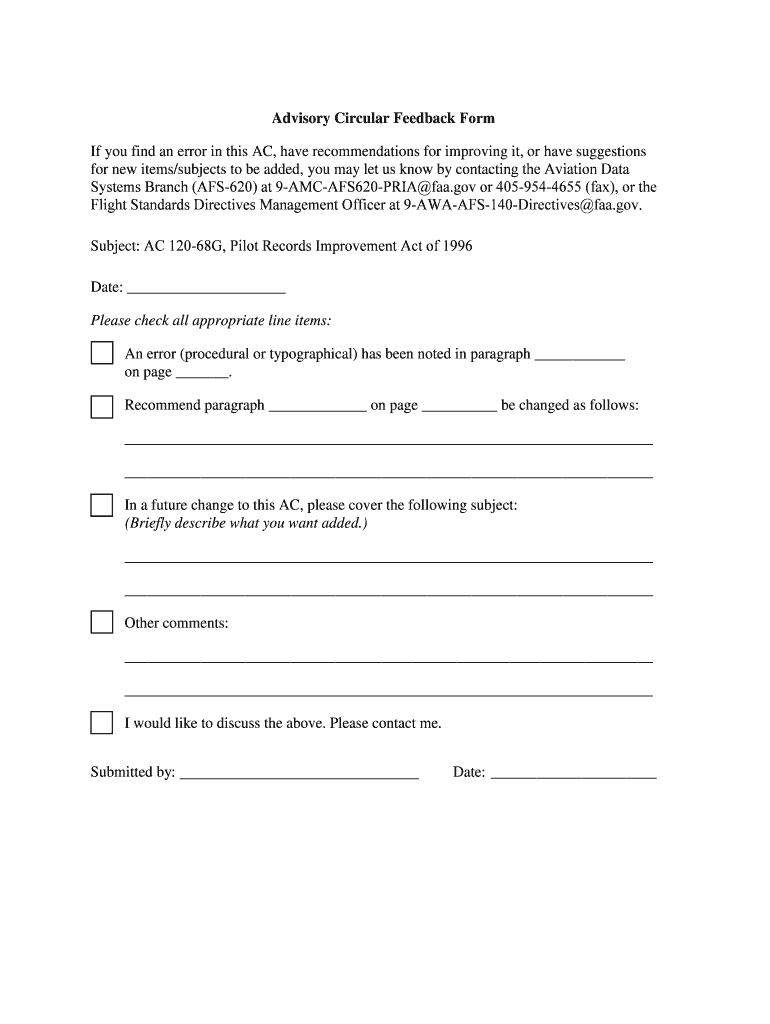







Definition & Meaning
The AC 120-68G is an advisory circular related to the Pilot Records Improvement Act of 1996 (PRIA). This act mandates that air carriers and operators conduct thorough background checks on pilots before hiring them. The advisory circular outlines the processes for acquiring and reviewing the safety records of pilots over the past five years, as required under PRIA. It helps ensure safety in aviation by facilitating a detailed evaluation of a pilot's professional history.
Steps to Complete the AC 120-68G
-
Understand the Requirements: Familiarize yourself with the AC 120-68G guidelines, including how it updates previous versions and what new processes are introduced.
-
Collect Necessary Information: Gather details of the pilot’s previous employers and training institutions, focusing on safety records from the last five years.
-
Submit Requests: Use the outlined procedure in the advisory circular to request the necessary records from relevant entities.
-
Review Incoming Data: Once received, carefully review these records for any safety issues or other red flags that might affect hiring decisions.
-
Document Findings: Maintain a structured log of all collected data and the conclusions drawn from the analysis.
Legal Use of the AC 120-68G
The AC 120-68G is primarily used to facilitate compliance with federal regulations concerning pilot background checks. It provides a clear framework that ensures all air carriers and operators adhere to legal requirements. This helps in mitigating legal risks by ensuring pilots hired have a verified history of compliance and safety.
Key Elements of the AC 120-68G
- Record Requests: It details the procedure for making record requests to a pilot's previous employers.
- Pilot Records Database (PRD): The introduction of this database streamlines access to various pilot records.
- Employer Responsibilities: Responsibilities related to the maintenance and confidentiality of records are specified.
- Pilot Involvement: Guidelines ensuring pilots can review and comment on their records are included.
Who Typically Uses the AC 120-68G
The AC 120-68G is primarily used by air carriers and operators in the United States who are responsible for hiring pilots. It is also relevant for pilots, who should be aware of how their records are handled and distributed, and for regulatory bodies overseeing aviation safety standards.


Important Terms Related to AC 120-68G
- PRD (Pilot Records Database): A centralized platform for accessing pilot records efficiently.
- Absent Information: Procedures addressing situations where certain records are unavailable.
- Disclosure Acknowledgment: Confirmation from pilots regarding the accuracy of records.
- Safety-related Records: Past incidents, accidents, and certification actions are covered.
Penalties for Non-Compliance
Failure to adhere to the procedures outlined in the AC 120-68G and comply with PRIA mandates can result in penalties. These could include fines, suspension of operating licenses, or other legal actions depending on the severity of the violation. Ensuring accurate and thorough compliance helps mitigate the risk of such penalties.
Software Compatibility
While the AC 120-68G does not specifically reference software tools, modern compliance often involves the use of digital record-keeping systems. Many operators may use comprehensive document management platforms like DocHub, which allows for secure, encrypted handling and sharing of sensitive pilot records, integrating seamlessly with platforms like Google Drive and Dropbox for improved workflow.
Disclosure Requirements
Operators and carriers must disclose any relevant pilot records during the hiring process as mandated by the AC 120-68G. This includes any incidents, accidents, or related safety certifications over the last five years. The transparency in disclosure helps maintain integrity in hiring qualified pilots.




