
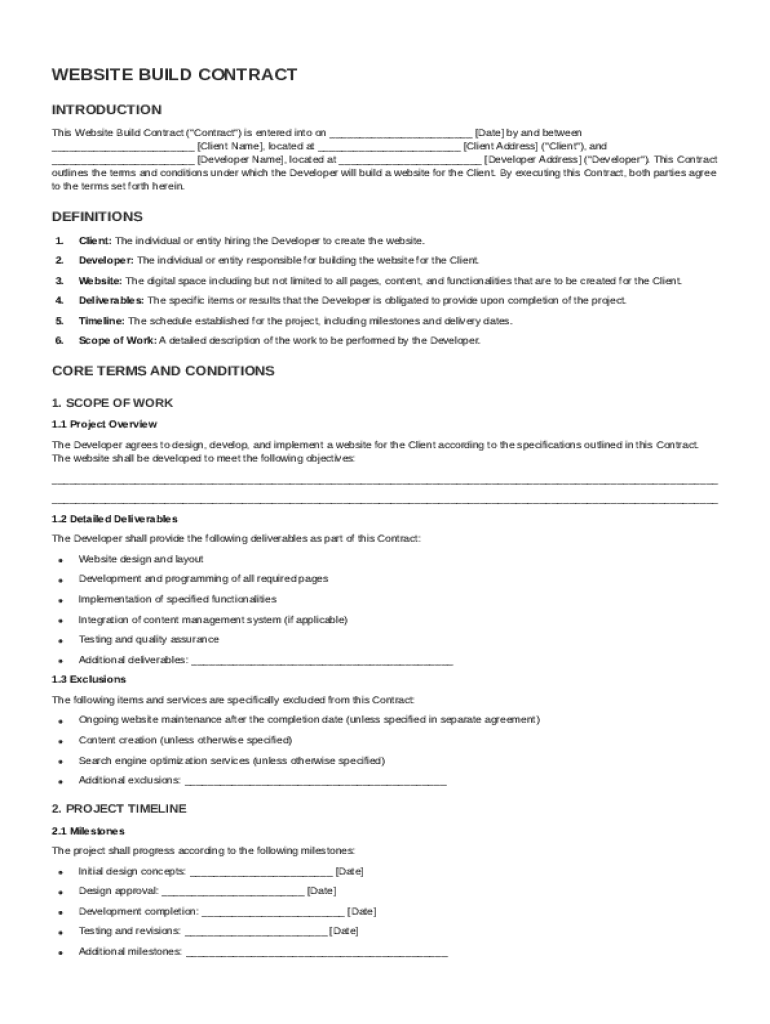







Definition and Purpose of a Website Build Contract
A Website Build Contract acts as a legal agreement between a client and a developer to outline the process and expectations for creating a website. It encompasses critical details including the responsibilities of both parties, the scope of work to be carried out, and detailed specifications regarding the project timeline, compensation, and deliverables. The contract is vital in ensuring clear communication between the client and developer, preventing misunderstandings during the website development process.
Key Elements Included
- Scope of Work: Clearly defines the services the developer will provide. This includes design, development, testing, and implementation phases.
- Timeline: Establishes deadlines for project milestones and final delivery.
- Compensation: Details payment terms, including necessary deposits, billing cycles, and the final project cost.
- Intellectual Property Rights: Specifies ownership of the website content and source code after project completion.
- Confidentiality: Ensures that proprietary information shared during the project remains secure.
- Termination Conditions: Outlines acceptable grounds for contract termination by either party.
How to Use the Website Build Contract Template
Utilizing a Website Build Contract Template involves several systematic steps to ensure that all necessary elements are tailored to fit the specific needs of the development project. These templates typically provide a structured format that guides users through crucial details that need to be included.
Steps to Customize the Contract
- Review the Template: Before editing, thoroughly read the template to understand the sections included and identify any areas that require modification.
- Insert Project Details: Fill in specific information such as the names of the client and developer, project description, timeline, and compensation details.
- Specify Scope and Deliverables: Clearly define the tasks and objectives the developer is responsible for, to avoid scope creep.
- Adjust Legal Provisions: Ensure confidentiality agreements, intellectual property rights, and termination clauses accurately reflect the understanding between both parties.
- Finalize and Review: Vet the document for clarity and completeness. Legal advice may be sought to ensure compliance with applicable laws.
Legal Use of the Website Build Contract
The Website Build Contract is a legally binding document that must comply with state-specific laws where the business transaction is taking place. Its legal enforceability ensures that in case of disputes, the terms of the agreement can be upheld in a court of law.
Legal Provisions to Consider
- Governing Law and Jurisdiction: Clearly state which state's laws will govern the contract.
- Warranties: Outline any guarantees the developer makes concerning the performance and quality of the website.
- Dispute Resolution: Include methods for resolving disagreements, such as mediation or arbitration, before litigation.
Important Terms Related to Website Build Contracts
Understanding the terminology associated with Website Build Contracts is crucial for both developers and clients to ensure clarity and mutual agreement.
Common Terms Defined
- Milestone: Specific points or stages in the project timeline where predetermined objectives should be completed.
- Deposit: Initial payment made to a developer before commencing work.
- Intellectual Property (IP): Creations of the mind, like logos or site layouts, that may be protected by law.
- Scope Creep: Refers to uncontrollable changes or continuous growth in the project scope.
Who Typically Uses the Website Build Contract Template
The template can be utilized by a variety of parties who engage in website development activities, ranging from individual freelancers to major development firms.


Primary Users
- Freelance Developers: Independent contractors providing specific web development services.
- Digital Agencies: Organizations offering comprehensive digital solutions, from website creation to marketing services.
- Business Clients: Companies or individuals commissioning websites for personal or business use.
Key Elements of the Website Build Contract Template
A quality Website Build Contract Template should feature fundamental components that establish a clear and concise framework for both parties. These elements facilitate a mutual understanding of expectations and provide clarity regarding the project lifecycle.
Essential Components
- Detailed Project Description: Comprehensive outline of the site's features, functionality, and target audience.
- Roles and Responsibilities: Definitions for who is responsible for each aspect of the project, ensuring accountability.
- Payment Schedule: Clearly defined terms for when and how payments will be made throughout the project duration.
Examples of Using the Website Build Contract Template
Real-world scenarios of employing a Website Build Contract Template can illustrate its value in managing client-developer relationships efficiently. Examples highlight the range of situations in which these contracts prevent potential disputes or misunderstandings.
Practical Scenarios
- Startup Launch: A tech startup hires a developer to construct an MVP (Minimum Viable Product) website using a Website Build Contract to safeguard its innovative concept.
- E-commerce Expansion: An online retailer commissions a website redesign to improve UX and integrate new payment gateways, detailed extensively in the contract.
- Educational Platform: A non-profit organization collaborates with a developer to construct an online educational portal, ensuring content ownership through the contract.
Who Issues the Template
The Website Build Contract Template is typically crafted by legal professionals or industry experts to align with standard practices and legal requirements specific to website development projects. Businesses and developers can then adapt these professional templates to fit their specific needs for developing websites.
Sources of Templates
- Legal Websites: Offer professionally written and legally vetted contract templates suitable for various jurisdictions.
- Industry Associations: Provide resources and templates tailored to the specific needs of web developers and creative agencies.
- Online Platforms: Services like DocHub offer customizable templates, enabling users to streamline the creation and negotiation of website development agreements.




