






Definition and Purpose of the HR Service Level Agreement Template
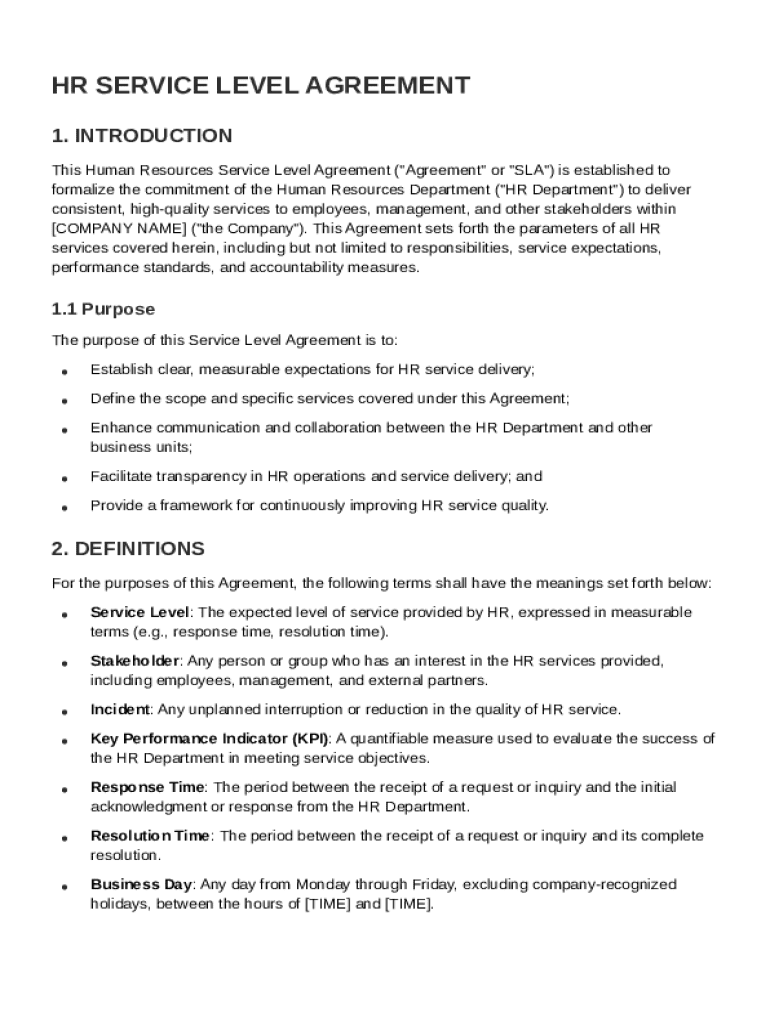
The HR Service Level Agreement (SLA) Template serves as a formal document that establishes the expected standards of performance between the Human Resources (HR) department and its stakeholders. This template is crucial for defining the scope of HR services, such as recruitment, employee relations, compensation management, training, and compliance. By clearly outlining commitments, it fosters better communication, enhances transparency, and promotes continuous improvement in HR operations. It also delineates the roles and responsibilities of both HR personnel and stakeholders to prevent miscommunication and ensure aligned service delivery.
Key Elements of the HR Service Level Agreement Template
An effective HR Service Level Agreement Template comprises several essential elements designed to streamline service delivery. These include:
-
Service Scope: Specifies the exact services the HR department will provide, which can range from recruitment and onboarding to conflict resolution and employee appraisals.
-
Performance Metrics: Criteria and benchmarks used to measure the HR department's service delivery effectiveness, ensuring that specific targets are met consistently.
-
Roles and Responsibilities: Clarifies the duties of HR personnel and outlines expectations for stakeholders, thus preventing role ambiguity.
-
Reporting and Review Procedures: Includes mechanisms for regular performance evaluations and feedback to encourage continuous improvement and adaptation.
Steps to Complete the HR Service Level Agreement Template
When completing the HR SLA Template, it is vital to follow a structured approach:
-
Identify Services: Clearly define the HR services covered by the agreement.
-
Set Performance Standards: Establish metrics for measuring the success of these services.
-
Assign Responsibilities: Detail each party's obligations to prevent overlaps and omissions in duties.
-
Outline Review Mechanisms: Include processes for evaluating service delivery regularly.
-
Customization: Adjust the template to reflect the specific needs and legal requirements of your organization and industry.
How to Use the HR Service Level Agreement Template
Utilizing the HR SLA Template involves integrating it into regular HR operations. Organizations should:
- Customize the template to align with specific organizational goals and legal standards.
- Distribute the document to all relevant parties, ensuring everyone is informed of service expectations.
- Employ the SLA as a basis for regular performance reviews and strategic planning meetings.
- Update the document periodically to reflect changes in service scope or performance expectations, adapting to feedback and organizational changes.
Who Typically Uses the HR Service Level Agreement Template
Typically, the HR SLA Template is used by various stakeholders within an organization:
-
HR Departments: To set clear expectations and guidelines for service delivery.
-
Management Teams: To understand HR capabilities and align them with organizational objectives.
-
Employees and Their Representatives: To hold HR accountable and ensure their needs are being met consistently.


Important Terms Related to HR Service Level Agreement Template
Familiarity with certain terms is crucial when working with the HR SLA:
-
Service Level Objective (SLO): A specific, detailed description of a particular aspect of the service and its expected performance.
-
Key Performance Indicator (KPI): Measurable values used to gauge the effectiveness of HR services.
-
Incident Management: Procedures put in place to handle issues or complaints about HR services.
Legal Use of the HR Service Level Agreement Template
HR SLAs must be legally sound to ensure their enforceability and validity. Organizations should:
-
Ensure the documents comply with relevant laws and regulations, such as employment and labor laws.
-
Consult legal professionals when drafting or modifying the SLA to mitigate potential legal risks.
-
Use the SLA to protect against breaches of agreement by clearly defining dispute resolution processes.
State-Specific Rules for the HR Service Level Agreement Template
HR SLA requirements and usage can vary by state due to differing laws and regulations:
- Be aware of unique labor laws and employment standards specific to each state's jurisdiction.
- Adapt the SLA to comply with state-specific requirements, especially in areas like workers' compensation, employment rights, and workplace safety regulations.
Staying informed about state-specific nuances ensures that the SLA remains compliant and protects both the organization and its employees effectively.