






Definition & Meaning
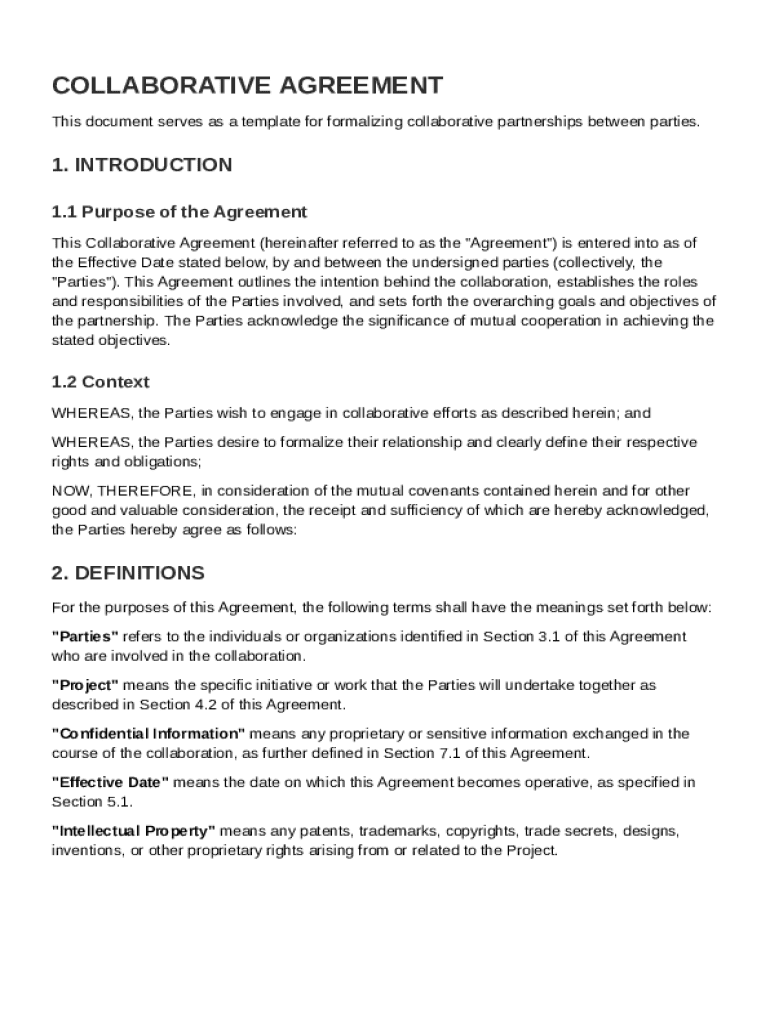
A Collaborative Agreement Template is a formal document utilized to define and govern partnerships between two or more parties. Its primary role is to establish the purpose, roles, responsibilities, and objectives of the collaboration. This template provides a structured framework that includes definitions of key terms that are pertinent to the understanding and execution of the agreement. Sections cover a range of critical elements such as financial considerations, intellectual property rights, and dispute resolution mechanisms. By outlining these aspects, the template serves as a legally binding foundation that facilitates clear communication and sets expectations among all parties involved.
Key Elements of the Collaborative Agreement Template
A Collaborative Agreement Template consists of several vital components:
- Purpose and Scope: Clearly defines the aims and boundaries of the collaboration, ensuring that all parties have a shared understanding of the goals and the nature of their cooperation.
- Roles and Responsibilities: Details the specific duties and accountability of each party, reducing the chances of misunderstandings and fostering a cooperative working relationship.
- Confidentiality Obligations: Includes clauses that protect sensitive information exchanged during the collaboration, ensuring that proprietary data is not disclosed improperly.
- Intellectual Property Rights: Addresses the ownership and usage rights of any intellectual property developed or shared during the partnership, preventing potential disputes over creative or innovative outputs.
- Financial Arrangements: Outlines any monetary contributions, payments, or profit-sharing arrangements agreed upon, providing a clear financial framework for the partnership.
- Dispute Resolution: Establishes mechanisms for resolving conflicts, such as mediation or arbitration, which can help maintain the relationship and prevent litigation.
- Term and Termination: Specifies the duration of the agreement and the conditions under which it can be terminated, offering flexibility and protection for all parties involved.
How to Use the Collaborative Agreement Template
Using a Collaborative Agreement Template effectively requires a series of deliberate steps:
- Identify Parties Involved: Begin by listing all entities or individuals who are participating in the collaboration. This ensures that everyone who needs to be part of the agreement is included from the start.
- Outline Project Details: Clearly describe the project or objective at hand, setting a solid foundation for the collaboration's purpose and scope.
- Assign Roles and Responsibilities: Specify the duties of each party, ensuring clarity in what is expected and reducing the likelihood of task overlap or neglect.
- Include Terms and Conditions: Incorporate financial arrangements, intellectual property rights, confidentiality clauses, and any other terms necessary to govern the collaboration effectively.
- Establish Dispute Resolution Procedures: Define a clear path for addressing any disagreements that may arise, thereby safeguarding the collaborative spirit.
- Review and Revise: All parties should review the agreement thoroughly. Revisions should be made if any terms are unclear, ensuring a comprehensive understanding and acceptance.
Legal Use of the Collaborative Agreement Template
The Collaborative Agreement Template serves as a legally binding document once duly signed by the involved parties. It is crucial that the agreement complies with local, state, and federal laws relevant to the intended purpose and jurisdiction of the collaboration. Legal review is advised to verify compliance and ensure that no clauses inadvertently contravene statutory regulations. This is particularly important for agreements involving substantial financial transactions or sensitive intellectual property, which might have significant legal implications.
Who Typically Uses the Collaborative Agreement Template
The template is frequently used by various entities, including:
- Businesses: Companies often engage in collaborative agreements to develop new products, enter new markets, or pool resources for research and development.
- Non-Profit Organizations: These entities may collaborate with other charities, governmental departments, or private firms to fulfill philanthropic goals efficiently.
- Educational Institutions: Universities and colleges use these templates to formalize partnerships with other educational entities or corporations for research purposes.
- Government Agencies: Collaborations with private-sector firms or NGOs for public welfare projects often require a structured agreement to manage expectations and deliverables.


Software Compatibility
The Collaborative Agreement Template is designed with broad adaptability in mind, supporting various file formats like DOC and PDF, ensuring seamless compatibility with numerous document editing and management platforms. Users can leverage software such as Microsoft Word and Adobe Acrobat for document modification. Additionally, integrated solutions like DocHub provide comprehensive editing tools and features that enhance collaboration, such as real-time updates, annotation capabilities, and digital signature support.
Versions or Alternatives to the Collaborative Agreement Template
While the Collaborative Agreement Template is comprehensive, there are alternative templates and versions that may suit specific needs:
- Joint Venture Agreements: Specialized for joint ventures, focusing on shared profit and loss arrangements and joint ownership.
- Memorandum of Understanding (MOU): Less formal than a full contract, an MOU establishes a shared understanding without the binding legal commitments.
- Partnership Agreements: Tailored for ongoing business partnerships, detailing operational management and financial contributions.
- Consortium Agreements: Used when multiple organizations band together to achieve a common goal, commonly seen in large-scale research projects or grant applications.
Exploring these variations allows parties to select or customize a template that best aligns with their specific objectives and working arrangements.