
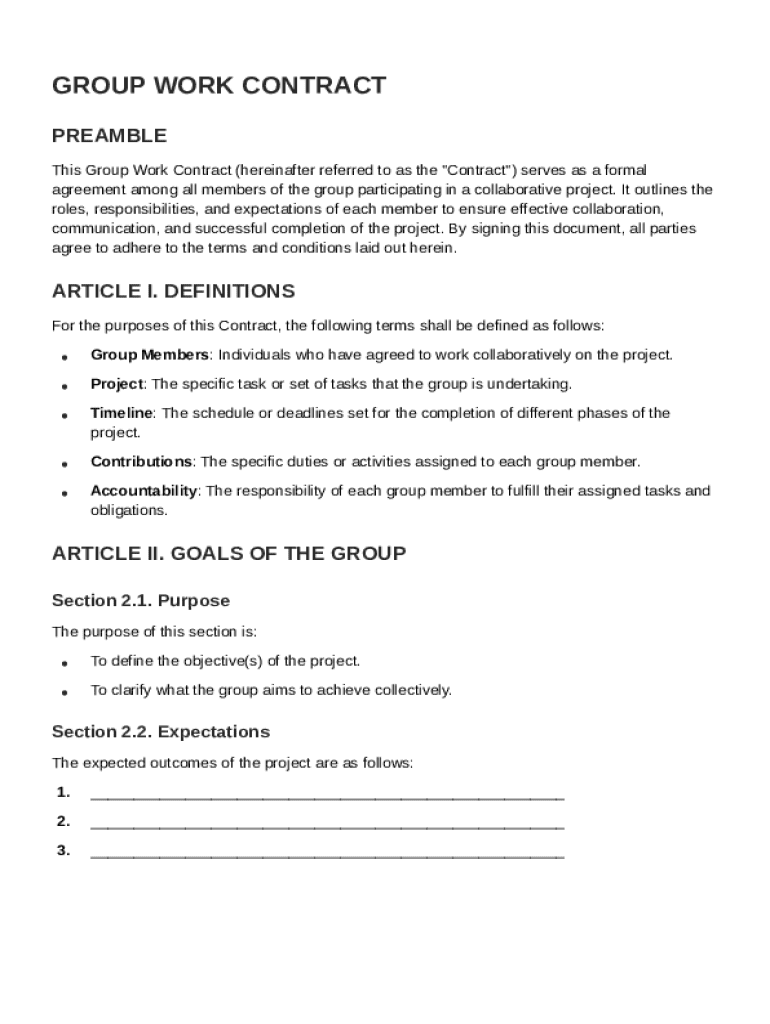







Definition & Meaning
A Group Work Contract Template is a formal document designed to outline the expectations, roles, responsibilities, and guidelines for members working collaboratively in a team setting. This template serves as an agreement among group members to define their contributions, establish communication protocols, and set timelines for the completion of tasks. The aim is to ensure effective collaboration and successful project completion by clearly delineating what is expected from each participant. Such contracts are commonly used in academic settings for group projects, in professional environments for team-based tasks, and in any situation where structured collaboration is essential.
Detailed Breakdown
- Roles and Responsibilities: The contract specifies the roles each member will take on within the group, detailing their specific tasks and responsibilities.
- Communication Protocols: It outlines how the group will communicate, including chosen platforms (e.g., email, messaging apps), frequency of meetings, and decision-making processes.
- Timelines: Establishes a project timeline, including due dates for particular tasks or milestones, ensuring the group remains on track and deadlines are met.
Key Elements of the Group Work Contract Template
A comprehensive Group Work Contract Template should include several critical components to facilitate smooth group dynamics. These elements collectively ensure that all aspects of group interaction and task execution are addressed.
Core Components
- Contact Information: Includes the names and contact details of all group members for easy communication.
- Objectives: Clearly states the overall goal of the project to provide a shared vision for the group.
- Conflict Resolution Procedures: Details the steps to be followed if disputes arise among group members, which may include mediation or consensus-building strategies.
- Contribution Guidelines: Defines what constitutes acceptable participation, specifying minimum engagement levels for each member.
- Review Processes: Establishes how the work will be reviewed and by whom, including peer reviews or feedback sessions.
Steps to Complete the Group Work Contract Template
Completing a Group Work Contract Template involves several key steps, ensuring that all group members are aligned and the template serves its intended purpose effectively.
Process Breakdown
- Initial Meeting: Convene all members to discuss the project goals and outline the initial draft of the contract.
- Assign Roles: Determine and agree on the responsibilities of each member, ensuring tasks align with individuals' skills and experiences.
- Draft Contract: Use the template to draft the contract, ensuring clarity and comprehensiveness.
- Review and Revise: Allow each member to review the draft and suggest revisions to reflect equitable and realistic expectations.
- Finalize: Once all suggestions are incorporated, finalize the document with mutual consent from all participants.
- Signatures: Obtain signatures from each member to formalize the agreement and commitment to the outlined terms.
Why Should You Use a Group Work Contract Template
Utilizing a Group Work Contract Template brings numerous benefits to collaborative projects, enhancing clarity and accountability.
Benefits Explanation
- Promotes Accountability: Clearly defined roles and contribution guidelines ensure each group member knows their duties and what is expected of them.
- Improves Coordination: By establishing communication protocols and timelines, it aids in better coordination among members.
- Reduces Conflicts: With predefined conflict resolution mechanisms, disagreements can be handled efficiently, minimizing disruption.
- Enhances Productivity: Structured approaches to task completion often lead to increased productivity and higher quality outcomes.
Who Typically Uses the Group Work Contract Template
The Group Work Contract Template finds applications across various sectors and groups that rely on collaborative efforts to achieve their objectives.


User Categories
- Academic Institutions: Used by students in group projects to manage responsibilities and ensure fair participation.
- Corporate Teams: Employed in business settings for team projects, helping to streamline collaboration across different departments.
- Non-Profits: Utilized by volunteer groups to coordinate community projects efficiently.
- Research Groups: In scientific and research environments, it assists in managing complex projects with multiple contributors.
Legal Use of the Group Work Contract Template
While a Group Work Contract is not a legally binding document in most contexts, it holds importance as a mutual agreement that fosters responsibility and clarity.
Explanation and Scenarios
- Non-Legal Binding: Generally, these contracts are not enforceable in a legal sense but serve as a moral and professional commitment.
- Documentation: Provides documented evidence of agreed roles and procedures, which can be referenced in disputes.
- Adaptations: May be adapted into a legally binding contract with sufficient legal oversight if required for particular projects.
Important Terms Related to Group Work Contract Template
Understanding key terms associated with a Group Work Contract Template helps participants navigate the document and communicate effectively.
Glossary
- Milestone: Specific points in the project timeline where progress is reviewed or specific outcomes are achieved.
- Facilitator: A group member tasked with guiding the group's processes and ensuring that meetings are productive and inclusive.
- Consensus: A decision-making process where all members agree on a course of action, prioritizing collective agreement over individual preference.
Examples of Using the Group Work Contract Template
Examining real-world examples of Group Work Contract usage can illustrate its versatility and effectiveness in various scenarios.
Case Studies
- University Project: In a university setting, students working on a capstone project utilize the template to assign research tasks, set deadlines, and agree on presentation roles.
- Corporate Marketing Team: A marketing team uses the template to delegate specific campaign tasks among members, outline creative input processes, and establish feedback loops.
- Community Service Group: Volunteers in a community service initiative employ the contract to assign fundraising roles, coordinate event planning, and schedule outreach activities.




