






Definition & Meaning
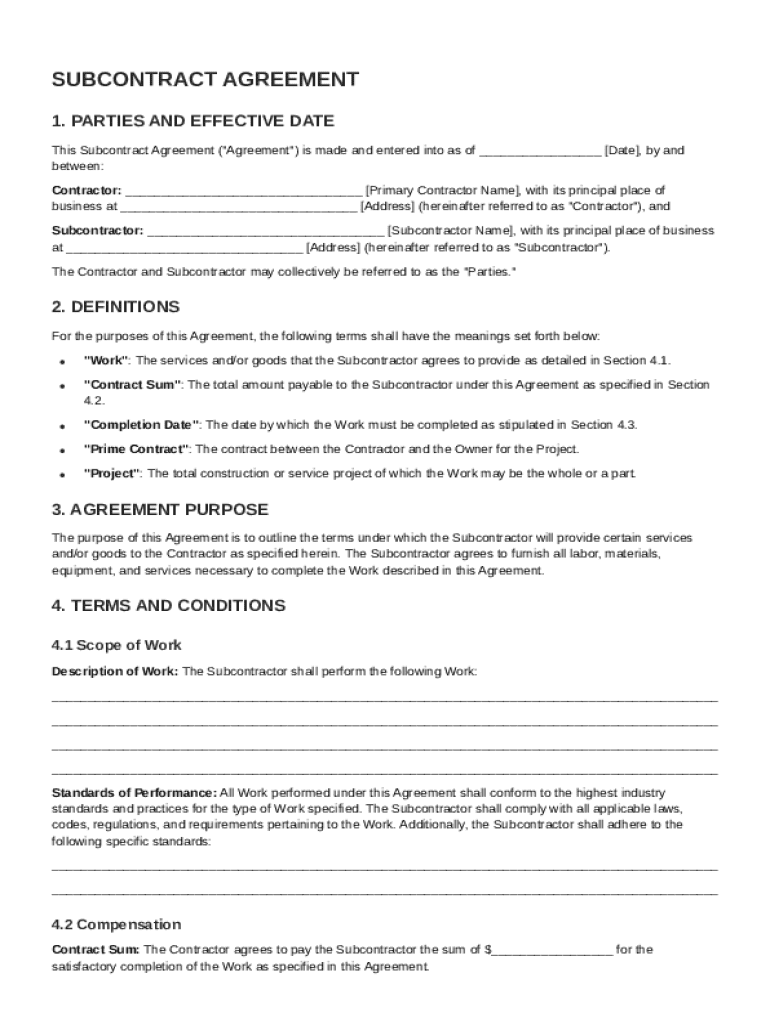
A Subcontract Agreement Template is a formal document that establishes the terms and conditions between a contractor and a subcontractor. The agreement outlines the scope of work, timelines, deliverables, and payment schedule for the services or goods provided by the subcontractor. It serves as a crucial tool for clearly defining the responsibilities and expectations of both parties, thereby minimizing potential disputes or misunderstandings.
This template typically includes several standard sections, such as definitions of key terms relevant to the project, which help clarify the nature of the work agreed upon. Definitions may also include concepts like "work product," "deliverables," and "payment terms" to ensure both parties understand the specific vocabulary within the contract's context.
Key Elements of the Subcontract Agreement Template
The Subcontract Agreement Template generally contains several vital components that ensure a comprehensive agreement:
-
Scope of Work: This section specifies the details of the work or services the subcontractor is expected to provide. It includes a description of tasks, project deadlines, and any milestones that need to be achieved.
-
Compensation and Payment Terms: Details how much and how often the subcontractor will be paid. This section may outline payment schedules, methods, and terms, ensuring transparency in financial transactions.
-
Responsibilities of Both Parties: Clearly identifies the duties and obligations of each party involved, ensuring accountability and mitigating any future disputes.
-
Confidentiality and Intellectual Property: Protects sensitive information shared during the project, laying out restrictions on disclosure and ownership rights of any work produced under the contract.
-
Indemnification and Liability: Covers legal liabilities, addressing how risks and damages are handled, and which party bears responsibility in specific situations.
-
Termination Conditions: Outlines the circumstances under which the agreement may be terminated, including breach of contract or failure to comply with specified terms.
How to Use the Subcontract Agreement Template
Using the Subcontract Agreement Template involves several steps to ensure it effectively meets the needs of both the contractor and the subcontractor:
-
Download the Template: Start by obtaining the template from a reliable source, ensuring it is comprehensive and meets industry standards.
-
Customize the Template: Modify sections to fit the specific project requirements. Pay close attention to the scope of work, payment schedules, and deadlines.
-
Review with Stakeholders: Share the customized agreement with relevant stakeholders, including legal advisors and the subcontractor, and solicit feedback for any adjustments.
-
Finalize Terms: Once all parties agree on the modifications, finalize the terms and conditions, ensuring all details align with mutual expectations.
-
Sign and Execute: All parties should sign the agreement to signify consent and execute the document. This formalizes the contract and initiates the agreed-upon work.
Legal Use of the Subcontract Agreement Template
The Subcontract Agreement Template serves as a legally binding document conforming to applicable laws and statutes. It must comply with federal, state, and local regulations to be enforceable in court. Legal sections within the agreement often include:
-
Jurisdiction and Governing Law: Specifies which state's laws govern the contract, providing a legal framework for resolving disputes.
-
Compliance with Regulations: Ensures both parties agree to comply with all relevant laws and industry standards, such as construction codes or safety regulations.
-
Dispute Resolution: Outlines methods for resolving conflicts, such as mediation or arbitration, before pursuing litigation.
-
Amendments and Modifications: Details the process for making changes to the agreement after it is executed, often requiring written approval from all parties involved.
Important Terms Related to Subcontract Agreement Template
Understanding critical terms associated with the Subcontract Agreement Template is essential for clarity and effective communication:
-
Contractor: The party that hires the subcontractor to provide specific services or goods under the agreement.
-
Subcontractor: The entity or individual hired to perform the specific tasks outlined in the contract.
-
Work Product: The deliverable items or services the subcontractor must provide as part of their contractual obligations.
-
Milestones: Predefined stages of progress that mark significant points of development within the project timeline.
-
Force Majeure: A clause that exempts liabilities for both parties in case of unforeseen events or circumstances beyond their control that prevent fulfilling contractual obligations.
Steps to Complete the Subcontract Agreement Template
Completing the Subcontract Agreement Template involves several detailed steps that ensure accuracy and mutual understanding:
-
Fill Out Basic Information: Start by entering the names and contact details of the contractor and subcontractor.
-
Define the Scope of Work: Provide a detailed description of the services or goods to be delivered, including specific tasks and expected outcomes.
-
Specify Payment Terms: Insert the agreed-upon compensation, payment method, and schedule. Clarify details regarding invoicing, deposits, and final payments.
-
Set Project Milestones: Create a timeline outlining significant project phases, deadlines, and the dates when payments are due upon completion of each stage.
-
Establish Confidentiality Clauses: Include language that protects proprietary information and sets boundaries for information sharing.
-
Add Legal Terms: Incorporate necessary legal clauses, such as governing law, severability, and indemnification, ensuring the template complies with jurisdictional requirements.
-
Review and Sign: Double-check all sections for accuracy, share the draft with legal advisors if necessary, and collect signatures from all parties to finalize the agreement.
Who Typically Uses the Subcontract Agreement Template
The Subcontract Agreement Template is commonly used by various stakeholders across different industries where subcontracting work is a regular practice:
-
General Contractors: Often employ subcontractors for specific trade work like electrical installations, plumbing, or carpentry on large construction projects.
-
Business Owners: Use subcontracting agreements to delegate specialized tasks such as IT services, marketing, or content creation to external providers.
-
Project Managers: Engage subcontractors through formal contracts for project-based collaborations, ensuring clear expectations and deliverables.
-
Consultancies: Subcontracting is prevalent in consulting firms to bring in temporary expertise for particular projects or sectors.


Examples of Using the Subcontract Agreement Template
Understanding real-world applications of the Subcontract Agreement Template can provide practical insights:
-
Construction Industry: A general contractor hires a subcontractor to complete the roofing of a commercial building. The agreement specifies the type of materials used, timelines, and payment schedule.
-
Event Planning: An event organizer contracts a caterer to supply food services for a corporate event. Terms include menu specifications, delivery schedules, and food safety compliance.
-
IT Projects: A tech company employs a freelance developer to build a custom software application. The agreement details project phases, code ownership, and support terms post-launch.
State-by-State Differences
Legal requirements for subcontracting agreements may vary dramatically from one state to another within the U.S., impacting specific contract provisions:
-
Licensing Requirements: Ensure subcontractors adhere to state-specific licensing laws for various professions, such as electrical work or plumbing.
-
Lien Laws: Different states have varying regulations governing mechanics' liens, which protect subcontractors if disputes over payment arise.
-
Regulatory Compliance: States may have specific worker protection laws and construction safety regulations that contracts must address in detail.
Understanding these variations is crucial for drafting a compliant subcontract agreement applicable to the state where the work is performed.