






Definition & Meaning
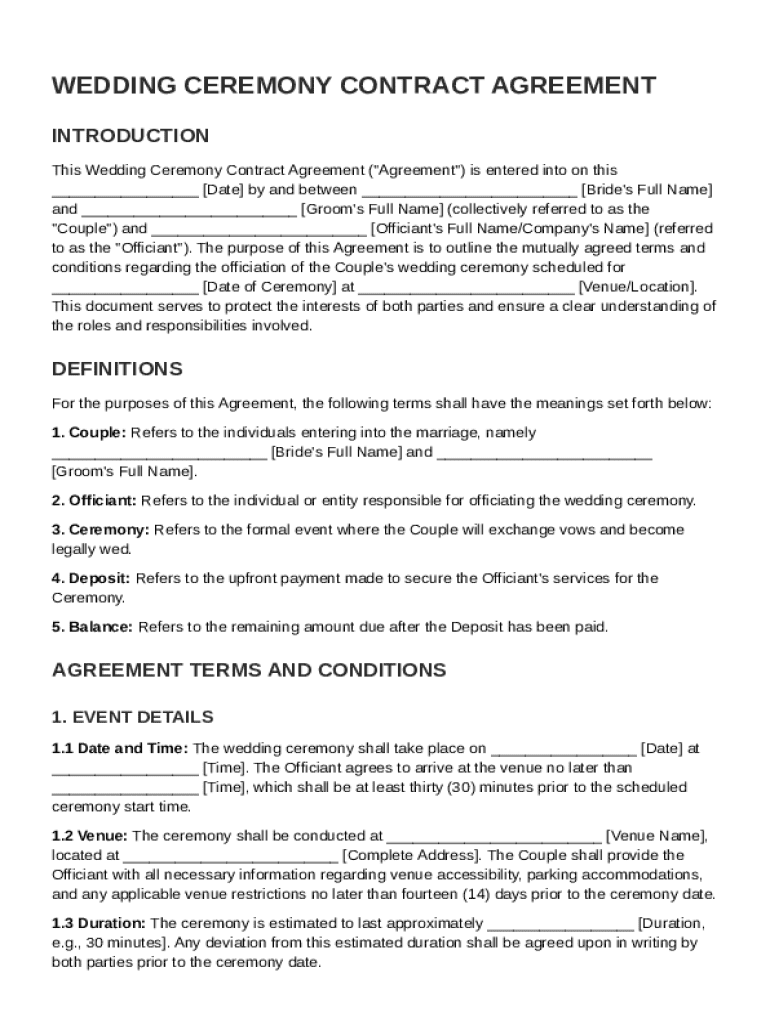
A Wedding Ceremony Contract Template is a formal agreement that lays out the terms and conditions between a couple and an officiant for their wedding ceremony. This document ensures clarity and understanding regarding the roles and obligations of both parties involved. It typically covers details related to the event, services provided, payment terms, and other critical aspects that concern both the couple and the officiant. By providing a structured framework, it serves as a safeguard to prevent potential disputes and protect the interests of both parties through clear documentation.
Key Elements of the Wedding Ceremony Contract Template
A well-crafted Wedding Ceremony Contract Template includes several essential components:
- Event Details: This section specifies the date, time, and location of the wedding ceremony. It is crucial to outline these details to ensure the officiant is available and prepared.
- Services Provided: A comprehensive list of services offered by the officiant, such as conducting the ceremony or providing rehearsal services. Precise descriptions help set expectations for both parties.
- Payment Terms: Clearly defined payment schedules, including deposit amounts and final payment due dates. It may also specify acceptable payment methods.
- Cancellation and Rescheduling Policies: Guidelines for terminating or altering the agreement, including any penalties or refunds, help mitigate misunderstandings should plans change.
- Liability Clauses: These clauses protect both parties by outlining responsibilities and potential compensations in case of unforeseen circumstances.
- Governing Law and Amendments: Statements on how disputes will be resolved, which jurisdiction's laws apply, and how amendments to the contract can be made.
How to Use the Wedding Ceremony Contract Template
Using the Wedding Ceremony Contract Template effectively involves several steps to ensure all aspects are addressed:
- Review the Template: Begin by carefully reading through the entire template to understand each section's purpose and content.
- Customize the Details: Fill in specific information related to the event, services, and parties involved. Personalizing the template with accurate data is crucial to creating a valid contract.
- Clarify Ambiguities: Any unclear terms or conditions should be discussed between the couple and the officiant to ensure mutual understanding.
- Sign and Finalize: Both parties should sign the document to indicate their consent. A digital signature can be used if the template is being processed electronically.
- Maintain Communication: After signing, maintain open communication for any required updates or amendments until the event concludes.
Who Typically Uses the Wedding Ceremony Contract Template
The template is primarily utilized by:
- Engaged Couples: To ensure that all aspects of their wedding ceremony arrangements are formally documented and agreed upon.
- Wedding Officiants: Professionals who perform wedding ceremonies and need to establish clear terms and expectations with their clients.
- Wedding Planners: Individuals or companies that coordinate wedding events may also use this template to manage arrangements effectively.


Important Terms Related to the Wedding Ceremony Contract Template
Several key terms are frequently associated with the Wedding Ceremony Contract Template:
- Officiant: The individual authorized to conduct the wedding ceremony.
- Deposit: Upfront payment required to secure the services of the officiant.
- Liability Release: A clause that limits or releases one party from liability in case of specific scenarios, such as postponements.
- Force Majeure: A provision often included to address unforeseen events or circumstances beyond control that prevent the execution of the ceremony as planned.
Legal Use of the Wedding Ceremony Contract Template
In the United States, the Wedding Ceremony Contract Template is legally binding if it adheres to contract law principles:
- Offer and Acceptance: Showing mutual consent by both parties to the documented terms.
- Consideration: An agreed exchange of value, such as payment for services.
- Competency and Legality: Both parties must have the legal authority to enter into an agreement, and the contract must involve legal activities.
State-Specific Rules for the Wedding Ceremony Contract Template
While the general structure of a wedding ceremony contract is consistent nationwide, some state-specific rules may apply:
- Licensing Requirements: States may require officiants to have particular credentials.
- Marriage License Regulations: Specific local laws about marriage license application, timelines, and documentation can affect the contract.
- Statutes on Contracts: Some states have specific statutes that govern legal contracts, affecting the enforceability and particular clauses within.
Examples of Using the Wedding Ceremony Contract Template
Real-world scenarios for using this template include:
- Traditional Church Wedding: A couple having a formal ceremony officiated by a clergy member might use the template to outline expectations for church availability and pre-ceremony counseling.
- Destination Wedding: For weddings abroad, the template could accommodate additional considerations like travel arrangements for the officiant.
- Civil Ceremony: In cases where a justice of the peace is officiating, the contract will reflect any civic obligations and legal documentation needed for compliance.