
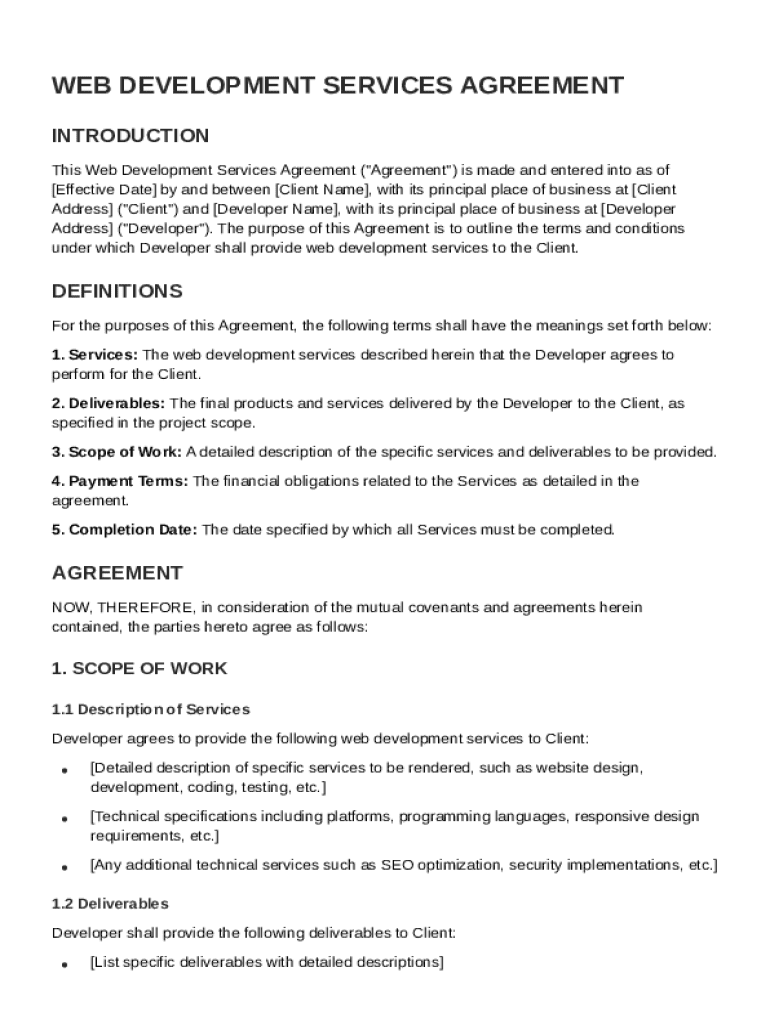







Understanding the Web Development Contract Template
The Web Development Contract Template is a critical document that sets out the terms of engagement between a client and a developer. It outlines project specifics, deadlines, payment structures, and the division of responsibilities. By establishing these elements clearly, the contract mitigates misunderstandings, aligns expectations, and provides a legal framework for resolving disputes.
-
Project Scope and Deliverables: This section defines the exact services the developer will provide. It distinguishes between what is included and what is not, preventing scope creep. Clear deliverables help ensure both parties understand their mutual commitments and the project's end objectives.
-
Timeline and Milestones: The timeline sets the project’s schedule, detailing when each phase must be completed. Milestones within this schedule can be linked to payment schedules, ensuring a fair distribution of resources and compensation.
Utilizing the Web Development Contract Template
Employing the Web Development Contract Template involves customizing it to suit the specific needs of each project. This process typically begins with a thorough review of the template to ensure all sections comply with the project's requirements.
-
Customizing the Scope of Work: Tailor this section to reflect specific tasks and responsibilities. It should be aligned with the client’s expectations and the developer's capabilities.
-
Setting Payment Terms: Modify this part to specify payment methods, schedules, and conditions that must be met for transactions.
-
Specifying Project Timelines: Insert clear timelines to guide the project from inception to completion, ensuring accountability for both parties.
Step-by-Step Guide to Complete the Web Development Contract Template
Completing the Web Development Contract Template requires careful attention to detail to avoid ambiguities and omissions.
-
Define Project Requirements: Start by collecting comprehensive information about the client's needs and project goals.
-
Draft Payment Terms: Outline how and when payments will be made, such as an initial deposit followed by installment payments tied to milestones.
-
Establish Ownership Clauses: Include intellectual property stipulations to ensure clarity over project ownership once completed.
-
Finalize and Review: Both parties should review the finalized document to confirm understanding and agreement before signing.
Key Elements of the Web Development Contract Template
The Web Development Contract Template integrates several essential elements that protect both parties' interests, serving as a comprehensive guide during the project lifecycle.
-
Intellectual Property Rights: This defines who retains ownership of the created website and any accompanying code or design materials upon project completion.
-
Confidentiality: Highlights the importance of maintaining privacy regarding any sensitive information exchanged during the project.
-
Dispute Resolution: Details the process for addressing disagreements, aiming for resolution outside of litigation when possible.
Legal Considerations in Using the Web Development Contract Template
Legal considerations are paramount in any contractual agreement, ensuring enforceability and compliance with applicable laws.
-
Governing Law: Check the contract’s stipulations regarding the jurisdiction whose laws will govern the agreement.
-
Contractual Capacity: Ensure both parties are legally able to enter into the contract, which includes being of legal age and sound mind.
-
Clause Review: Have legal counsel review the template to tailor any clauses needing specific legal adjustments.
Who Typically Uses the Web Development Contract Template
Various entities and individuals utilize the Web Development Contract Template based on their specific needs and project goals.
-
Freelancers: Independent developers use the template to safeguard their rights and secure payment structures.
-
Agencies: Web development agencies rely on these contracts to manage multiple client projects efficiently.
-
Startups and Small Businesses: These entities prominently use the template to engage web developers when launching new websites to ensure project clarity and security.


Variants and Alternatives to the Web Development Contract Template
While the Web Development Contract Template is comprehensive, there are variations and alternatives for specific scenarios.
-
Freelance Contract Templates: More focused on smaller projects or single developers, these offer flexibility in terms of scope and detail.
-
Agile Development Agreements: Cater to projects that require iterative or evolving scopes, ideal for ongoing development work.
-
Maintenance Contracts: Focus on ongoing website updates rather than initial development, ensuring long-term site functionality.
Software Compatibility for Web Development Contract Template
Compatibility with various software is crucial for efficiently managing and editing the Web Development Contract Template.
-
DocHub Integration: Seamless integration with DocHub allows for easy editing, signing, and sharing in a secure environment.
-
Google Workspace: The template can be imported from and exported to Google Drive, enhancing collaborative editing and storage.
-
PDF and DOC Formats: Available in multiple formats to suit different software preferences, ensuring maximum accessibility.
Case Studies and Examples of Using the Web Development Contract Template
Practical examples and case studies highlight the utility of the Web Development Contract Template.
-
Freelancer Success Story: A freelance developer used the template to establish clear project terms, resulting in timely payment and client satisfaction.
-
Agency Application: An agency streamlined its workflow by customizing the template across multiple projects, reducing client onboarding time and improving project delivery efficiency.
-
Startup Utilization: A startup mitigated risk by employing the template to clearly define their web project requirements, preventing future disputes over project scope changes.
These examples underscore the template's versatility in different business contexts, showcasing its role in effective project management.




