
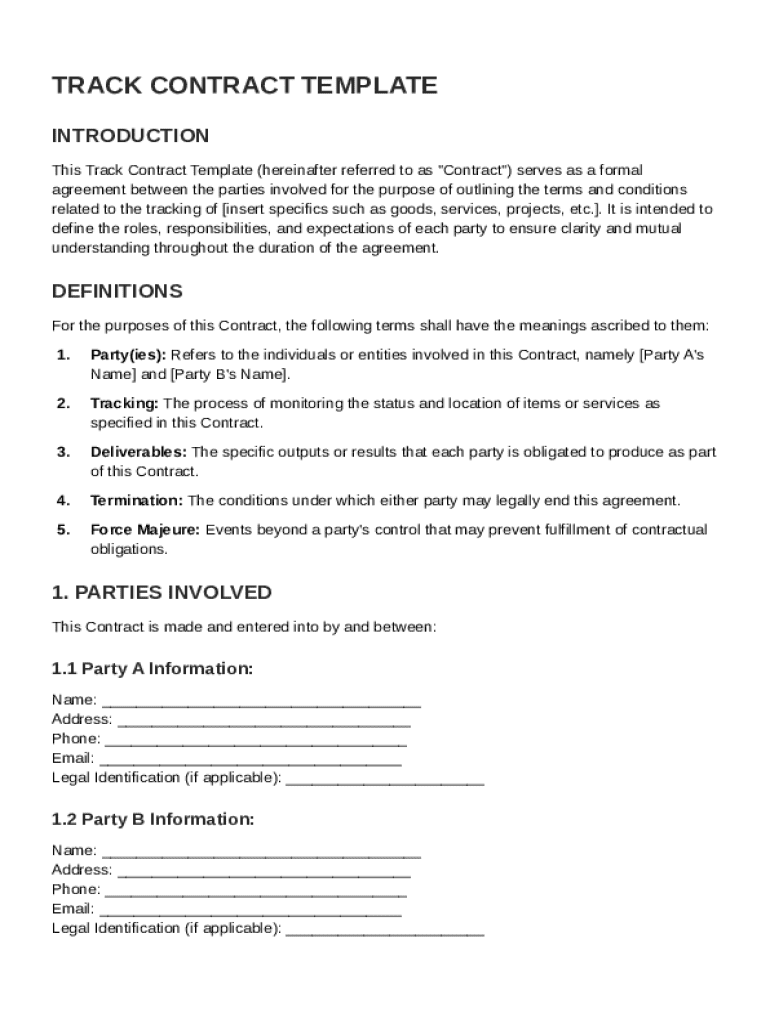







Definition and Meaning
The Track Contract Template is a standardized form used to detail agreements made between two parties for tracking goods, services, or projects. It serves as a formal document that outlines roles, responsibilities, deliverables, and other critical components necessary for mutual understanding and compliance. By using this template, parties ensure that every aspect of their agreement is documented, reducing the potential for misunderstandings and disputes. The template typically includes sections on confidentiality, intellectual property rights, payment terms, dispute resolution processes, and provisions for termination or force majeure events.
Key Elements of the Track Contract Template
Understanding the primary components of the Track Contract Template is essential for effective use. Key elements typically include:
- Parties Involved: Clearly identifies the entities entering into the agreement.
- Scope of Work: Details the specific tasks, services, or deliverables expected.
- Roles and Responsibilities: Outlines duties for each party, ensuring clarity in contributions and expectations.
- Payment Terms: Specifies the financial conditions, including rates, payment schedules, and any penalties for late payment.
- Confidentiality: Ensures sensitive information is protected, with terms detailing how information can be shared or must be restricted.
- Termination Clauses: Provides guidelines for ending the agreement and any penalties or processes involved.
- Governing Law: Indicates the legal jurisdiction under which the contract is governed, crucial for resolving disputes.
How to Use the Track Contract Template
Using the Track Contract Template effectively involves a series of steps:
- Identify Parties: Clearly define who is entering the agreement and their roles.
- Define Terms and Conditions: Outline the expectations, deliverables, and any specific conditions.
- Set Payment and Deliverables Schedule: Establish timelines and financial terms to avoid future disputes.
- Review Governing Laws and Legal Clauses: Ensure compliance with necessary legal requirements and jurisdiction.
- Final Review and Signatures: Both parties should carefully review all terms before signing to ensure full understanding and agreement.
Who Typically Uses the Track Contract Template
The Track Contract Template is versatile and can be utilized by various entities:
- Businesses: Particularly those involved in supply chains, project management, or service delivery, where tracking is essential.
- Freelancers and Contractors: Independent workers can leverage this template to protect their interests and formalize their commitments.
- Nonprofits and Government Agencies: These organizations may use the template to manage vendor relationships and service agreements.


Steps to Complete the Track Contract Template
Completing the Track Contract Template involves the following steps:
- Fill in Basic Information: Identify the parties involved and detail their contact information.
- Outline the Project Scope: Provide a comprehensive description of the work to be completed.
- Set Deliverables and Timelines: Clearly define what needs to be delivered and by what date.
- Agree on Payment Terms: Detail the amount, method, and schedule of payments.
- Include Confidentiality Clauses: Ensure sensitive information is adequately protected.
- Review and Resolve Disputes Mechanisms: Outline processes for dealing with potential disagreements.
Legal Use of the Track Contract Template
Using the Track Contract Template legally involves understanding its implications:
- Compliant with the ESIGN Act: Ensures electronic signatures used on this contract are legally binding.
- Confidentiality Obligations: Both parties must respect the non-disclosure terms as outlined.
- Verification of Terms: All sections need to be verified for accuracy to prevent legal challenges.
- Records and Audit Trails: Maintain copies of the final signed agreement for record-keeping and audits.
Important Terms Related to the Track Contract Template
Familiarize yourself with key legal and contractual terms:
- Force Majeure: Situations that prevent contractual obligations due to unforeseen events.
- Intellectual Property Rights: Ownership and rights over creative works and proprietary methods.
- Dispute Resolution: Mechanisms in place to handle disagreements, such as mediation or arbitration.
- Deliverables: Tangible outputs or results from the contract agreement.
Examples of Using the Track Contract Template
Practical applications of the Track Contract Template include:
- Logistics Company: Tracks shipments and delivery services between courier and recipient.
- Consulting Firm: Manages project deliverables between consultant and client.
- Software Development: Implements phases of software delivery and rights management between development team and customer.




