






Definition & Meaning
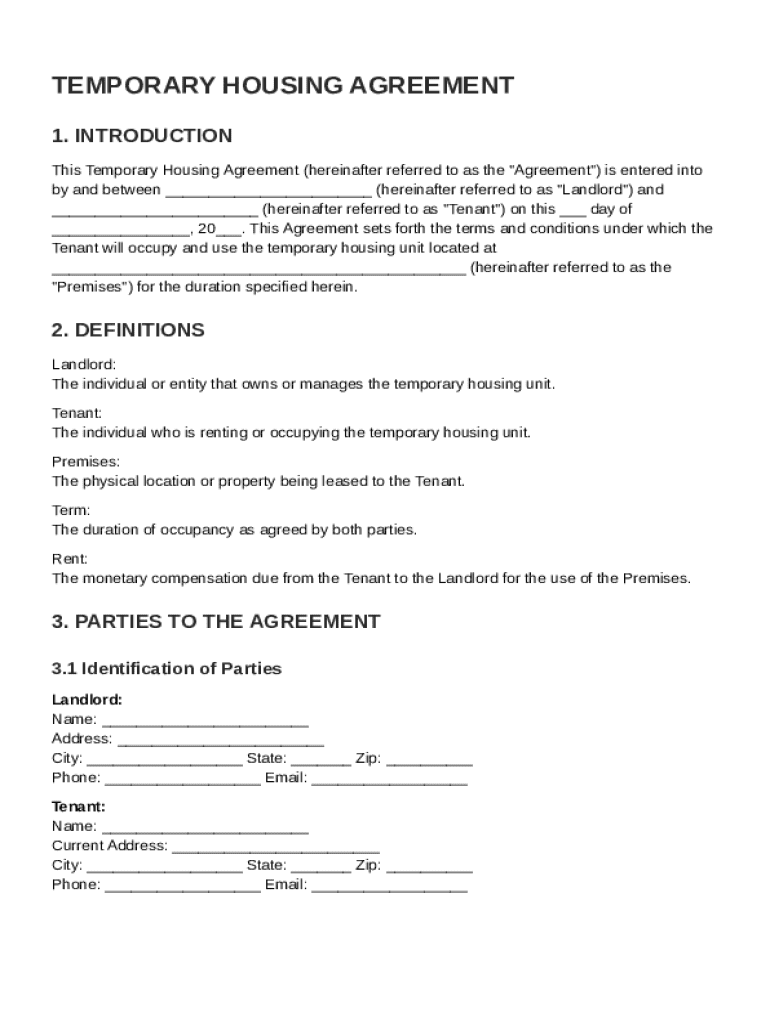
The Temporary Housing Agreement Template serves as a formal document outlining the terms and conditions under which a tenant occupies a housing unit temporarily provided by a landlord. This agreement delineates essential elements such as the identification of the involved parties, the duration of occupancy, and the financial obligations related to rent payment and security deposits. The template acts as a comprehensive legal framework governing the interaction between landlords and tenants, ensuring clarity and mutual understanding of responsibilities and rights.
- Identity of Parties: Specifies the landlord and tenant involved in the agreement.
- Property Description: Provides a detailed description of the temporary housing unit.
- Tenancy Duration: Clarifies the start and end dates of the rental period.
How to Use the Temporary Housing Agreement Template
Utilizing the Temporary Housing Agreement Template efficiently requires understanding its structure and filling in the specific details pertaining to the rental arrangement. This template can save time and reduce errors by providing a structured format to capture all necessary information.
- Customize Basic Information: Enter the names of the landlord and tenant, as well as the address of the property.
- Specify Terms: Clearly define the tenancy duration, including start and end dates.
- Outline Financial Obligations: Detail rent amounts, payment schedules, and security deposits.
- Include Special Conditions: Add any particular clauses relevant to utility payments or maintenance responsibilities.
Best Practices
- Review the document thoroughly before finalizing to ensure all sections are complete.
- Both parties should read and understand the agreement to avoid future disputes.
How to Obtain the Temporary Housing Agreement Template
The Temporary Housing Agreement Template can be obtained through various online services or legal document platforms. Utilizing a reputable source ensures that the template complies with legal standards and includes all necessary provisions.
Steps to Access
- Visit a trusted document provider such as DocHub, which offers a range of legal templates.
- Search for the "Temporary Housing Agreement Template" in their document library.
- Download the template in your preferred file format (PDF, DOC, etc.) for easy editing.
Factors to Consider
- Verify the template's compliance with applicable laws in your region.
- Ensure that the source of the template offers customization options to suit your specific needs.
Steps to Complete the Temporary Housing Agreement Template
Completing the Temporary Housing Agreement Template involves several key steps to ensure the agreement is valid and comprehensive.
- Gather Required Information: Collect necessary details about the landlord, tenant, and property.
- Fill In Personal Details: Enter the names, contact information, and signatures of both parties.
- Detail Payment Terms: Define rent amounts, due dates, and methods of payment clearly.
- Specify Property Conditions: Include conditions for damages or repairs required during the tenancy.
- Review for Accuracy: Double-check all entries for typographical errors or missing information.
Important Considerations
- Obtain mutual agreement and signatures from both parties to finalize the document.
- Consider having an attorney review the document for legal sufficiency.
Important Terms Related to the Temporary Housing Agreement Template
An understanding of the terminology used within the Temporary Housing Agreement Template is crucial for both landlords and tenants to prevent misunderstandings.
Common Terms
- Security Deposit: A sum paid by the tenant and held by the landlord as security for any damages incurred during the lease period.
- Repair Clause: Specifies the responsibilities for maintenance and repair of the property.
- Notice Period: The time frame required for either party to terminate the agreement before the specified end date.
Examples
- Breach of Contract: Any violation of the terms outlined in the agreement could result in penalties or eviction.
- Late Fee: A penalty imposed for failure to pay rent on the agreed-upon date.
Legal Use of the Temporary Housing Agreement Template
The template provides a legally binding document that can protect the rights and outline the duties of both landlords and tenants. Adhering to legal standards ensures the enforceability of the agreement in a court of law.
- Legal Protections: Offers protection against disputes by clearly defining responsibilities.
- Compliance with State Laws: Ensures that terms are aligned with the specific state regulations governing temporary housing.
- Enforceability: Provides landlords and tenants with a legal recourse in the event of non-compliance with the terms.
Key Elements of the Temporary Housing Agreement Template
Several fundamental elements define the scope and effectiveness of a Temporary Housing Agreement Template.
- Parties to the Agreement: Identification of the tenant and landlord, including legal names and contact information.
- Description of Premises: Detailed outline of the property, including any furnishings or appliances provided.
- Financial Details: In-depth information on rent, deposit amounts, payment dates, and additional costs such as utilities.
- Duration of Tenancy: Exact dates the lease begins and ends, including any renewal options if applicable.
- Rights and Obligations: Responsibilities related to property upkeep, damage liability, and rights of access by the landlord.
Special Provisions
- Pet Policy: Any clauses related to pet ownership within the property.
- Subletting: Conditions under which the tenant may sublet the premises, if allowable.
State-Specific Rules for the Temporary Housing Agreement Template
Regulations surrounding temporary housing agreements can vary significantly from state to state. It’s crucial to understand these differences to ensure that the template remains compliant with local laws.
- State-Specific Clauses: Some states, for instance, may impose stricter regulations on security deposits or the timeline for returning them.
- Rent Control: Specific areas might have rent control laws that limit the amount the landlord can charge.
- Tenant Rights: Varying local regulations can affect tenant eviction processes and procedures.
Recommendations
- Research your state's rental laws or consult with a legal professional to ensure the template meets all local requirements.
- Customizing the agreement according to state-specific regulations helps prevent future legal challenges.