Definition & Meaning
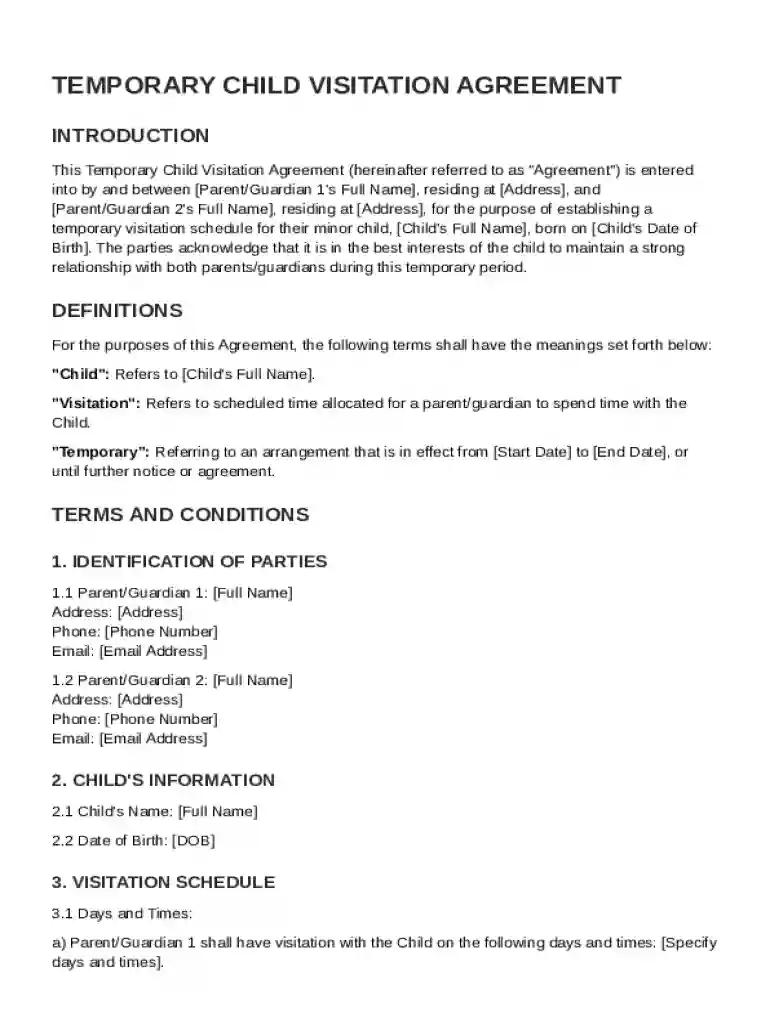
The Temporary Child Visitation Agreement Template is a legal form used to outline the specific terms and conditions governing the visitation arrangements between two parents or guardians and their minor child. This type of agreement is typically employed during periods when permanent arrangements are pending or when temporary circumstances necessitate an interim schedule. The document ensures that both parents have a clear understanding of when and how they will have access to the child, promoting stability and continuity in the child's life. It specifies important details such as visitation days, times, and locations while covering logistics like transportation and communication protocols.
Key Elements of the Temporary Child Visitation Agreement Template
This template includes several crucial components that are designed to address all aspects of child visitation arrangements. Key elements typically include:
- Visitation Schedule: Specific days and times allocated for each parent's visitation.
- Duration of the Agreement: The start and end dates for which the temporary arrangement is valid.
- Transportation Arrangements: Details regarding pick-up and drop-off locations, responsibilities, and any associated costs.
- Communication Protocols: Guidelines for how parents should communicate about visitation-related matters, including preferred methods and times.
- Modification Process: Procedures for making amendments to the agreement, should circumstances change during the specified period.
- Governing Law: The legal jurisdiction under which the agreement will be interpreted and enforced.
Steps to Complete the Temporary Child Visitation Agreement Template
Completing this agreement involves several steps to ensure accuracy and legal compliance:
- Collect Personal Information: Gather details of all parties involved, including names, addresses, and contact information.
- Determine the Visitation Schedule: Agree on the specific days and times for visitation, ensuring it accommodates the child's best interest.
- Outline Transportation Details: Define who will be responsible for transportation, including exact pick-up and drop-off addresses and contact numbers.
- Establish Communication Guidelines: Set rules for how and when parents will communicate regarding the child's needs and any potential changes to the schedule.
- Review and Modify if Necessary: Both parties should thoroughly review the agreement, propose any necessary changes, and reach a consensus.
- Finalize and Sign: Once finalized, both parties should sign the agreement, and a copy should be retained for reference.
Legal Use of the Temporary Child Visitation Agreement Template
Using this template legally binds both parties to adhere to the specified terms. It is crucial to ensure that the agreement complies with local family law statutes in the relevant jurisdiction. Legal counsel may be sought to review the agreement and provide advice on its enforceability. Additionally, if the agreement is being used in conjunction with court proceedings, it may need to be formally submitted to, and approved by, a family court judge.
State-Specific Rules for the Temporary Child Visitation Agreement Template
Family law can vary significantly from one state to another in the United States. It is essential to be aware of state-specific legislation that may impact how the visitation agreement is structured. For example, certain states may have specific requirements regarding the language used in the document or may mandate court approval for all visitation agreements involving minors.
Examples of Using the Temporary Child Visitation Agreement Template
In practice, this template can be utilized in a variety of scenarios:
- During Divorce Proceedings: A temporary arrangement can provide clarity while the family waits for court-mandated custody orders.
- Accommodation of Parental Relocation: If a parent needs to move temporarily due to work or personal reasons, a flexible visitation schedule can be devised.
- Health or Safety Concerns: When a child's safety or specific health needs require modifications to regular visitation schedules, the template can support such interim adjustments.
Important Terms Related to the Temporary Child Visitation Agreement Template
Understanding key legal and logistical terms is crucial for successfully drafting and executing a visitation agreement:
- Non-Custodial Parent: The parent who does not have primary custody but has visitation rights.
- Primary Residence: The home where the child spends the majority of their time.
- Visitation Rights: Legal permission for a non-custodial parent to visit their child according to agreed terms.
- Contingency Plans: Arrangements included to address unforeseen circumstances affecting the visitation schedule.
Who Typically Uses the Temporary Child Visitation Agreement Template
Generally, the primary users of this template include:

- Divorcing or Separating Parents: To establish temporary visitation while awaiting final custody adjudication.
- Guardians and Relatives: In cases where temporary guardianship is arranged outside the conventional parental structure.
- Family Law Attorneys: To draft legally binding documents for clients undergoing custody arrangements.
- Mediators and Counselors: In facilitating agreements during family mediation sessions.