






Definition and Meaning
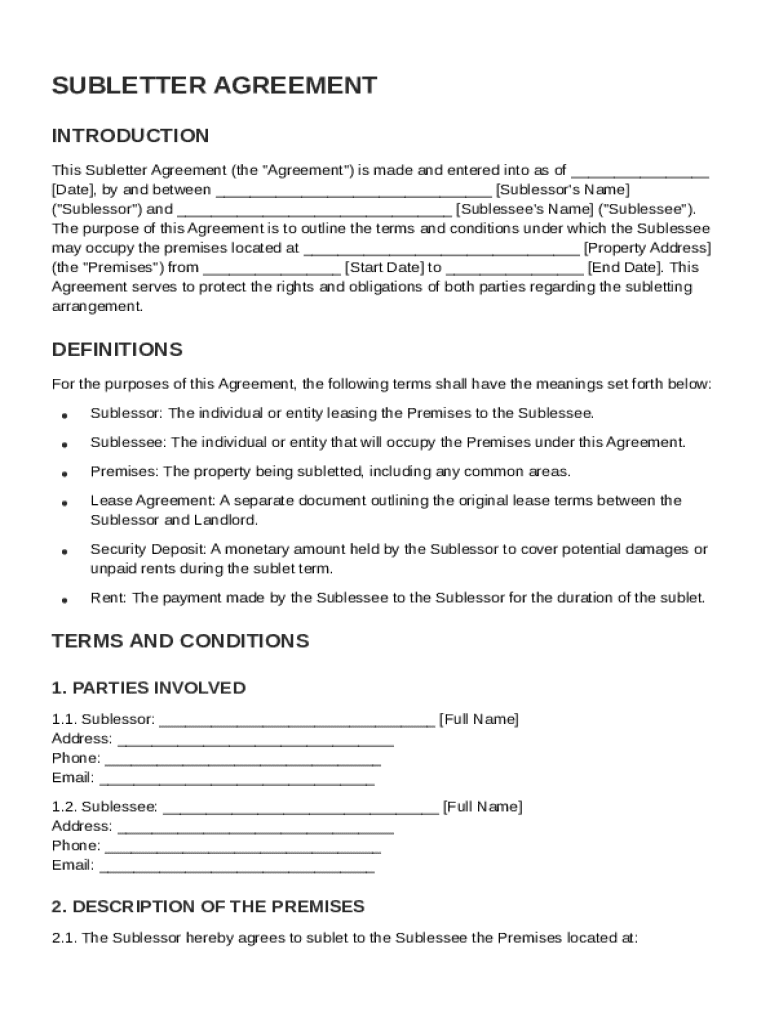
The Subletter Agreement Template is a legal document that outlines the responsibilities and obligations of both the sublessor and the sublessee in a subletting arrangement. This agreement is essential for informing all parties—landlord, sublessor, and sublessee—about the terms of occupancy of a rental property, which may include an apartment, house, or commercial space. It details critical components such as definitions of roles, rent payment details, security deposits, and the duration of the sublet. An effective subletter agreement helps ensure that the rights of both parties are protected and that there is a mutual understanding of the subletting conditions.
How to Use the Subletter Agreement Template
Using a Subletter Agreement Template effectively requires a thorough understanding of the form's structure and items. Start by reviewing each section of the template to ensure all relevant information is captured adequately. Here's a step-by-step guide:
- Identify the Parties: Clearly state the names and contact information of the sublessor, sublessee, and the original landlord.
- Property Details: Include the address and description of the rental property being subleased.
- Term of Sublease: Specify the start and end dates of the sublease period.
- Rent and Payment Instructions: Outline the rent amount, due date, and payment method.
- Security Deposit Terms: Document any security deposit requirements, including the amount and conditions for its return.
- Responsibilities and Maintenance: Define the maintenance responsibilities of the sublessee concerning the property.
- Termination Conditions: Detail the conditions under which the sublease can be terminated early by either party.
By using the template as a guide, parties can create a legally sound document that clearly defines their expectations and obligations.
Steps to Complete the Subletter Agreement Template
Completing a subletter agreement involves several steps to ensure that all aspects of the sublease arrangement are legally documented:
- Gather Required Information: Collect personal details of the sublessor and sublessee, property details, and any prior agreements with the landlord.
- Customize the Template: Modify the pre-existing fields in the template such as rent, lease term, and special conditions.
- Review Legal Terms: Ensure that legal terms such as governing law, indemnification, and dispute resolution methods are clearly articulated.
- Sign and Date the Agreement: Both parties must sign the agreement for it to be legally binding. Include the date of signing.
- Obtain Landlord Approval: If required, get the landlord’s written consent for the sublease.
By following these steps, both parties can confidently complete the subletter agreement, knowing that it provides legal protection and clarity.
Key Elements of the Subletter Agreement Template
Understanding the key elements of the Subletter Agreement Template ensures that all necessary aspects are thoroughly addressed:
- Identification of Parties: Includes the sublessor, sublessee, and landlord.
- Lease Duration: Detailed timeline for which the sublease is valid.
- Financial Obligations: Rent amount, due date, late fees, and security deposit requirements.
- Property Specifications: Description of the property being subleased, including amenities and condition notes.
- Consent and Permissions: Landlord approval requirements and permissions for property use.
- Responsibilities and Maintenance: Define who is responsible for maintenance and repair of the property.
- Exit Conditions: Lay out conditions under which the sublease can be terminated.
Properly detailing these elements helps prevent disputes and ensures both parties are aware of their responsibilities.
Legal Use of the Subletter Agreement Template
The Subletter Agreement Template is a legal tool used to document the terms of a sublease arrangement. Its legal use cases include:
- Documenting Agreements: Provides written proof of the terms agreed upon by the sublessor and sublessee.
- Protecting Rights: Safeguards the rights of both parties by ensuring that terms are explicitly stated.
- Complying with Lease Terms: Helps ensure that the sublease complies with the original lease agreement's terms and conditions.
- Resolution of Conflicts: Acts as a reference point during disputes regarding obligations and responsibilities.
It's essential to have the agreement reviewed by a legal expert to confirm compliance with local and state laws.
Examples of Using the Subletter Agreement Template
Consider a scenario where a college student needs to sublet their apartment during a summer internship in another city. The Subletter Agreement Template can be used to outline:
- A Three-Month Lease Term: With clearly defined start and end dates.
- Rent Payment Schedule: Detailing how the sublessee will pay rent monthly.
- Maintenance Responsibilities: Clearly states who handles specific maintenance issues.
- Security Deposits: Discuss terms for deposit transfer and return upon lease completion.
By providing clear guidelines and expectations upfront, the agreement helps avoid potential confusion and disputes.
Important Terms Related to Subletter Agreement Template
The Subletter Agreement Template involves several key terms that parties should understand:
- Sublessor: The original tenant who is subleasing the property to another party.
- Sublessee: The new tenant who takes on the rights and responsibilities of leasing the property from the sublessor.
- Landlord: The property owner who originally leased the property to the sublessor.
- Lease Agreement: The original contract between the landlord and the sublessor, which must be honored in the sublease.
- Security Deposit: An amount of money held as security for fulfillment of the lease, including property damage or unpaid rent.
- Governing Law: Legal jurisdiction and laws applicable to the sublease agreement.
Clarifying these terms helps ensure all parties understand their roles and obligations within the agreement.
State-Specific Rules for the Subletter Agreement Template
State-specific regulations can influence the terms of a subletting agreement. In some states, the landlord's consent for subleasing may be mandatory. Other states might impose restrictions on the maximum allowable rent increase during the sublease period. Understanding these nuances is critical:
- Landlord Approval: Verify if the landlord's consent is a prerequisite in your state.
- Rent Control Regulations: Check if laws in your area impact rent increases.
- Tenant's Rights: Familiarize yourself with state laws regarding tenant rights during subleasing.
- Security Deposit Limitations: Some states have regulations on how security deposits should be handled.
Consulting state-specific legal resources or seeking legal advice is advisable to ensure compliance.
Who Typically Uses the Subletter Agreement Template
Understanding who typically uses the Subletter Agreement Template can provide context for its application:
- College Students: Frequently use subletting during summer breaks or study abroad programs.
- Traveling Professionals: Individuals temporarily relocating for work assignments.
- Military Personnel: Relocate often and may need to sublet their housing when stationed elsewhere.
- Seasonal Travelers: People regularly moving between residences based on weather or employment.
These groups benefit from the structured protection that a subletter agreement offers, ensuring their interests are safeguarded during their absence.