






Definition & Meaning of Form CT-1041
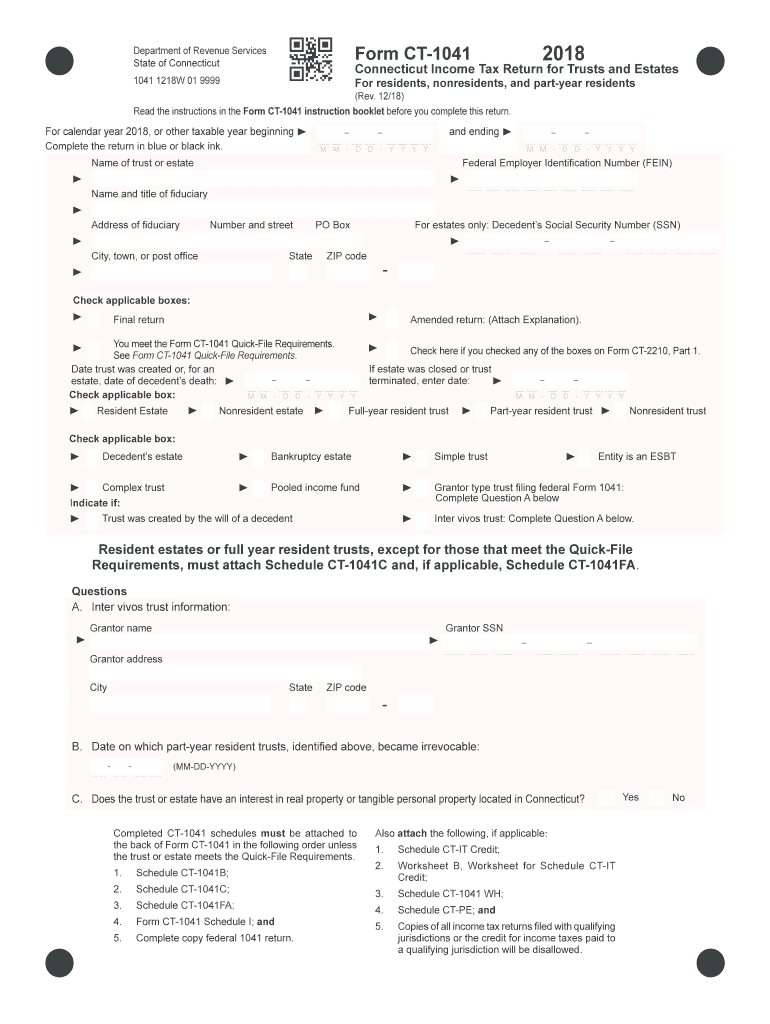
Form CT-1041 is the Connecticut Income Tax Return specifically designed for trusts and estates. This form is utilized to report the income, deductions, and credits of a trust or estate, and it determines any applicable Connecticut income tax liability. The document encompasses sections related to personal information, tax computation, payments, refunds, and essential schedules that must be attached during submission.
Components of Form CT-1041
- Personal Information Section: Includes details such as the name, address, and federal Employer Identification Number (EIN) associated with the trust or estate.
- Income Calculation: Outlines the methods for calculating taxable income, including gross income from various sources.
- Deductions and Credits: Lists allowable deductions and credits specific to trusts and estates.
- Tax Computation: Provides guidelines for calculating the total tax liability based on Connecticut tax laws.
- Payment and Refund Areas: Sections dedicated to detailing payments made and requesting refunds if applicable.
How to Use Form CT-1041
To effectively use Form CT-1041, a clear understanding of its sections and the required information is vital. Users must complete the form accurately to ensure compliance with Connecticut tax regulations for trusts and estates.
Step-by-Step Usage
- Gather Required Information: Collect all necessary financial statements, income documentation, and previous tax returns.
- Fill Out Personal Information: Complete the top section with the trust or estate’s identification details.
- Report Income: Accurately list all income sources, including dividends, interest, and any capital gains.
- Apply Deductions and Calculate Tax: Input applicable deductions and calculate the tax liability using the instructions provided.
- Review and Submit: Double-check all entries for accuracy before submitting the form by mail or online.
Steps to Complete the CT-1041
Completing Form CT-1041 requires a meticulous approach to ensure all financial data is correctly entered and that no section is overlooked.
Detailed Steps
- Step 1: Identify Reporting Period - Clearly state the tax year for which the return is being filed.
- Step 2: Enter Income Details - Input total income received by the trust or estate, including taxable and non-taxable sources.
- Step 3: Consider Deductions - Apply any relevant deductions that the trust or estate qualifies for, such as management fees or trustee costs.
- Step 4: Calculate Taxable Income - Deduct the allowable expenses from the total income to arrive at the taxable income figure.
- Step 5: Determine Tax Liability - Use Connecticut tax rates to compute the total tax liability.
- Step 6: Finalize the Submission - Attach all necessary schedules and documentation. Follow the filing instructions for submission via mail or electronic filing.
Filing Deadlines and Important Dates for CT-1041
Adherence to filing deadlines is crucial to avoid penalties and interest charges. Form CT-1041 has specific deadlines and important dates throughout the tax year.
Key Filing Dates
- Regular Filing Deadline: Typically falls on April 15 following the close of the tax year, aligning with federal income tax deadlines.
- Extension Filing: Automatic six-month extension available if Federal Form 7004 or CT-1041 EXT (Connecticut extension request) is filed and approved prior.
- Payment Deadlines: Estimated tax payments must align with Connecticut's quarterly schedule to avoid late penalties.
Required Documents for CT-1041
When preparing to file Form CT-1041, certain documents should be gathered to substantiate the income and deductions claimed.
Essential Documentation
- Income Statements: Include such documents as 1099 forms for interest, dividends, or other income.
- Expense Receipts: Provide documentation for deductible expenses like attorney fees or other administration costs.
- Previous Tax Returns: Include the previous year’s return to ensure accuracy in carryforward calculations.
Key Elements of Form CT-1041
Understanding the fundamental components and sections of Form CT-1041 is essential for proper filing and compliance.
Notable Sections
- Fiduciary Information Page: Collects fiduciary contact information and details about the financial structure of the trust or estate.
- Income Detail Section: Captures all sources of income relevant to the filing year.
- Tax Computation and Payments: Covers calculations for tax owed or refunds due and provides payment instructions.
Legal Use of Form CT-1041
Form CT-1041 must be used in accordance with Connecticut's tax laws and guidelines for trusts and estates. Non-compliance can result in penalties or audits.
Application and Compliance
- Legal Compliance: Adhere strictly to Connecticut tax codes when reporting income and deductions.
- Audit Preparedness: Maintain complete and accurate records as the form may be subject to audit by state tax authorities.
- Penalties: Be aware of legal ramifications and potential penalties for misreporting or failure to file by deadlines.
Penalties for Non-Compliance
Failure to comply with the filing requirements for Form CT-1041 can result in severe penalties and additional interest charges, making timely and accurate filing crucial.
Consequences of Non-Compliance
- Late Filing Penalties: Imposed on returns filed past the deadline without an approved extension.
- Underpayment Penalties: Charged on any tax payments not made by the due date or for underestimating taxes due.
- Interest on Unpaid Taxes: Accrued interest applies to any unpaid tax amount until it is fully paid to the state tax authority.
Who Typically Uses Form CT-1041
Form CT-1041 is primarily used by fiduciaries, which include trustees or executors of an estate, responsible for managing the financial affairs and filing tax returns on behalf of the trust or estate.
Common Users
- Trustees: Individuals appointed to manage assets placed in a trust.
- Executors: Representatives tasked with administering an estate as designated by a will.
- Corporate Fiduciaries: Institutions that serve as fiduciary agents for trusts or estates, often having professional tax preparers handle the filing.