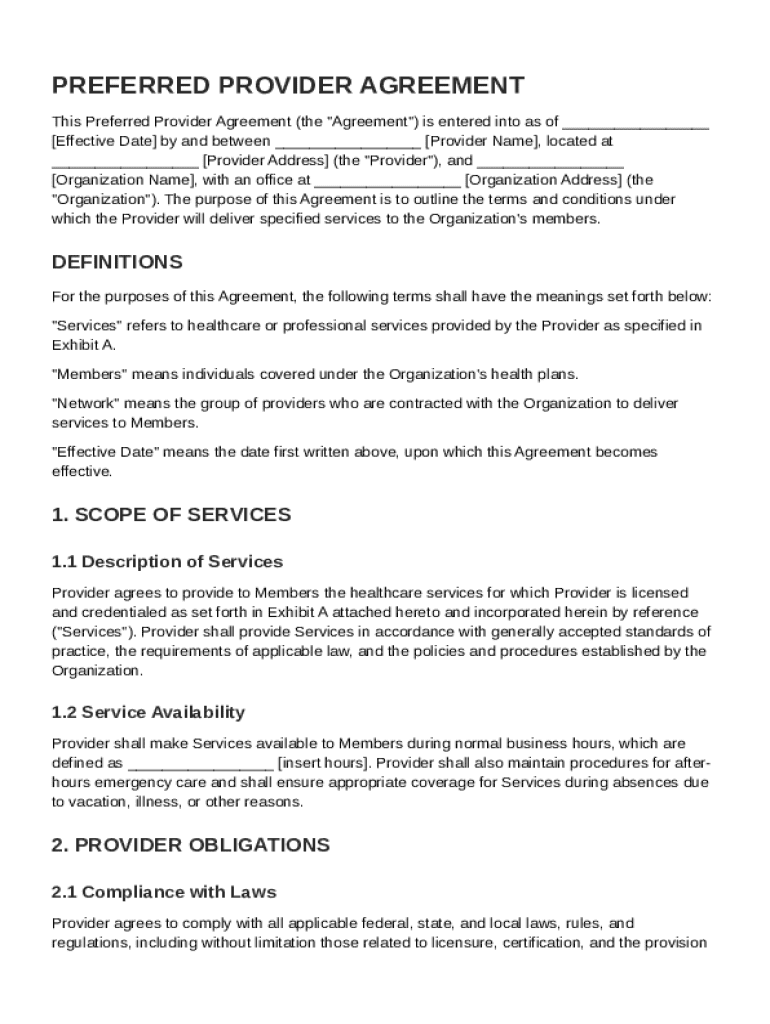







Definition & Meaning
A Preferred Provider Agreement Template is a document used to outline the terms and conditions between a healthcare provider and an organization for delivering specified services to the members of that organization. This template encompasses important aspects such as the scope of services to be provided, roles and responsibilities of the provider and the organization, compensation terms, and confidentiality requirements. The agreement is crucial for ensuring compliance with legal standards, maintaining quality assurance in service delivery, and defining the payment processes.
Key Components
- Scope of Services: Defines the range of services that the provider agrees to deliver to the organization’s members. This part is critical as it ensures that both parties have a clear understanding of the expectations and obligations involved.
- Provider Obligations: Outlines the duties and responsibilities that the provider must adhere to. This can include maintaining professional standards, serving a set number of clients, or reporting specific metrics.
- Organization Responsibilities: Specifies the commitments of the organization towards the provider, such as timely payment for services and facilitating the necessary access for service delivery.
Compensation Terms
Compensation terms clarify how the healthcare provider will be paid for their services. This section typically details the payment rates, frequency, and any conditions that may alter the payment structure. The clarity in compensation terms aids in preventing disputes between the provider and the organization, ensuring a smooth transactional relationship.
How to Use the Preferred Provider Agreement Template
The Preferred Provider Agreement Template is designed to serve as a comprehensive framework for establishing terms between a healthcare provider and an organization. Here's a step-by-step guide on how to utilize this template effectively:
- Download the Template: Access the template through trusted platforms or directly from the organization offering it.
- Customize the Details: Tailor the template to reflect specifics such as the services provided, payment details, and parties involved. Each section should accurately capture the unique aspects of the agreement.
- Consult with Legal Counsel: It's advisable to have the agreement reviewed by legal counsel to ensure compliance with relevant laws and regulations.
- Negotiate Terms: Discuss the provisions with the other party to reach a mutual agreement on all sections.
- Finalize the Document: Once both parties agree, finalize the template and consider it legally binding upon signatures from all parties involved.
Practical Examples
- Hospitals: A hospital using the template to contract external specialists such as cardiologists or radiologists to provide advanced services.
- Insurance Companies: Insurance firms entering agreements with healthcare providers to offer specific treatments to policyholders.
Steps to Complete the Preferred Provider Agreement Template
Completing the Preferred Provider Agreement Template involves several precise steps to ensure a clear, lawful, and mutual understanding between both parties. These steps should be followed carefully to protect the interests of all stakeholders involved:
- Identify Parties Involved: Clearly list the healthcare provider’s details and the organization’s contact information. This includes names, addresses, and relevant identification numbers.
- Define Service Scope: Explicitly describe the services to be offered by the provider, including any limits or conditions.
- Set Compensation Terms: Establish payment terms and schedule, including any variables that could affect payments.
- Insert Term Duration: State the effective dates and duration of the agreement, including start and end dates.
- Detail Termination Conditions: Clearly define the grounds upon which the agreement can be terminated by either party.
- Outline Confidentiality Requirements: Specify how proprietary and sensitive information will be handled and protected.
- Review and Sign: Conduct a thorough review to ensure all details are accurate before all parties sign the document.
Considerations and Edge Cases
- Amendments: Specify how amendments to the agreement can be made and documented.
- Dispute Resolution: Include terms for resolving disputes, such as mediation or arbitration, to avoid litigation.
Key Elements of the Preferred Provider Agreement Template
The Preferred Provider Agreement Template contains several core elements necessary for clearly defining the contractual relationship:
Primary Sections
- Definitions: Provides clarity on specific terms used throughout the agreement.
- Licensing Requirements: Specifies that providers must maintain necessary licenses and accreditations.
- Quality Assurance: Details expectations for maintaining service quality standards.
Additional Clauses
- Indemnification Clauses: Protects the organization from liabilities due to the provider’s conduct.
- Miscellaneous Provisions: Covers clauses such as force majeure, governing law, and complete agreement clauses to ensure the agreement is comprehensive.
Real-World Example
A medical group enters into a Preferred Provider Agreement with an HMO, detailing each party's responsibilities and services such as preventive care, specialist consultations, and diagnostic tests, ensuring the organization’s members receive consistent and standardized healthcare services.
Legal Use of the Preferred Provider Agreement Template
Ensuring the legal compliance of the Preferred Provider Agreement Template is crucial when forming a binding contract between a healthcare provider and an organization. Key legal considerations include:
- Compliance with State and Federal Laws: Adhering to healthcare laws and regulations such as HIPAA for patient privacy.
- Licensure Verification: Providers must possess the appropriate licenses to deliver the agreed services.
- Enforcement of Agreements: The contract should be legally enforceable, with all rights and obligations clearly defined.
Case Study
An urgent care chain utilizes the template to formalize provider arrangements across multiple states, ensuring each agreement reflects local laws and licensing requirements, safeguarding both parties from legal risks and non-compliance issues.
State-Specific Rules for the Preferred Provider Agreement Template
The Preferred Provider Agreement Template often requires customization to align with state-specific regulations. Different states may have varying requirements regarding healthcare provider agreements, and it’s essential to incorporate these into the template.
Examples of Variations by State
- California: Emphasis on patient privacy and specific consent requirements under state law.
- Texas: Specific disclosure models related to network adequacy and provider exclusion policies.
- New York: Detailed requirements about billing practices and transparency with patients.
Practical Implications
When a healthcare provider plans to deliver services across multiple states, understanding state-specific regulations ensures that each agreement meets local law requirements, helping to avoid potential legal disputes and operational delays.
Software Compatibility
DocHub’s features enhance the ease of managing Preferred Provider Agreements by offering compatibility with various software solutions. Integration with platforms such as Google Workspace ensures that agreements can be accessed, edited, and shared effortlessly.
Supported Formats
- PDF: Standard file format for professional documentation.
- DOC & DOCX: Allows for text-heavy contractual documents.
- XLS: Useful for managing and analyzing compensation or service data.
Integration Benefits
By incorporating Preferred Provider Agreements into a system that interacts seamlessly with common cloud storage systems, both parties can facilitate a smooth contract management process, streamline revisions, and maintain up-to-date documents without the hassle of manual transfers and formatting issues.