Definition & Significance of a Software NDA Agreement
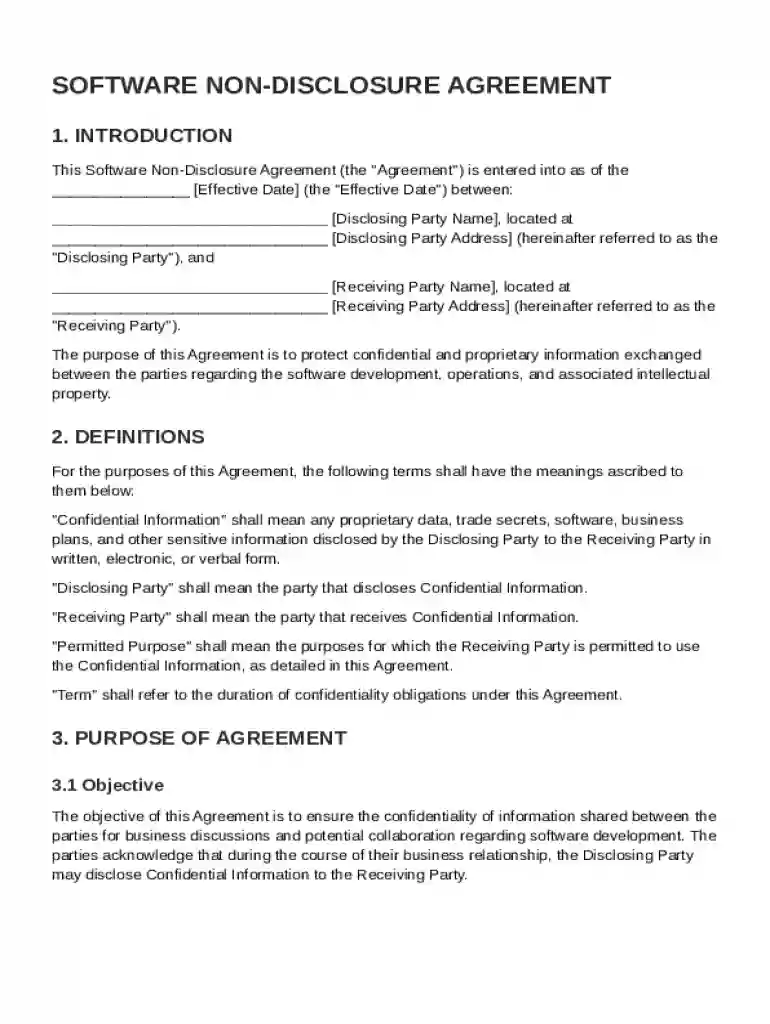
A Software Non-Disclosure Agreement (NDA) is a critical legal document formulated between two parties – the Disclosing Party and the Receiving Party. Its primary purpose is to safeguard confidential and proprietary information related to software development. This agreement delineates the parameters of confidentiality, ensuring protection against unauthorized use and disclosure of sensitive data. By specifying obligations, the agreement establishes trust and facilitates secure exchanges of information necessary for business collaborations.
- Key Components: It enlists the type of information considered confidential and proprietary, the obligations of the Receiving Party to maintain secrecy, and the time span for which confidentiality should be upheld.
- Implications for Software Companies: This agreement is particularly vital for software companies who often deal with innovations, source codes, algorithms, and strategic information that need sheltering from misuse.
How to Use the Software NDA Agreement Template
Using a Software NDA Agreement Template streamlines the creation of a legally binding document. It aids in ensuring that all critical areas are covered without requiring legal expertise.
-
Step-by-Step Guidance:
- Personalize Template Details: Insert specific details pertinent to the parties involved and the nature of the confidential information.
- Review Clauses: Ensure all clauses align with your company's needs, tailoring sections relating to confidentiality obligations and enforcement timelines.
- Include Specifics: Add any additional terms essential for your agreement, such as jurisdiction or dispute resolution mechanisms.
-
Examples of Practical Usage: Companies undergoing joint software development projects often rely on these templates to guarantee mutual confidentiality.
Key Elements of the Software NDA Agreement Template
The Software NDA Agreement Template typically comprises several key sections, each addressing different aspects of the confidentiality agreement.
- Confidential Information Definition: Clarifies what constitutes confidential information to prevent ambiguity.
- Confidentiality Obligations: Details the duties of the Receiving Party to maintain the secrecy of the disclosed information.
- Duration of Agreement: Specifies how long the confidentiality obligations remain in effect, often extending beyond the end of the business relationship.
- Exclusions: Identifies information that will not be classified as confidential.
Steps to Complete the Software NDA Agreement Template
Completing this template correctly is crucial to ensure its legality and effectiveness.
-
Follow These Steps:
- Detail the Parties: Clearly list both Disclosing and Receiving Parties with full names and addresses.
- Specify the Scope: Outline the specific scope and purpose for the exchange of information.
- Finalize Terms and Conditions: Use precise language to define terms such as 'confidential information' and 'disclosure'.
- Review and Amend: Examine for any necessary modifications that better fit the specific needs of your project or partnership.
-
Consideration of Legal Counsel: It can be beneficial to have the document reviewed by legal professionals to ensure compliance with pertinent laws.
Legal Use of the Software NDA Agreement Template
These templates must be used legally to ensure an enforceable agreement.
-
Compliance with Laws: The NDA should comply with applicable laws and legal standards within the jurisdiction of the agreement.
-
Electronic Signatures: Using platforms like DocHub, electronic signatures appended to the template maintain legality under the ESIGN Act.
Important Terms Related to Software NDA Agreement
Understanding the terminologies and clauses used within an NDA is essential for both parties involved.
- Examples of Key Terms:
- Non-Use Obligations: Prohibits parties from using the confidential information for any purposes other than what is stipulated in the agreement.
- Non-Disclosure Obligations: Ensures that neither party discloses information beyond what is necessary for the execution of the contract.
- Termination Conditions: Outlines the specifics of when and how an agreement can be terminated.
Who Typically Uses the Software NDA Agreement Template
A wide range of individuals and businesses find these templates indispensable.

- Common Users:
- Software Developers and Engineers: During collaborative projects or potential partnerships.
- Startups and Tech Companies: Engaging with potential investors or partners and needing to protect their proprietary assets.
- Freelancers and Consultants: When dealing with client information that entails confidentiality.
State-Specific Rules for the Software NDA Agreement Template
Although a Software NDA is widely applicable, state-specific rules can influence certain provisions.
-
Examples of Variations:
- Duration Limits: Some states may impose restrictions on how long confidentiality can legally be enforced.
- Terms of Enforceability: Differences in the enforceability of certain NDA clauses might exist, impacting how information is protected.
-
Recommendation: Verify state laws to ensure that your NDA is both compliant and enforceable within your designated jurisdiction.