
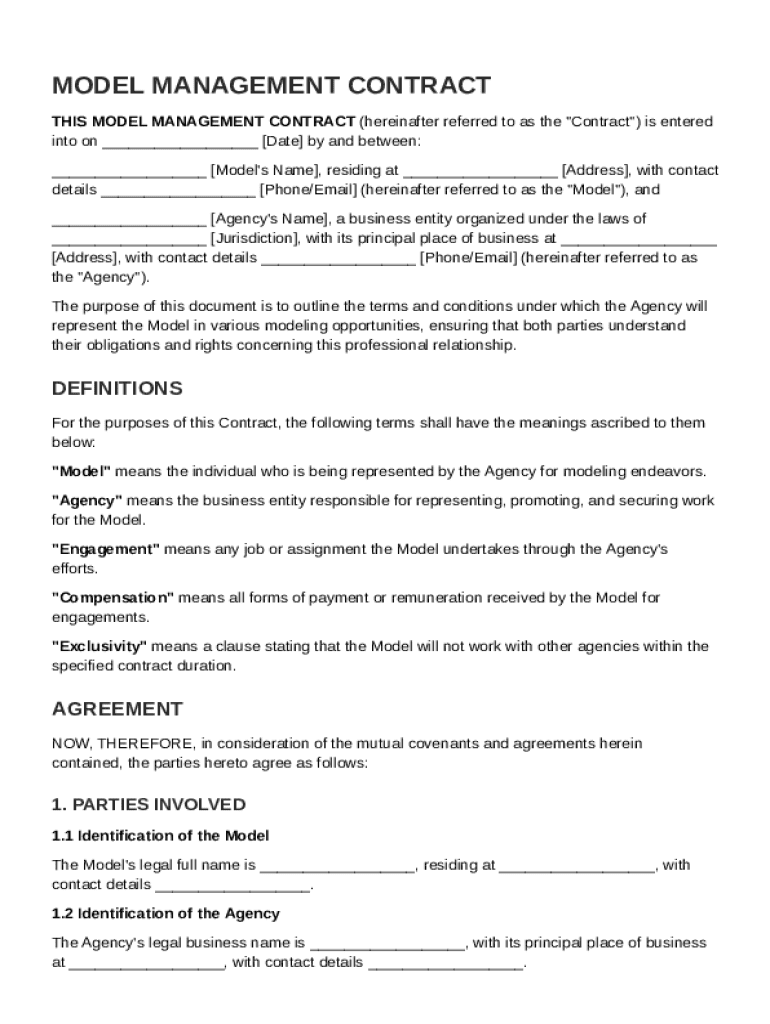







Definition & Meaning
A Model Management Contract Template serves as a foundational document between a model and an agency. This legal form outlines the terms of their professional relationship, giving both parties clarity on their roles and responsibilities. It captures the essential details such as the scope of services, compensation agreements, and exclusivity clauses. This document ensures both the model and agency understand their obligations, reducing misunderstandings and protecting their interests. With this template, agencies and models can formalize their business arrangements professionally and efficiently.
Key Elements of the Model Management Contract Template
The Model Management Contract Template includes several critical sections. These sections govern various aspects of the professional relationship:
- Scope of Services: A detailed description of the services the model is expected to provide, whether for photoshoots, runway shows, or endorsements.
- Compensation Structure: Explains how the model will be paid, including any commissions or fees the agency may deduct.
- Exclusivity Agreements: Defines whether the model is exclusively represented by the agency or if they can pursue opportunities through multiple agencies.
- Confidentiality Obligations: Mandates the protection of sensitive or proprietary information shared during their professional engagements.
- Indemnification Clauses: Offers protection for both parties against any potential legal claims arising from the performance of their duties.
- Governing Law: Specifies which jurisdiction's laws will apply in case of disputes or legal proceedings.
These elements ensure both parties have clear expectations and legal protection.
Important Terms Related to Model Management Contract Template
Understanding the terminologies used in the Model Management Contract is crucial:
- Agent/Agency: The party responsible for representing the model and securing opportunities.
- Model Release: A clause that authorizes the use of the model’s likeness in advertisements, campaigns, or other media.
- Booking Fees: Charges associated with securing a modeling job, often absorbed by the client.
- Termination Conditions: Specifies how either party can end the contract, including any penalties or notice periods.
- Client: The third party for whom the modeling services are performed, often a brand or photographer.
Proper comprehension of these terms can help models and agencies avoid misinterpretations.
How to Use the Model Management Contract Template
Using the Model Management Contract Template involves several key steps:
- Customizing the Template: Adapt the template to reflect specific terms that both the model and agency agree upon, such as particular services or payment terms.
- Filling Out Details: Include relevant information like names, addresses, and contact details of each party involved.
- Reviewing for Accuracy: Both parties should review the contract to ensure all information is accurate and complete.
- Legal Consultation: Consider having a legal professional review the contract for compliance with local laws and industry standards.
Following these steps aids in the creation of a comprehensive contract that stands up to legal scrutiny.
Who Typically Uses the Model Management Contract Template
The Model Management Contract Template is used by various professionals within the modeling and fashion industries:
- Models: Individuals who perform modeling work and need to outline their professional terms with agencies.
- Modeling Agencies: Organizations that manage models’ careers by promoting them and securing jobs.
- Legal Teams: Professionals providing legal services who draft or review these contracts to uphold compliance.
- Fashion Industry Employers: Businesses or individuals hiring models for projects such as photoshoots, fashion shows, or promotional events.
This wide range of users ensures the template's versatility and practical application throughout the industry.


Legal Use of the Model Management Contract Template
The Model Management Contract Template provides a legally binding framework:
- ESIGN Act Compliance: Features for electronic signing ensure the document is compliant with legal standards for electronic transactions.
- Adaptability to Jurisdictions: The template can be tailored to meet different legal requirements of various states or countries.
- Confidential Clauses: Privacy and confidentiality clauses protect sensitive information and intellectual property rights.
Leveraging the legal robustness of the template prevents potential disputes and protects everyone involved in the modeling work.
State-Specific Rules for the Model Management Contract Template
State regulations may affect the content and enforceability of a Model Management Contract:
- Employment Laws: Labor laws can differ significantly from one state to another, affecting payment terms or working conditions.
- Contractual Clauses: Certain clauses may need modifications to meet state-specific legal standards.
- Licensing Requirements: Agencies may need to adhere to specific licensing laws to operate within certain states.
It is crucial for the parties to adjust the template according to the state laws applicable to their contract to ensure compliance and enforceability.
Steps to Complete the Model Management Contract Template
Finishing the contract template requires careful attention to detail:
- Fill in the Parties’ Information: Make sure all contact and identifying information is current and correct.
- Outline the Services Provided: Specify the modeling activities and responsibilities.
- Discuss and Agree on Payment Terms: Establish how and when the model will be compensated.
- Address Legal Considerations: Include necessary legal language about rights, obligations, and indemnities.
- Proofread Final Draft: Verify all details to avoid errors.
- Sign and Distribute Copies: Both parties should sign the document; then each should retain a copy.
These steps conclude the creation of a well-structured contract, ensuring both clarity and functionality.
Examples of Using the Model Management Contract Template
The Model Management Contract Template is used in various scenarios:
- Freelance Modeling Work: Independent models can use the template to secure terms and conditions with multiple agencies.
- Long-term Modeling Engagements: Agencies employ contracts for models they represent on an ongoing basis, specifying long-term working arrangements.
- Event-specific Contracts: Models hired for specific events, like fashion shows or photoshoots, can use short-term contractual agreements delineated in the template.
These examples underscore the flexibility of the template's application within the modeling industry, enabling clear communication and agreement on essential details.




