






Understanding the TDOC Visitation Form
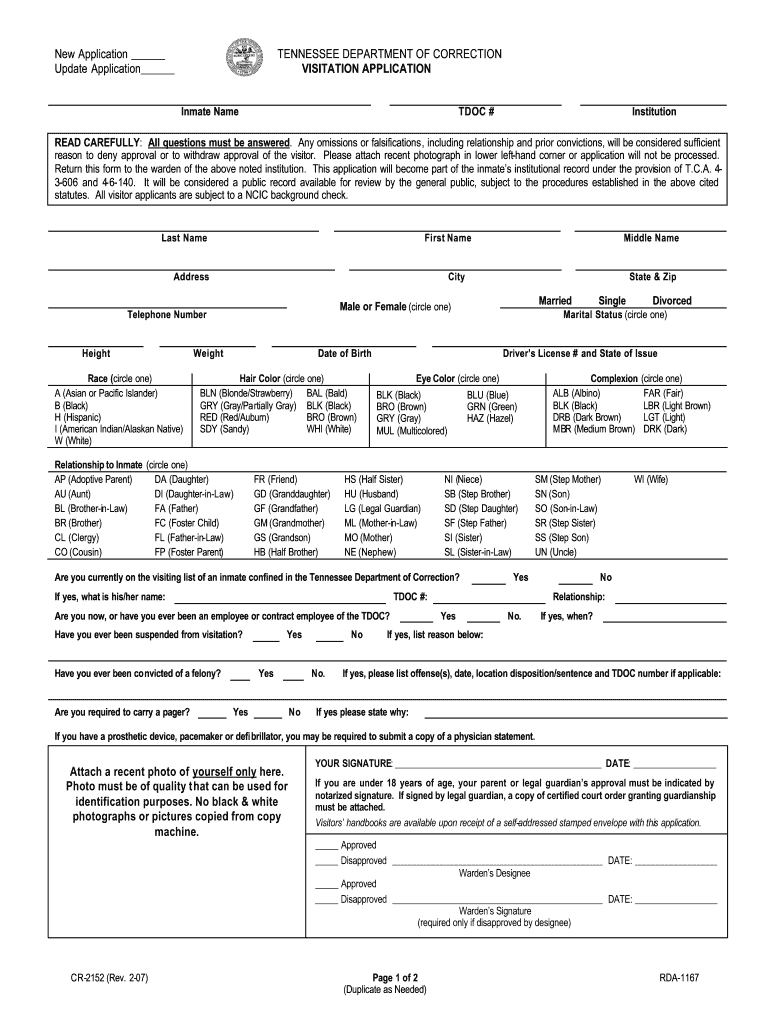
The TDOC visitation form is a critical application for individuals wishing to visit inmates in Tennessee correctional facilities. This form is essential for ensuring that all visitors meet the required criteria set by the Tennessee Department of Correction (TDOC). The application gathers detailed personal information about the visitor and primarily focuses on the visitor's relationship with the inmate. It also addresses prior convictions, if any, which can affect visitation eligibility.
Purpose of the TDOC Visitation Form
The purpose of the TDOC visitation form is multifaceted. It serves to:
- Ensure security and safety within correctional institutions.
- Maintain appropriate visitation protocols.
- Collect background information on potential visitors.
- Facilitate the approval process for each visitation request.
Each application undergoes thorough verification to ensure compliance with TDOC rules, which ultimately enhances the safety of both the inmates and the facilities.
Step-by-Step Instructions to Complete the Form
Completing the TDOC visitation form requires attention to detail. Here’s a simplified guide to assist you through the process:
- Access the Form: Obtain the form from the official TDOC website or from the specific correctional facility's resources.
- Personal Information Section: Fill in your full name, address, date of birth, and other identifying information.
- Relationship to Inmate: Clearly state your relationship with the inmate. This information is crucial for the approval process.
- Criminal History Disclosure: Provide any prior convictions honestly, as this will be verified during the review process.
- Parental Consent: If a minor is applying to visit, ensure that the parental consent section is completed accurately.
- Submission: Submit the completed form directly to the institution's warden as specified in the instructions.
Ensure all sections are complete to avoid delays in processing.
Important Visitation Rules
Understanding the visitation rules established by the TDOC is essential for a smooth visitation process. Important rules typically include:
- Visitation Schedule: There are specific days and hours when visitations are allowed. Familiarize yourself with these schedules to plan your visit.
- Visitor Dress Code: Adherence to the dress code is mandatory. Generally, clothing should be modest and not revealing.
- Items Allowed: Personal items such as bags and cell phones may be prohibited in the visitation area. Check the specific facility's list of acceptable items.
- Behavior During Visits: Proper conduct is expected during visitation hours. Any inappropriate behavior can lead to termination of the visit and potential future restrictions.
Parental Consent and Minor Visitations
When applying for a minor to visit an inmate, the TDOC visitation form requires parental consent. This section includes information about:
- Permission: Parents or legal guardians must grant permission for minors to visit.
- Identification: Bring valid identification documents for both the minor and accompanying adult.
- Special Guidelines: Each facility may have additional rules governing visits that include minors, such as required adult supervision and specific visitation areas.
Confirm with the specific facility regarding any extra requirements to reduce potential issues on the visitation day.
Tracking the Application Status
Once the TDOC visitation form is submitted, applicants may wish to track the status of their application. Here’s how to do it:
- Contact the Facility: Reach out to the correctional facility where you submitted the application. Each facility has management responsible for handling visitation requests.
- Ask for Confirmation: Inquire if you can receive confirmation of your application submission and request an estimated processing time.
- Document Review: Be prepared to provide your identification information or fact-specific details to verify your request.
What to Do if Denied Visitation
If your application for visitation is denied, the TDOC typically provides reasons for the denial. Understanding these reasons is vital for addressing any issues. Common next steps might include:
- Review Denial Notice: Carefully examine the notification for specific reasons for denial.
- Correction Process: If the denial relates to omitted or incorrect information, correct those elements and reapply.
- Appeal the Decision: In some cases, there may be an appeal process available. Check with the TDOC for any potential recourse options.
Exploring these avenues can offer a way forward if initially denied visitation rights.
Conclusion
The TDOC visitation form is a vital document for maintaining the structure and safety of visitation policies in Tennessee correctional facilities. By understanding the form's requirements and following these guidelines, visitors can navigate the approval process more effectively.