




01. Edit your sars travel logbook online
Type text, add images, blackout confidential details, add comments, highlights and more.

Type text, add images, blackout confidential details, add comments, highlights and more.

Draw your signature, type it, upload its image, or use your mobile device as a signature pad.

Send sars travel logbook template via email, link, or fax. You can also download it, export it or print it out.
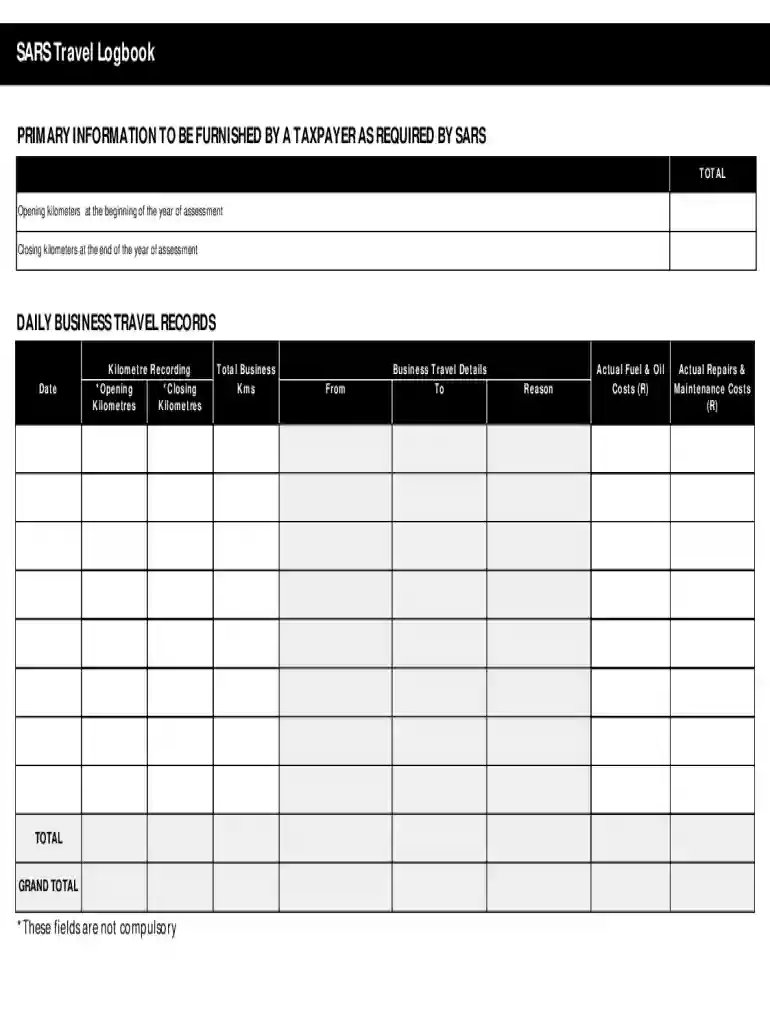
The SARS travel logbook is a crucial tool for taxpayers in South Africa who receive a travel allowance. Its primary purpose is to document business-related travel expenses accurately. The logbook captures essential information, including odometer readings, dates of travel, and details about the destinations visited. By utilizing this logbook, taxpayers can substantiate their claims for deductions on their income tax returns, ensuring compliance with the South African Revenue Service (SARS) regulations.
Maintaining a comprehensive record in the SARS travel logbook allows taxpayers to maximize their deductions and provides a safeguard against potential audits by SARS.
To effectively use the SARS travel logbook, begin by documenting your odometer readings at the start and end of each business trip. It is essential to include specific details regarding the trip, such as the date of travel, purpose, and any associated expenses. Here’s a systematic approach to utilizing the logbook:
Recording Odometer Readings:
Detailing Travel Purpose:
Documenting Expenses:
This organized approach enables taxpayers to provide clear evidence of their business travel, aiding in deductible claims when filing tax returns.
Completing the SARS travel logbook can be done systematically to ensure accuracy and compliance. Follow these steps:
Start the Logbook:
Log Each Trip:
Detail Expenses:
Monthly Review:
Regularly maintaining the logbook helps mitigate the risk of discrepancies during tax filing or audits by SARS.
Understanding the terminology associated with the SARS travel logbook can enhance clarity when using it. Here are some key terms:
Familiarity with these terms can streamline the process of completing and using the travel logbook effectively.
To illustrate the practical application of the SARS travel logbook, consider two scenarios:
Scenario 1: Client Meeting in Another City
Scenario 2: Attending a Conference
These scenarios exemplify how consistent log management can contribute to more precise tax deductions based on business travel.
We've got more versions of the sars travel logbook form. Select the right sars travel logbook version from the list and start editing it straight away!
At DocHub, your data security is our priority. We follow HIPAA, SOC2, GDPR, and other standards, so you can work on your documents with confidence.


