






Definition and Meaning of the Treatment Agreement Template
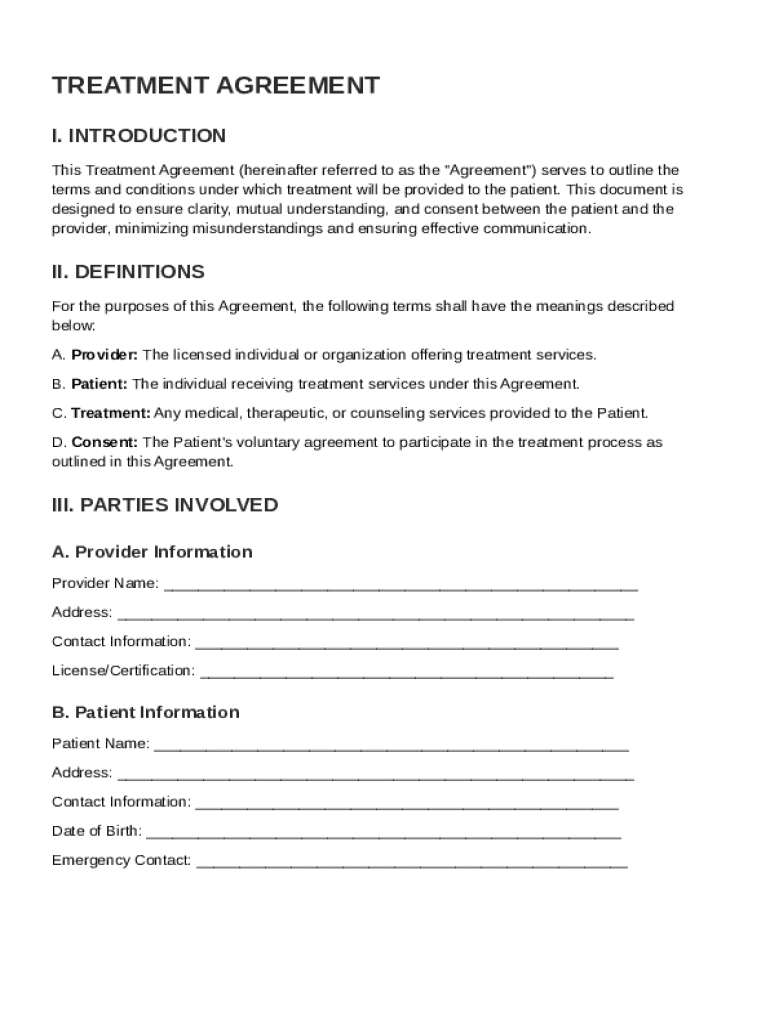
The Treatment Agreement Template is a formal document that outlines the terms and conditions of a treatment plan between a healthcare provider and a patient. This template ensures mutual understanding and consent by detailing the roles, responsibilities, and expectations of both parties involved. Key components often include the scope of treatment, confidentiality agreements, risks and benefits, financial obligations, and termination conditions. By emphasizing informed consent, the template ensures that patients are fully aware of what the treatment entails and the various legal implications.
How to Use the Treatment Agreement Template
To effectively utilize the Treatment Agreement Template, follow these steps:
-
Customization: Begin by inputting specific details such as the name of the provider, patient name, and treatment specifics. Adjust sections to align with the nature of the treatment and any particular policies of the healthcare entity.
-
Clarification: Clearly define the treatment’s scope, including expected outcomes, procedures involved, and timeframes. This helps set realistic expectations for the patient.
-
Confidentiality and Security: Outline how the patient's data will be handled, emphasizing compliance with privacy laws such as HIPAA in the U.S.
-
Financial Terms: Detail the financial obligations, including payment schedules, insurance coverage specifics, and potential additional costs.
-
Review and Consent: Allow both parties to review the agreement. Answer any questions the patient may have and ensure they fully understand the document before signing.
-
Documentation: Once completed, both the provider and the patient should retain copies of the signed agreement for their records.
Steps to Complete the Treatment Agreement Template
Completing the Treatment Agreement Template involves several key steps that ensure accuracy and clarity:
-
Gather Information: Before filling out the template, collect all necessary information regarding the treatment plan, provider details, and patient’s medical history.
-
Fill Required Fields: Enter detailed information into the template, including names, contact information, and specific treatment procedures.
-
Specify Terms and Conditions: Document the terms of treatment, including any required patient actions, restrictions, and compliance expectations.
-
Incorporate Legal Terms: Ensure the inclusion of legal statements related to consent, liability, and dispute resolution in line with state and federal regulations.
-
Review with Legal Counsel: It's often beneficial to have legal counsel review the agreement to ensure all aspects are comprehensively covered and legally binding.
-
Patient Review: Provide the patient ample time to review the agreement, encouraging questions to facilitate understanding and agreement.
Key Elements of the Treatment Agreement Template
The Treatment Agreement Template generally comprises several essential elements:
- Treatment Details: Comprehensive description of the treatment methodology, expected outcomes, and duration.
- Responsibilities: Clear delineation of the responsibilities of both patient and provider to ensure compliance and coordination.
- Confidentiality Clause: Sections that safeguard patient privacy and data security in compliance with legal standards.
- Financial Arrangements: Detailed explanation of fees, insurance participation, payment schedules, and any potential additional costs.
- Termination Conditions: Clauses specifying conditions under which the treatment agreement can be terminated by either party.
Legal Use of the Treatment Agreement Template
The legal use of a Treatment Agreement Template ensures that both parties are protected and fully informed of their rights and obligations. This document acts as a binding contract that can be referenced in cases of disputes or non-compliance. Adherence to legal standards such as HIPAA in the United States is critical for maintaining confidentiality and data protection. It's important that legal counsel reviews the document to confirm it meets all regulatory requirements and includes necessary protective clauses.
Important Terms Related to Treatment Agreement Template
Understanding key terms within the Treatment Agreement Template is crucial:
- Informed Consent: The process by which a patient voluntarily confirms their willingness to undergo a particular treatment based on a clear appreciation and understanding of the facts, implications, and consequences.
- Confidentiality: The obligation to protect personal information from unauthorized access.
- Termination Clause: A provision outlining the circumstances under which the agreement may be concluded.
- Financial Obligation: Obligations related to costs, including fees for services rendered and insurance details.
- Scope of Treatment: Description of services provided, including procedures, duration, and expected outcomes.
State-Specific Rules for the Treatment Agreement Template
The Treatment Agreement Template must be adapted to accommodate state-specific regulations, affecting terms such as confidentiality, patient rights, and consent procedures.
- Regulatory Compliance: Each state may have distinct laws regarding medical consent and privacy. Templates need precise language to comply with local laws.
- Standard Treatments: States might provide guidelines on what standard treatments should be included or highlighted according to prevalent state health issues.
- Financial Specifications: Some states enforce specific stipulations regarding billing practices and insurance claim processes. Providers must ensure compliance with these rules to avoid legal action.
Examples of Using the Treatment Agreement Template
Real-world scenarios where the Treatment Agreement Template proves invaluable:
- Chronic Treatment Conditions: For ongoing treatments such as diabetes management, a detailed agreement helps ensure both provider and patient understand long-term responsibilities.
- Psychiatric Care: This template provides a clear outline of therapeutic goals, confidentiality details, and patient responsibilities critical in mental health treatments.
- Surgical Procedures: Prior to surgery, both parties can clarify all potential risks, recovery expectations, and post-operative care requirements through a structured agreement.