






Definition & Meaning
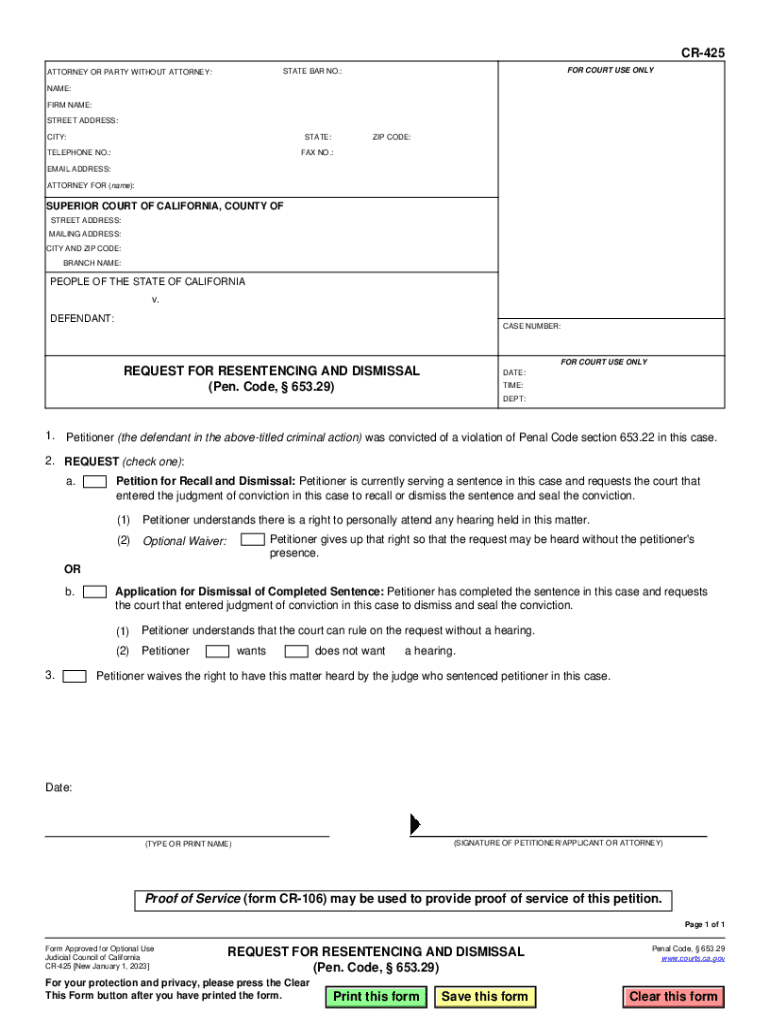
The CR-425 is a legal form used in the Superior Court of California for requesting the resentencing and dismissal of a conviction under Penal Code section 653.29. This critical document serves individuals seeking to adjust their legal standing, either by recalling and dismissing a current sentence or by expunging a completed sentence. It is frequently sought by petitioners aiming to rectify or alter previous judicial outcomes, thereby impacting their criminal record. This process can influence future employment opportunities and personal rights, making understanding the CR-425 vital for those affected.
How to Use the CR-425
Effectively using the CR-425 requires a clear understanding of its purpose and structure. Petitioners must provide detailed personal information, express their preference for a court hearing, and append their signature to submit the form officially. Ensuring that all necessary fields are filled accurately is critical, as errors can lead to delays or denials. It's advisable to review the form instructions or consult legal counsel to guarantee a comprehensive and correct submission. Furthermore, individuals should consider how their responses and the supporting evidence they attach will be interpreted by the court when deciding on their request.
How to Obtain the CR-425
The CR-425 is accessible through various channels, reflecting its importance in legal adjustments. Individuals can acquire the form from the California court's official website, allowing for immediate download and completion. Alternatively, the form may be available at local court offices where legal professionals or court clerks can offer direct assistance. Ensuring receipt of the most current form version is essential, as outdated documents may not be accepted, leading to procedural complications.
Steps to Complete the CR-425
Completing the CR-425 involves a series of precise steps designed to ensure accurate information submission. Begin by entering personal details, including your full name and contact information, followed by the specifics of your conviction under Penal Code section 653.29. It's crucial to indicate clearly whether you are requesting a recall and dismissal of a current sentence or seeking to expunge a past conviction. Next, decide if you'd like a hearing and mark your preference accordingly. Finally, verify the provided information for completeness before signing the document. Ensuring that all required information is present and correct is imperative for successful processing.
Key Elements of the CR-425
Several crucial elements compose the CR-425, each serving a specific purpose within the legal process. A comprehensive statement of personal information, crime details, and preferred legal outcomes are necessary components. Petitioners must outline whether they are requesting the recall of a current sentence or the expungement of a completed one. Additionally, the choice regarding a court hearing is critical, as it impacts how the case is reviewed. The signature section validates the request, affirming the petitioner's willingness to proceed with their plea under the specified legal parameters.
Legal Use of the CR-425
The CR-425 plays a pivotal role in the legal and judicial landscape by offering individuals a mechanism to request conviction adjustments. Its use is primarily lawful and is intended to provide a fair means for petitioners to seek reconsideration from the court. For those who believe their case merits a second look—due to new evidence, changes in law, or rehabilitation efforts—the CR-425 acts as a trusted vehicle for initiating such dialogue with the judiciary. Legal professionals often guide on how best to interpret the form's instructions, ensuring an aligned approach with current legal standards.
Important Terms Related to the CR-425
Understanding the terminology associated with the CR-425 is essential for proper navigation through the legal system. Terms such as "resentencing," "dismissal," and "expungement" feature prominently, each denoting different legal outcomes. "Resentencing" involves reviewing and potentially reducing an existing sentence, while "dismissal" implies removing a conviction from a person's record. "Expungement" is the formal process of sealing past records, essentially rendering the conviction invisible in most standard background checks. Familiarity with these terms aids applicants in making informed decisions aligning with their desired legal results.
State-Specific Rules for the CR-425
While the CR-425 is utilized throughout California, perpetrators should be aware of any distinctions that may arise due to regional regulations or judicial interpretations. State-specific rules can influence how the CR-425 is processed and what supplemental documentation is required. For instance, varying jurisdictions within California may have unique requirements for supporting evidence or technical specifications concerning submission formats. Applicants are encouraged to contact local court officials to verify if additional regulations affect their form completion process.
Examples of Using the CR-425
Practical usage examples of the CR-425 demonstrate its application across various scenarios. A typical case might involve an individual who has completed their sentence seeking expungement to enhance career prospects uninhibited by past legal blemishes. Another scenario could revolve around currently sentenced individuals advocating for altered penalties due to rehabilitation progress or shifting societal norms surrounding their initial conviction. These examples highlight both the diversity of its applicability and its importance in initiating meaningful change within legal frameworks.
Filing Deadlines / Important Dates
Adhering to defined deadlines is a critical aspect of navigating the CR-425's successful submission and evaluation. Each case may have specific filing deadlines imposed by local courts or overarching legal standards in California. Being informed about these time constraints ensures that requests for resentencing or dismissal are considered timely and given due attention by the judiciary. Missing these key dates can lead to missed opportunities for case reviews, highlighting the need for organized and prompt action by those seeking legal redress.
Form Submission Methods
There are multiple ways to submit the CR-425, reflecting the form's adaptability to individual circumstances. Submissions can be made online via electronic court portals, offering convenience and speed in processing. For those preferring traditional routes, mail-in alternatives remain available, initiating the form's journey through standard postal channels. In-person submissions at court offices provide opportunities for direct consultations with administrative staff, catering to applicants requiring personalized assistance. Each method incorporates its nuances, with timelines varying according to the chosen submission approach.