






Definition and Meaning of the Form
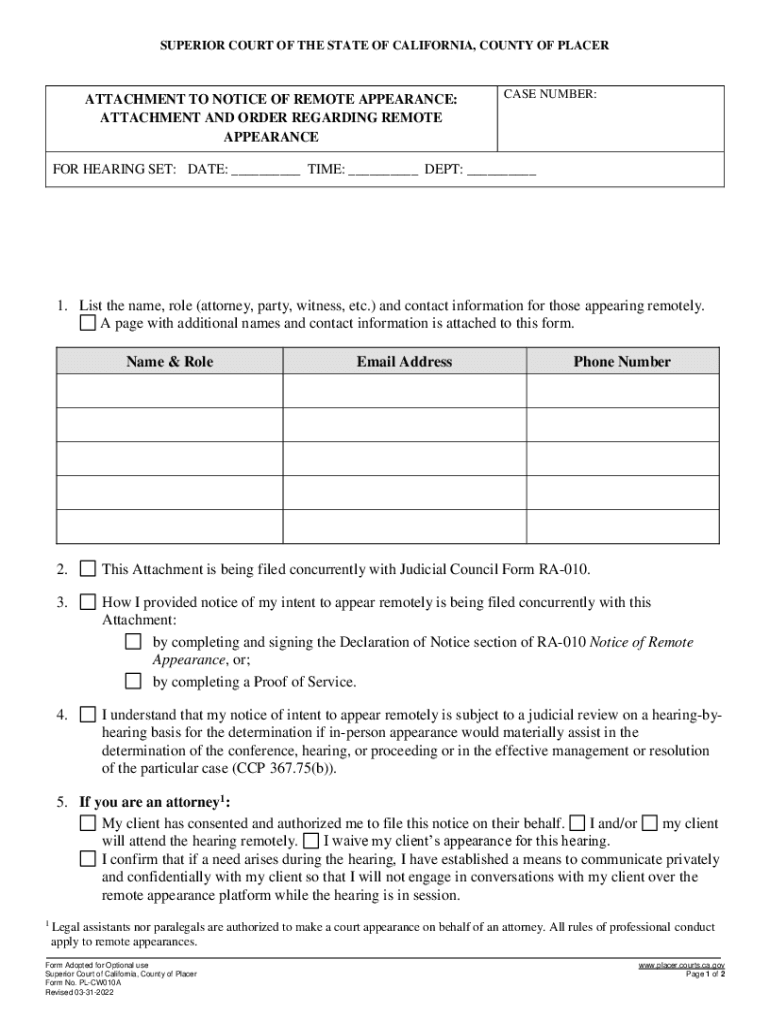
The "1 List the name, role (attorney, party, witness, etc.), and contact" is a form used in legal proceedings to clearly identify individuals involved in a case. This form is crucial for ensuring that all parties, including attorneys, witnesses, and involved individuals, are properly acknowledged in the documentation. It includes fields for the individual's name, their role in the case, and contact information, which is essential for communication throughout the legal process.
Purpose and Context
- Legal Identification: Helps in identifying all parties involved in a legal matter.
- Communication: Ensures accurate contact details are provided for efficient communication.
- Documentation: Creates a reliable record for court proceedings.
How to Use the Form
To use this form effectively, it is important to understand its specific sections and input the necessary information correctly. The process involves filling out names, specifying roles, and providing contact details for each individual.
Step-by-Step Instructions
- Name Entry: Clearly write or type the full name of each individual.
- Role Designation: Specify the role, such as attorney, party, or witness.
- Contact Information: Include accurate phone numbers, email addresses, and physical addresses.
Common Mistakes and Tips
- Ensure Accuracy: Double-check information to avoid errors.
- Legibility: Make sure the form is legible, especially if filled out by hand.
How to Obtain the Form
Acquiring the form can be done via multiple channels depending on the court or legal entity involved.
Methods
- Online Downloads: Many courts provide downloadable versions on their websites.
- Courthouse Pick-Up: Available at local courthouses upon request.
- Mail Request: Ordering a physical copy through legal services.
Steps to Complete the Form Correctly
Filling out the form requires attention to detail to meet legal standards and avoid delays.
- Review Instructions: Read any guidance notes provided.
- Enter Details Carefully: Follow section-by-section to ensure all required information is included.
- Verification: Double-check for accuracy before submission.
Why Should You Use the Form
This form serves several critical functions in legal scenarios, underscoring its importance.
Benefits
- Clarity in Legal Proceedings: Ensures everyone is on the record correctly.
- Ease of Access: Facilitates easy communication between parties.
- Legal Compliance: Helps meet court procedural requirements.
Who Typically Uses the Form
Various parties may need to use this form, largely dependent on their involvement in a legal matter.


Primary Users
- Attorneys: To document their representation of a party in a case.
- Court Personnel: For accurately recording case details.
- Individuals: Parties and witnesses participating in proceedings.
Key Elements of the Form
Understanding the structure and key components of the form is essential for proper completion.
Key Sections
- Name Section: To insert the individual's full legal name.
- Role Definition: Clearly states the involvement of the individual in the process.
- Contact Area: Provides necessary details to reach each individual.
State-Specific Rules
Variations may exist by state, impacting how the form should be completed or used.
Key Differences
- Submission Guidelines: Procedures for submitting may vary.
- Additional Requirements: Some states might have additional fields or required documentation.
Examples of Using the Form
Real-world examples can illustrate how this form plays a role in legal proceedings.
Scenarios
- Court Hearings: Used to list who will appear and their roles.
- Legal Filings: Attached to case files to provide a point of reference for contact.
- Remote Appearances: Lists individuals appearing remotely and their contact details for coordination.
By understanding these elements and procedures, individuals and legal professionals can ensure the effective use of the "1 List the name, role (attorney, party, witness, etc.), and contact" form. This comprehensive guide helps address the specific needs and streamline legal processes, providing clarity and organization in legal documentation.