







Definition and Meaning
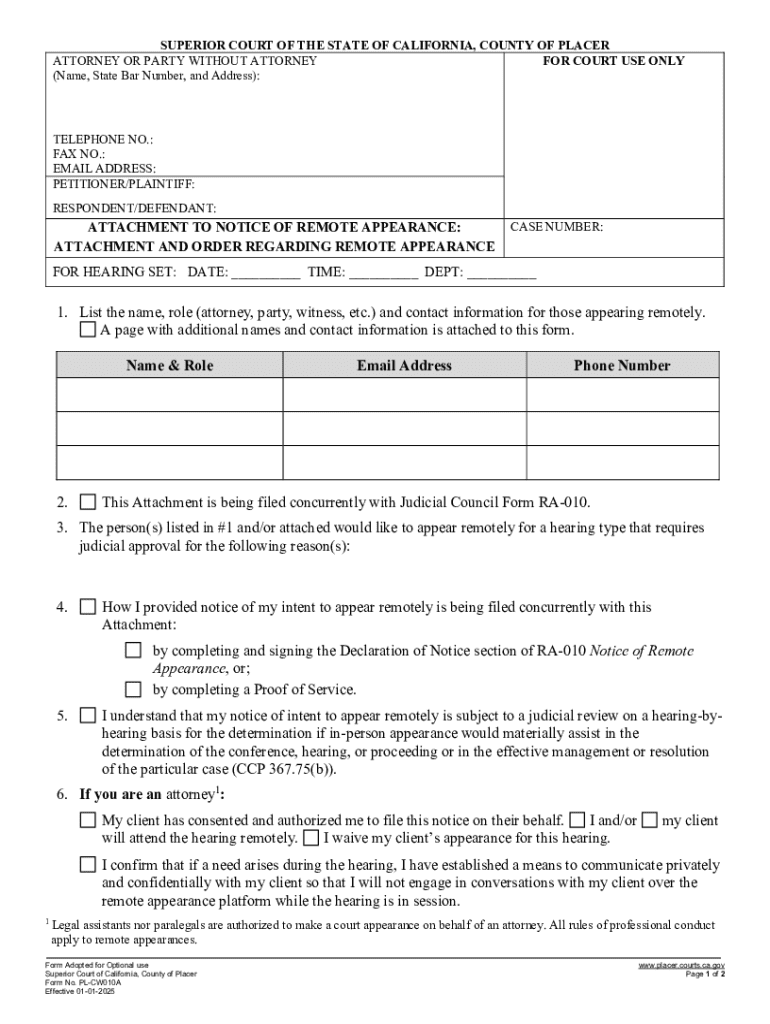
The form "1 List the name, role (attorney, party, witness, etc.) and" plays a crucial role in legal proceedings, particularly within the context of court appearances and documentation. It is used to clearly identify parties involved in a legal case, ensuring clarity and transparency during court processes. This form helps in maintaining a formal record of all participants and their respective roles, providing a framework for legal accountability. This documentation is essential for legal professionals who must keep detailed records of all parties involved in hearings, trials, or negotiations.
Common Usage Scenarios
- Legal teams use this form to prepare for court appearances by clearly listing all involved parties.
- Attorneys utilize this form to track witnesses and other participants whose testimonies are vital to the case.
- Court clerks rely on these forms for organizing case documents and maintaining accurate records.
Key Elements of the Form
To effectively use the "1 List the name, role (attorney, party, witness, etc.) and," it's essential to fill out its key components correctly. Each section must be completed with precision to ensure the form's utility in legal contexts.
Essential Sections
- Name: Clearly indicate the full legal names of all individuals or entities involved.
- Role: Specify each participant’s role, such as attorney, party, or witness, to provide context.
- Contact Information: Include contact details for verification and communication purposes.
- Affiliation: Describe any organizational or professional affiliations relevant to the case.
Legal Use of the Form
The form is crucial in providing legal documentation that supports the integrity of judicial processes. It acts as an official record, detailing who's involved in a case and their specific roles. This is vital for accountability and transparency in legal proceedings.
Compliance and Regulations
- Adhering to correct legal formatting and terminology is essential to ensure the form’s acceptance in court.
- The document must reflect updated information, including any changes in participants' roles or contact details.
How to Use the Form
Understanding the procedural steps for properly completing the form can prevent errors and facilitate smoother legal processes.
Step-by-Step Instructions
- Collect Information: Gather accurate details from all involved parties, ensuring names and roles are current.
- Complete the Form: Fill in all required fields with available data, leaving no sections incomplete.
- Verification: Double-check the entries to ensure accuracy and prevent discrepancies.
- Submission: Submit the completed form to the appropriate court or legal team for filing.
Who Typically Uses the Form
Different parties within the legal system utilize this form to accomplish various objectives and maintain organized records.


Primary Users
- Attorneys: For managing case-related information.
- Court Clerks: For organizing and documenting legal proceedings.
- Litigants: To understand the roles of other parties involved in their case.
Steps to Complete the Form
Completing the form requires a systematic approach to ensure thoroughness and accuracy.
Detailed Process
- Identify Participants: Begin by listing all individuals involved in the legal case.
- Categorize Roles: Clearly delineate each participant's role, using precise legal terminology.
- Ensure Clarity: Use consistent and legible writing or typing to avoid misinterpretation.
- Review and Confirm: Conduct a final review to confirm all information is precise and complete before submission.
Importance of Using the Form
The strategic importance of this form lies in its ability to provide a structured approach to recording legal information, essential for case management.
Benefits
- Enhanced Organization: Simplifies tracking of involved parties, making it easier to manage legal proceedings.
- Improved Communication: Facilitates clearer communication between legal entities, ensuring everyone is informed about participant roles.
- Legal Consistency: Maintains consistency in documentation across different cases and court sessions.
State-Specific Rules for the Form
The use and format of this form may vary depending on state regulations, which address specific legal requirements.
Variations by State
- California: May require additional verification steps due to its comprehensive legal system.
- New York: Emphasis on precise role descriptions to align with state-specific legal terms.
- Texas: Might incorporate supplementary information based on state judicial guidelines.
Each state's judiciary may provide specific instructions on adapting the form to meet its procedural standards.




