






Definition & Meaning
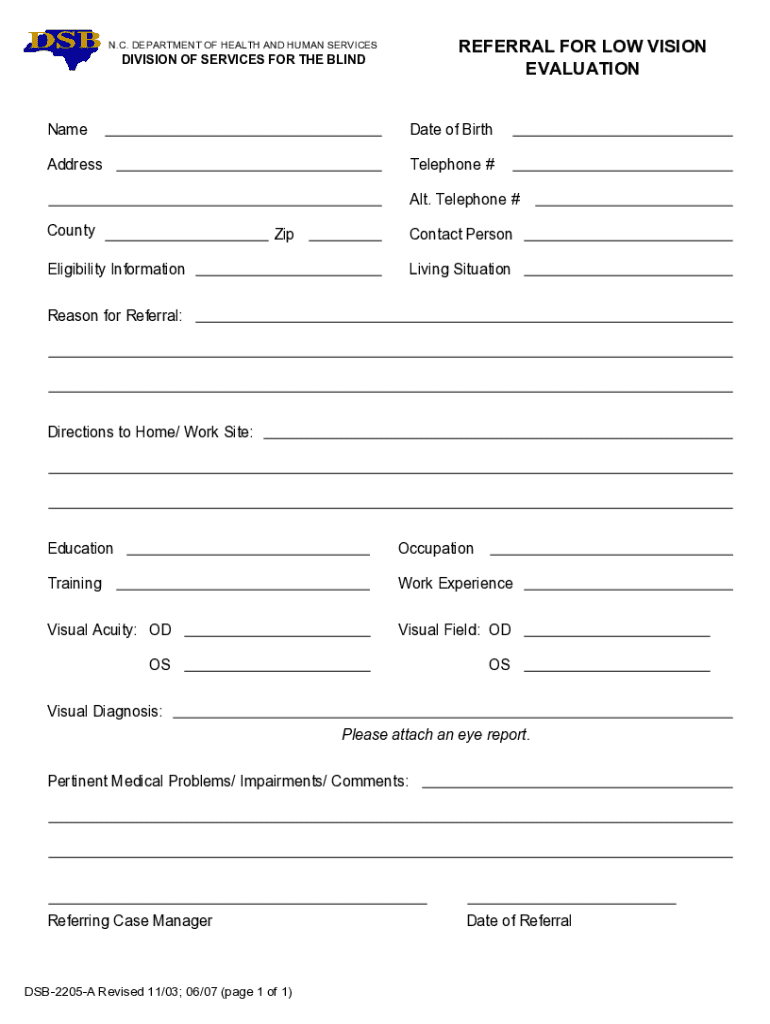
The "Referral for Low Vision Evaluation" form is a critical document utilized by the North Carolina Department of Health and Human Services, specifically the Division of Services for the Blind. This form is intended to facilitate a comprehensive evaluation of an individual's low vision needs, providing vital information about a person's visual health. It collects personal and medical details to help specialists understand the level of vision impairment and the required services. By accurately completing this form, healthcare professionals can ensure that individuals receive the appropriate evaluation and subsequent services tailored to their specific needs.
Importance of Visual Acuity and Diagnosis
Understanding the patient's visual acuity and diagnosis is crucial for assessing the severity and nature of the vision impairment. This section of the form requires specific details about the patient's eyesight, including any diagnosed conditions contributing to the low vision. Healthcare providers use this information to design an effective evaluation strategy that can lead to suitable interventions or assistive technologies for the patient.
Steps to Complete the Referral for Low Vision Evaluation
-
Gather Personal Information: Begin by collecting the referred individual's basic personal details, such as name, address, and contact information. Accurate data entry ensures effective communication and record-keeping.
-
Detail Living Situation: Include information about the individual's living environment, as this can influence the type of assistance required. Factors like living alone, with family, or in assisted living facilities provide context for personalized recommendations.
-
Educational Background and Occupation: Enter the individual's education and occupational details, as these can impact rehabilitation strategies and assistive technology choices. Understanding their daily activities helps in customizing support services.
-
Provide Visual Acuity and Diagnosis: Record detailed information about the individual's visual acuity levels and any existing diagnosis of eye-related conditions. This section is crucial for setting the foundation of the evaluation.
-
Add Pertinent Medical Problems: Note any medical issues that might affect the individual's vision or overall health. This comprehensive overview facilitates a holistic approach to their care.
-
Attach Eye Report: To support the evaluation, include a recent eye report from a certified eye care professional. This document validates the current visual condition and need for services.
Who Typically Uses the Referral for Low Vision Evaluation
Healthcare professionals, such as optometrists and ophthalmologists, primarily use this form to refer patients to specialized low vision services. Case managers and social workers may also complete the form when working with clients who could benefit from low vision rehabilitation. This collaborative approach ensures that the individual receives thorough care and access to various resources that promote independence and improve quality of life.

Key Elements of the Referral for Low Vision Evaluation
- Personal Information: Basic details, including contact information, are critical for identification and follow-up.
- Current Vision Assessment: Accurate details about the individual's eyesight form the basis for needed interventions.
- Healthcare Provider Details: Information about the referring professional ensures streamlined communication between involved parties.
- Eye Report Attachment: A mandatory component that substantiates the request for evaluation and informs the service providers.
Why Should You Use the Referral for Low Vision Evaluation
Using this form facilitates a structured and detailed approach to assessing individuals with low vision. It ensures that specialists receive all necessary information, reducing delays in obtaining the right services. This proactive measure allows for comprehensive evaluations that consider all aspects of the individual's life and health, ultimately contributing to more effective support and rehabilitation strategies.
Legal Use of the Referral for Low Vision Evaluation
The form is legally used to document and authorize requests for low vision evaluations within North Carolina. Ensuring that each section is accurately filled out satisfies legal requirements for securing state-supported visual aid services. By following established protocols, professionals help to maintain the integrity and trust associated with these forms.
Examples of Using the Referral for Low Vision Evaluation
A practical scenario involves a case manager using the form to refer an elderly client with worsening vision due to age-related macular degeneration. By completing the relevant sections, attaching the necessary eye report, and noting any additional medical conditions, they facilitate a comprehensive evaluation that leads to appropriate interventions. Another example is an optometrist referring a young patient diagnosed with low vision since birth, ensuring they receive the latest assistive tools and therapies.
Form Submission Methods (Online / Mail / In-Person)
The Referral for Low Vision Evaluation form can be submitted through multiple channels, depending on the facilities available. Some agencies provide online submission processes for convenience and efficiency. Alternatively, the form can be mailed or delivered in person to the designated office. Ensuring the form reaches the correct department without delay is crucial for timely evaluations.
Eligibility Criteria
To be eligible for referral, individuals typically need to demonstrate significant visual impairments that impact daily living or the potential to benefit from specialized low vision services. Eligibility may involve specific visual acuity criteria or a documented decline in vision function. Meeting these criteria ensures that resources are allocated to those in genuine need of professional evaluation and support services.