






Definition & Meaning
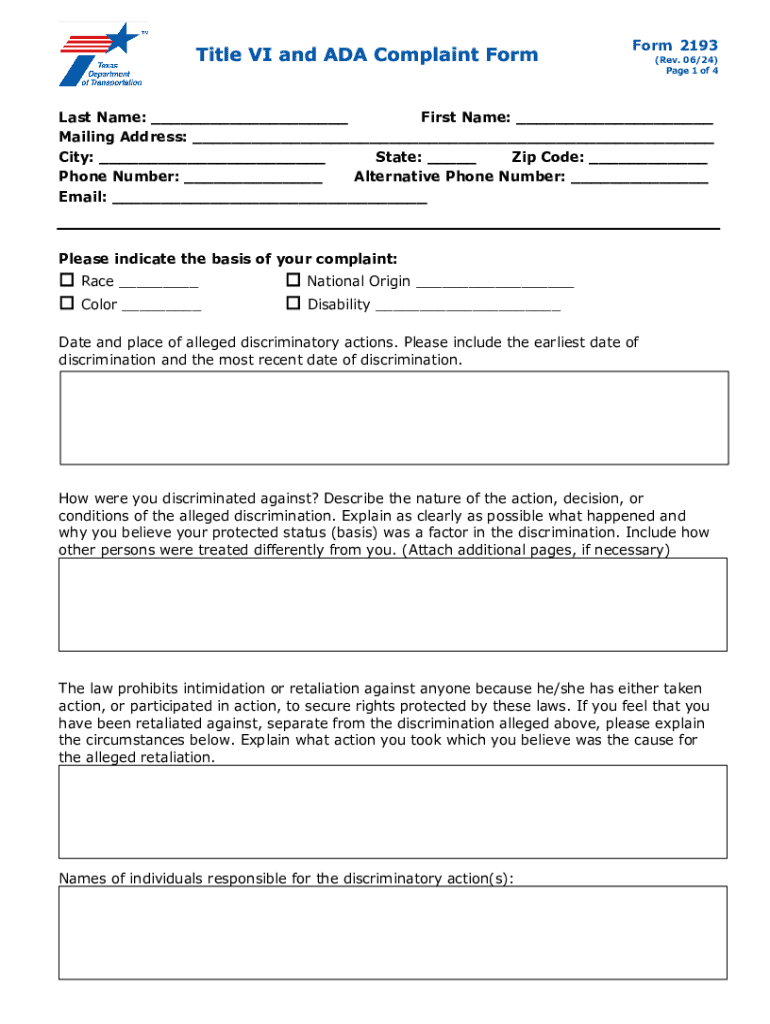
Form 2193 serves as a formal complaint form for reporting instances of discrimination based on race, color, national origin, or disability. This form is a crucial instrument for individuals seeking to document and address perceived unfair treatment. The form not only requires detailed information about the complainant but also demands specifics about the incident, such as the nature of the discrimination and identities of the individuals involved. Additionally, it includes provisions for the complainant to outline desired remedies and provide any additional supporting information relevant to their complaint.
How to Use the Form 2193
Utilization of Form 2193 entails specific steps to ensure accurate and thorough completion. First, individuals must clearly provide their personal information, including contact details, to establish the complainant's identity. Next, a detailed account of the alleged discriminatory act must be recorded, outlining the specifics of the situation and individuals implicated. Witnesses, if any, should also be listed to bolster the complaint's credibility. The form includes sections for detailing any previously filed complaints and their outcomes, which help to establish any patterns of behavior. Finally, the form should be reviewed for completeness before submission to the appropriate authority for investigation.
Steps to Complete the Form 2193
- Personal Information: Enter your name, address, and contact information in the designated fields.
- Description of Incident: Provide a comprehensive description of the discrimination, including the date, location, and nature of the incident.
- Involved Parties: List the names of the individuals who engaged in or witnessed the discriminatory actions.
- Prior Complaints: Document any prior related complaints, attaching them if available.
- Desired Remedies: Specify the outcomes or remedies you seek, such as corrective actions or policy changes.
- Additional Information: Include any other pertinent information or documents that could support your complaint.
- Review and Submit: Carefully review all entered information for completeness and accuracy before submitting to the designated office or authority.
Key Elements of the Form 2193
Form 2193 contains several key sections designed to capture comprehensive information on the discrimination case:
- Complainant Details: Fields for entering the complainant's contact information.
- Incident Description: Sections for a detailed narrative of the discrimination incident.
- Participants: Spaces for naming individuals involved in or witness to the discrimination.
- Complaint History: Areas for listing previous complaints and their resolutions.
- Remedy Sought: Options to specify the desired corrective action or relief.
- Supportive Documentation: An area to annex any evidence or documents supporting the claim.
Examples of Using the Form 2193
Consider a scenario where an employee believes they've been passed over for promotion due to their race. In this instance, the employee would utilize Form 2193 to formally document this belief, providing specific examples of the discrimination faced, such as derogatory comments from supervisors or a history of equally qualified colleagues from different backgrounds receiving promotions. Another example might involve a student with disabilities denied adequate accommodations at a school, who would use this form to highlight violations of their rights under applicable laws.
Legal Use of the Form 2193
The completion and submission of Form 2193 fulfill essential legal functions. First and foremost, it formally records the alleged discrimination, which can be critical for initiating an investigation or review by legal entities or regulatory bodies. Moreover, the form serves as a crucial piece of documentation should the case proceed to legal action, providing an early, consistent record that supports the complainant's position. It is part of a broader legal strategy to ensure accountability and compliance with anti-discrimination laws.
How to Obtain the Form 2193
Form 2193 can be acquired through several channels to facilitate access:
- Online: Many regulatory agencies offer downloadable versions of the form on their websites, allowing for completion and submission electronically.
- In-Person: Physical copies of the form may be available at local offices of agencies that oversee discrimination complaints.
- Mail: Requesting a form by contacting the relevant office by phone or email and having a copy mailed to you.
Penalties for Non-Compliance
Failure to properly complete or submit Form 2193, especially in cases where legal obligations demand it, can result in several consequences. Individuals may lose legal recourse to address their grievances if they do not initiate formal complaints. Organizations failing to respond correctly to filed forms might face penalties, including fines, mandatory policy adjustments, or involvement in legal proceedings. Furthermore, non-compliance can lead to reputational damage and increased scrutiny from regulatory bodies.
Who Typically Uses the Form 2193
The primary users of Form 2193 are individuals who believe they have experienced discrimination. This includes employees, students, or service users who have concrete incidents that they can document and seek resolution for through the appropriate channels. Organizations also use this form internally to address complaints and initiate corrective measures, ensuring compliance with anti-discrimination laws and fostering inclusive environments.


Required Documents
To complement the completion of Form 2193, supporting documentation is often necessary. This might include communication records, such as emails or text messages, photographic or video evidence of discriminatory acts, and statements from witnesses. Additionally, relevant personal identification documents and records of prior complaints or resolutions may be required to strengthen the case presented in the form.