




Definition & Meaning
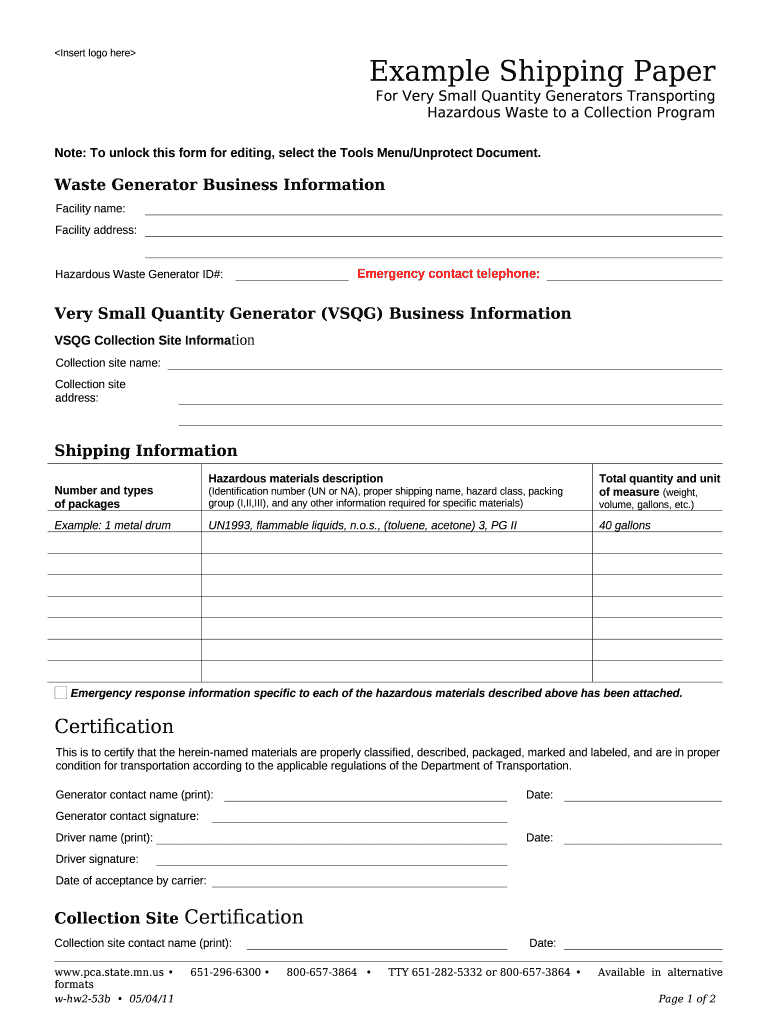
The "Example Shipping Paper" serves as a comprehensive document required for Very Small Quantity Generators (VSQG) to transport hazardous waste to designated collection programs. It consolidates essential information necessary for ensuring that the hazardous materials are transported safely and in regulatory compliance. The shipping paper includes key details such as identification of the generator and collection site, specifics of the materials being transported, and necessary certifications related to the handling and transportation processes.
Importance of Shipping Papers
Shipping papers are legally required for the transportation of hazardous materials. They play a crucial role in ensuring that all parties involved, including carriers and emergency responders, are aware of the potential hazards those materials present. Compliance with regulatory requirements helps mitigate risks associated with the transport of hazardous waste and contributes to environmental safety.
Key Elements of the Example Shipping Paper
The Example Shipping Paper is structured to capture comprehensive details required by regulatory bodies. These include:
Generator Information
- Name and Address: Clearly identifies who is responsible for the waste.
- Generator ID Number: Provides a unique identifier tied to regulatory requirements.
Collection Site Details
- Location: Includes the address of where the hazardous waste is to be transferred.
- Contact Information: Ensures that queries or emergencies can be swiftly addressed.
Shipping Details
- Description of Materials: Lists the types of hazardous materials being transported.
- Quantity: Provides specific measurements or weights to validate transport limits.
- Emergency Contact Information: Critical for response in case of an incident.
Steps to Complete the Example Shipping Paper
Filling out the Example Shipping Paper requires careful attention to ensure all regulatory and safety requirements are met:
- Gather Information: Collect data on hazardous materials, generator, and collection site.
- Fill Out Generator Details: Enter the name, address, and generator ID.
- Describe Materials: Document each type of hazardous material, including its proper shipping name and quantity.
- Enter Collection Site Information: Include address and contact numbers.
- Certify Handling and Transportation: Sign the certification section to confirm adherence to handling standards.
- Review and Validate: Double-check all entries for accuracy before submission.
Legal Use of the Example Shipping Paper
The proper completion and use of the Example Shipping Paper are mandated under federal environmental regulations for the transportation of hazardous waste. Misrepresentation or errors can lead to significant legal penalties, placing both VSQG and transporters at risk of fines or legal action. As such, accuracy and thoroughness are paramount, ensuring all relevant information is included to demonstrate compliance with applicable laws.
State-Specific Rules for the Example Shipping Paper
While the federal regulations provide a framework, each state may have additional requirements related to the transportation of hazardous waste:
- California: Requires additional waste category documentation.
- Texas: Mandates specific emergency response information.
- New York: Includes stricter penalties for non-compliance.
Understanding and incorporating state-specific nuances is crucial for ensuring that the document meets all legal requirements.
Examples of Using the Example Shipping Paper
Several case studies illustrate the effective use of the Example Shipping Paper:
- Small Manufacturing Company: Successfully utilized the form to transport spent solvents to a recycling center.
- Research Facility: Used the shipping paper to ensure compliance when disposing of laboratory chemicals.
- Auto Repair Shop: Employed the document to move used oils and antifreeze to an approved disposal site.
Each example underscores the document's role in facilitating safe and compliant waste transport.
Required Documents
In addition to the Example Shipping Paper, several other documents may be needed to complete the transportation process:
- Material Safety Data Sheets (MSDS): Provides detailed information on the hazardous materials.
- Shipping Labels: Ensures proper identification and handling instructions.
- Proof of Insurance: Verifies coverage during transit.
Possessing these additional documents supports the establishment of a comprehensive shipping package.
Digital vs. Paper Version
The Example Shipping Paper is available in both digital and physical formats. The choice between them depends on the user's preference and operational capabilities:
Digital Version
- Advantages: Easier to update, duplicate, and distribute.
- Security: Compatible with platforms supporting secure electronic documentation and signatures.
Paper Version
- Advantages: Tangible proof of compliance during inspections.
- Considerations: Increased risk of errors due to manual entries and changes.
Having both options ensures flexibility in meeting regulatory requirements while accommodating user needs.