
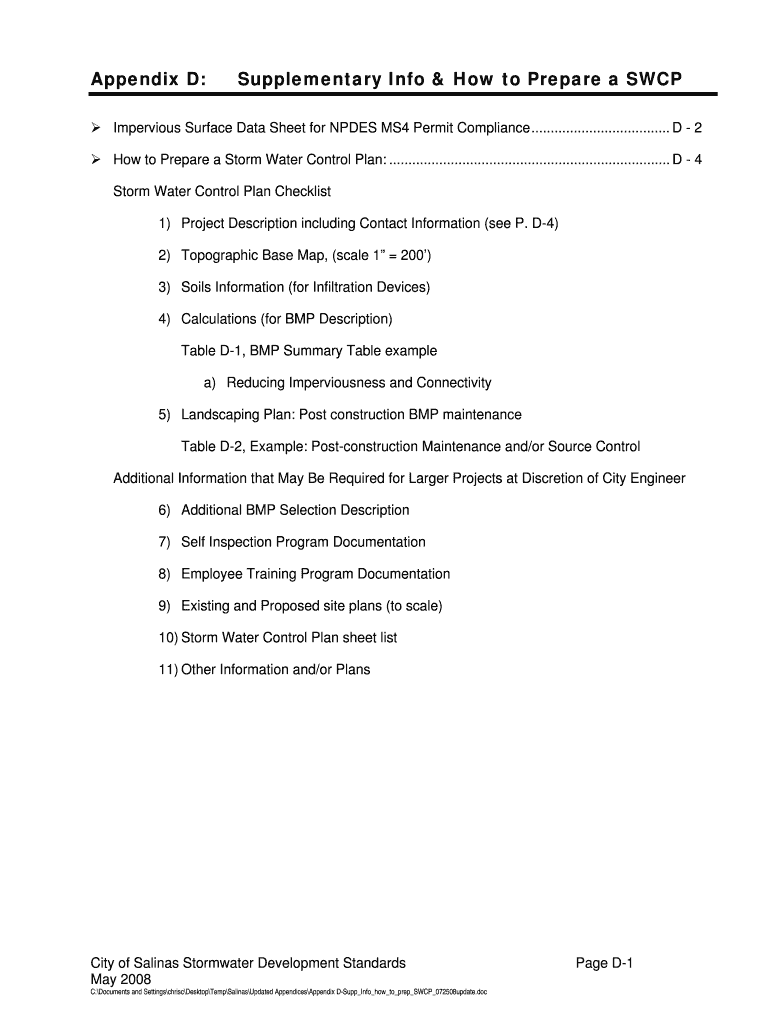







Definition and Purpose of Appendix D-Supp Info for SWCP
The Appendix D-Supp Info is a comprehensive guideline document designed to assist in preparing a Storm Water Control Plan (SWCP). It is used in compliance with the City of Salinas' stormwater development standards. The document outlines critical components, such as project descriptions, topographic maps, soil information, Best Management Practices (BMPs), and maintenance plans. It serves as a crucial tool for effectively managing stormwater runoff and ensuring water quality protection in projects that add or replace significant impervious surfaces.
How to Use the Appendix D-Supp Info for Preparing SWCP
The Appendix D-Supp Info functions as a step-by-step instructional guide that walks users through the SWCP preparation process. It provides a checklist of components required to create a compliant stormwater plan. Users should carefully review each section to ensure that all project-specific details, such as topographical data and soil assessments, are accurately included. Incorporating BMPs into the plan is critical to addressing water quality requirements, making this document an essential resource for anyone involved in stormwater management.
Obtaining the Appendix D-Supp Info Document
To obtain the Appendix D-Supp Info document, individuals or organizations must reach out to relevant city or municipal offices involved in stormwater management. Local government websites or urban water control departments might offer downloads of the document. Professionals involved in construction or land development in the City of Salinas should have this appendix on their checklist to ensure proper compliance before initiating development projects.
Steps to Complete the Appendix D-Supp Info for SWCP
- Gather Project Information: Collect and document all necessary project descriptions, including location, scope, and objectives.
- Analyze Site Conditions: Conduct a thorough analysis of existing site conditions, including topography and soil characteristics.
- Develop BMP Strategies: Identify and implement suitable BMPs to mitigate potential runoff and pollution issues.
- Compile Required Maps and Data: Ensure that all necessary maps, such as topographic and soil maps, are accurate and up-to-date.
- Draft the Maintenance Plan: Clearly outline ongoing maintenance procedures to sustain BMP efficiency over time.
- Review and Submit: Conduct a comprehensive review of the SWCP to ensure all elements are covered, then submit the plan to the appropriate city authority for review and approval.
Key Elements of the Appendix D-Supp Info
- Project Descriptions: Detailed narrative of the project scope and objectives.
- Topographic Maps: Visual representation of the land's elevation and features.
- Soil Information: Analysis reports that identify soil types and properties.
- BMP Implementations: Strategies designed to improve water quality by controlling pollutants.
- Maintenance Plans: Procedures for ongoing maintenance of stormwater control features to ensure effectiveness.
Who Typically Uses the Appendix D-Supp Info
The Appendix is primarily utilized by developers, civil engineers, environmental consultants, and construction managers who are planning and executing projects that impact stormwater runoff. They are tasked with designing compliant infrastructure that considers environmental impacts and adheres to local policies. Local authorities and regulatory agencies also reference this appendix when evaluating submissions to ensure compliance with established standards.


Legal Use and Compliance Concerns
Legal use of the Appendix D-Supp Info requires adherence to all outlined guidelines to ensure compliance with stormwater management policies. Failing to accurately complete or submit the SWCP can lead to penalties, including fines or project delays. Ensuring every aspect of the document is completed thoroughly satisfies legal requirements and protects the developing entity from potential liabilities or environmental hazards.
State-Specific Rules and Variations
While the Appendix D-Supp Info is specific to the City of Salinas, other regions may have different requirements or additional components specific to their environmental concerns. Developers and consultants should familiarize themselves with local variations in stormwater management regulations across regions. Engaging with local regulatory bodies and staying informed on regional policies is essential for maintaining legal compliance and ensuring optimal environmental outcomes.




