






Definition & Meaning
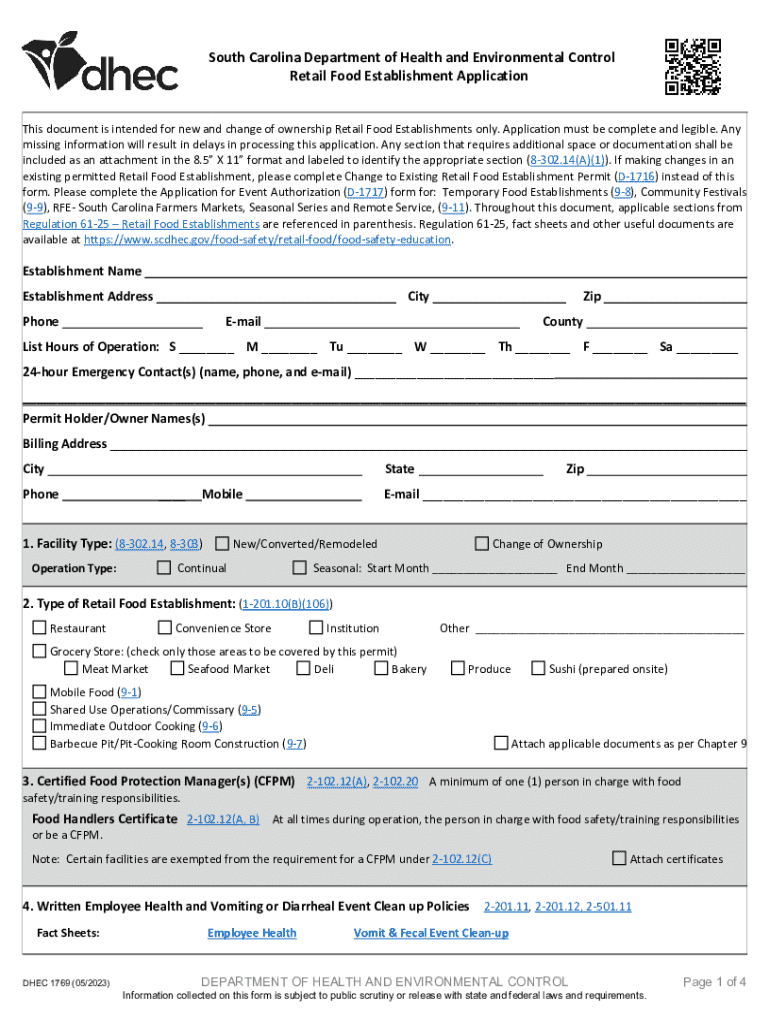
The Retail Food Establishment Application is a crucial document used by businesses in the food industry to obtain or change the ownership of a license to operate a food establishment. This application encompasses various types of retail food services, including restaurants, cafes, food trucks, and grocery stores. The document is essential for ensuring that these establishments comply with local and state health regulations. By completing the application, an establishment declares its intent to operate, outlines its operational scope, and showcases its commitment to adhering to food safety and sanitation standards.
Functionality of the Application
- Regulatory Compliance: It ensures compliance with health and safety standards set by local authorities.
- Operational Declaration: It serves as a formal declaration of operational type and scope for the establishment.
- Ownership Details: It captures critical information about the ownership and management of the establishment.
How to Obtain the Retail Food Establishment Application
Obtaining the Retail Food Establishment Application involves contacting the local health department or the South Carolina Department of Health and Environmental Control. It's possible to request the form via their official website, call their office, or visit in person.
- Online Access: Many health departments offer downloadable PDF versions of the form.
- Physical Copies: These can be picked up at local health department offices.
- Contact Information: Ensure you have the correct contact details for inquiries and submission.
Steps to Complete the Retail Food Establishment Application
Completing the Retail Food Establishment Application requires careful attention to detail and gathering the necessary documents. Here's a step-by-step guide:
- Gather Required Documents: Ensure you have all necessary documentation, including food safety certifications and previous inspection reports.
- Fill Out Establishment Details: Provide accurate information about the name, location, and type of your establishment.
- Owner Information: Include detailed contact information and backgrounds of owners or partners involved.
- Operational Types: Clearly define the operational type and any changes in previous operations if applicable.
- Attach Certifications: Include any current food safety or health compliance certifications along with the form.
- Review for Completeness: Double-check the form for accuracy and completeness to prevent delays.
Key Elements of the Retail Food Establishment Application
The effective completion of the application involves understanding its key components:
- Establishment Information: Details about the location, business hours, and type of food service offered.
- Owner Details: Full disclosure of ownership, including individuals' names and contact information.
- Food Safety Compliance: Evidence of training and adherence to food handling guidelines.
- Operational Plan: A comprehensive outline of daily operations, including handling, prep, and service.
- Documentation Attachments: Required documents like food safety certificates, previous inspections, and zoning approvals.
Legal Use of the Retail Food Establishment Application
The legal use of the Retail Food Establishment Application involves adhering strictly to state regulations regarding food safety and health.
- Compliance with Health Codes: Ensures operations meet health and safety codes.
- Enforcement of Regulations: Authorities use the application to assess compliance and grant operational permissions.
- Legal Documentation: Becomes part of the legal requirements for operating a food establishment in the state.
State-Specific Rules for the Retail Food Establishment Application
While many core elements of the application are consistent across states, particular variations must be considered in South Carolina:
- State Health Codes: Applications must comply with both state and local specific health adjustments.
- Inspection Requirements: Frequency and scope of mandatory inspections before granting permits can vary.
- Fee Structures: Application and renewal fees could differ based on location and establishment type.
Important Terms Related to Retail Food Establishment Application
Understanding the terminology related to the Retail Food Establishment Application is essential:
- Permit: An authorization required by law to operate a retail food establishment.
- Compliance: Adhering to established laws and standards.
- Food Safety Certification: Mandatory training certifications for handling food safely.
- Zoning Approval: Permission from local authorities confirming the operation's suitability for the location.
Required Documents
Several documents must accompany the completed application to facilitate processing:
- Ownership and Business Certifications: Documentation validating the ownership and business registration.
- Food Safety Certifications: Proof of food safety and health compliance training.
- Zoning and Inspection Reports: Current reports validating health and safety standards.
- Operational Plans: Detailed descriptions of daily workflow and adherence to regulations.
Who Typically Uses the Retail Food Establishment Application
The application is primarily utilized by business owners and managers in the food services industry. Whether opening a new restaurant, food truck, or grocery store, the application process is vital for:
- Established Businesses: Those needing to update or change ownership or operation details.
- New Entrepreneurs: Individuals and entities starting new ventures in the food and beverage sector.
- Large Chains: Locations of national or regional chains opening new establishments.
Understanding the detailed process and requirements of the Retail Food Establishment Application is critical for legally operating a food service business. This thorough exploration of its key features and necessary steps provides the foundational knowledge needed for successful application completion and compliance with local regulations.