

Chapter 8 cellular transport and the cell cycle 2026

Get Form
the cell cycle worksheet answer key Preview on Page 1

Here's how it works

01. Edit your the cell cycle worksheet answer key online
Type text, add images, blackout confidential details, add comments, highlights and more.
02. Sign it in a few clicks
Draw your signature, type it, upload its image, or use your mobile device as a signature pad.
03. Share your form with others
Send cellular transport worksheet answer key via email, link, or fax. You can also download it, export it or print it out.

How to use or fill out chapter 8 cellular transport and the cell cycle with our platform

Form edit decoration
9.5
Ease of Setup
DocHub User Ratings on G2
9.0
Ease of Use
DocHub User Ratings on G2
  1. Click ‘Get Form’ to open it in the editor.
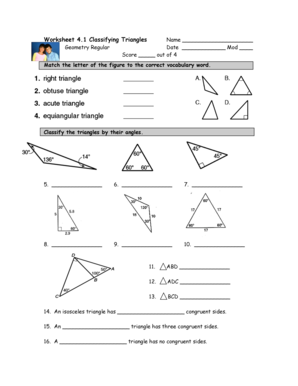
  2. Begin with Section 8.1 Cellular Transport. Read about osmosis in your textbook, then complete the table by checking the correct column for each statement regarding isotonic, hypotonic, and hypertonic solutions.
  3. Next, move to the matching items in Column A and Column B. For each item listed in Column A, write the corresponding letter from Column B that matches its definition or description.
  4. Ensure all fields are filled accurately before saving your progress. You can easily modify any entries as needed using our editing tools.

Start using our platform today to enhance your learning experience for free!

be ready to get more

Complete this form in 5 minutes or less

Get form

Got questions?

We have answers to the most popular questions from our customers. If you can't find an answer to your question, please contact us.
Contact us

Microsoft Word doesn’t have signing tools to generate legitimate eSignatures and enforceable documents. Fortunately, DocHub is an online eSignature-compliant editor that supports different file formats, such as .doc files. Log in to your account and import the Word edition of your transport across the cell membrane worksheet answer key pdf from your device and cloud, or URL - our editor will automatically transform it into an editable PDF. Make all required changes in your document and click Sign to generate your own legally-binding electronic signature. There are four signing options from which to choose.

In addition to a comprehensive toolset for editing PDFs on mobile phones, DocHub allows you to sign your section 8 1 cellular transport answer key along the way. Open our editor in your browser, make changes using DocHub’s toolset, and complete your editing by eSigning the completed form.

The statement is true; most living cells do range in size from 2 to 200 m in diameter. Typical sizes for prokaryotic cells, like bacteria, are smaller, and eukaryotic cells, such as those in humans, can be within this range.
Transport across the cell membrane includes passive transport using channel/carrier proteins and active transport requiring energy. The cell cycle includes interphase of growth and DNA replication followed by mitosis and cytokinesis to form two daughter cells.
A typical animal cell is 1020 m in diameter, which is about one-fifth the size of the smallest particle visible to the eye.

Security and compliance

At DocHub, your data security is our priority. We follow HIPAA, SOC2, GDPR, and other standards, so you can work on your documents with confidence.

Learn more
ccpa2
pci-dss
gdpr-compliance
hipaa
soc-compliance

People also ask

On average, most animal and plant cells are similar in size. Animal cells are about 10 to 30 micrometers (m) wide, while plant cells are about 10 to 100 m wide.
Cell division is the process by which cells replicate in order to replace cell loss, repair tissue damage and reproduce the organism. Two types of cell division are encountered in the Eukaryotic cell viz. Mitotic and Meiotic divisions.

chapter 8 section 8 1 cellular transport and the cell cycle answer key