






Definition and Meaning
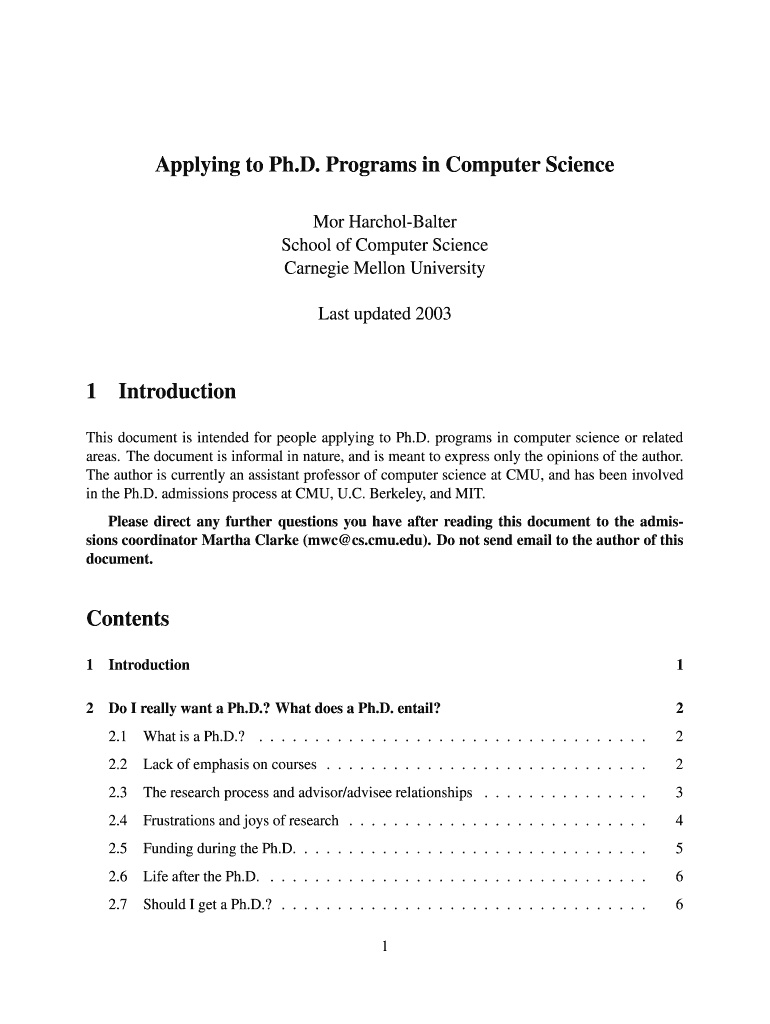
The "Ph.D. Program Requirements at Carnegie Mellon University - Computer" refers to a detailed outline of the criteria and processes involved in applying for and succeeding within the Ph.D. program in computer science at Carnegie Mellon University. This document is vital for prospective students to understand the academic and administrative expectations they must meet to gain admission and successfully complete their studies.
- This guide includes prerequisites such as prior educational experience, necessary skills, and relevant coursework that applicants need to demonstrate.
- It also encompasses the comprehensive structure of the Ph.D. program, detailing core courses, specializations, and research obligations.
Understanding the specific requirements is crucial for applicants aiming to align their qualifications with the university's academic standards.
Steps to Complete the Ph.D. Program Requirements
Completing the requirements for the Ph.D. program in computer science at Carnegie Mellon University involves several strategic steps.
-
Review Eligibility Criteria: Applicants should first ensure they meet the minimum program prerequisites, such as having a relevant undergraduate or master's degree.
-
Prepare Application Materials: This includes gathering transcripts, GRE scores, personal statements, and letters of recommendation. Each document must highlight the candidate's readiness and enthusiasm for advanced study and research.
-
Research Funding Opportunities: Prospective students should explore various funding options like scholarships, grants, and assistantships to support their studies.
-
Submit the Application: Ensure all components are uploaded and submitted before the specified deadlines. Adhering to these timelines is critical for consideration.
-
Prepare for Interviews/Assessment: If selected, applicants may be required to attend interviews or assessment sessions to further demonstrate their capability and fit for the program.
These steps ensure candidates can effectively navigate the application process and present their most compelling case for admission.
Key Elements of the Ph.D. Program Requirements
The Ph.D. program in computer science at Carnegie Mellon University is structured around several key components designed to develop deep expertise.
-
Core Curriculum: Students need to complete specific foundational courses that provide essential knowledge in computer science theory and methodologies.
-
Research Projects: Engaging in significant research projects under faculty supervision is crucial, contributing original knowledge to the field.
-
Teaching Requirements: Participants often have teaching obligations to develop communication and pedagogic skills.
-
Dissertation: Completing and defending a dissertation that presents new research findings is the cornerstone of the program.
Understanding these elements helps students plan their academic journey effectively.
Why Pursue a Ph.D. in Computer Science at Carnegie Mellon University
Choosing to pursue a Ph.D. in computer science at Carnegie Mellon University offers numerous benefits.
-
Reputation and Ranking: Carnegie Mellon is renowned for its strong emphasis on innovation and technology, providing a prestigious platform for doctoral studies.
-
Access to Resources: Students have access to cutting-edge research facilities and labs, enhancing their learning and research capabilities.
-
Networking Opportunities: The university's connections with industry leaders and researchers provide valuable networking avenues and career opportunities post-graduation.
These factors collectively offer a compelling case for selecting Carnegie Mellon as the institution for pursuing advanced studies in computer science.
Required Documents for Application
Applying to the Carnegie Mellon Ph.D. program requires specific documentation that showcases an applicant's background and readiness.
-
Academic Transcripts: Official records from all post-secondary institutions attended.
-
GRE Scores: Standardized test scores may be required to assess analytical and quantitative skills.
-
Letters of Recommendation: Typically from academic or professional references who can attest to the applicant’s capabilities and potential.
-
Personal Statement: An essay outlining the applicant's research interests, experience, and objectives for pursuing a Ph.D.
Thorough preparation and submission of these documents play a crucial role in the application’s success.
Who Typically Uses the Ph.D. Program Requirements
The requirements for applying to the computer science Ph.D. program at Carnegie Mellon University primarily cater to:
-
Prospective Graduate Students: Individuals with a strong academic background in computer science or related fields seeking to advance their research capabilities.
-
Current Academia: Students currently enrolled in master’s programs and considering doctoral studies.
-
International Scholars: Those from around the world interested in leveraging Carnegie Mellon's resources and elevated academic environment.
These groups utilize the program requirements to guide their application process and align their qualifications with the expectations of the program.


Application Process and Approval Time
The application process for the Ph.D. program at Carnegie Mellon University is rigorous and involves several stages.
-
Application Submission: Interested candidates must submit their applications through the university's online portal by the specified deadline.
-
Review and Evaluation: The admissions committee evaluates applications based on academic qualifications, research potential, and the fit with the program’s objectives.
-
Decision Communication: Applicants are informed of admission decisions within a few months after submission, although exact timelines can vary.
Understanding the nuances of this process helps candidates manage their expectations and prepare efficiently.
Legal Use of the Ph.D. Program Requirements
The Ph.D. Program Requirements document is a formal guideline that outlines the obligatory steps and criteria for prospective students.
-
Official Declarations: Compliance with these requirements is necessary to ensure that applicants meet the university's standards and legal obligations.
-
Policy Adherence: The document must be adhered to as part of the academic integrity and policy compliance expected by Carnegie Mellon University.
Awareness of these legal aspects is essential for applicants to ensure a legitimate and successful application process.