






Definition & Purpose of the Document
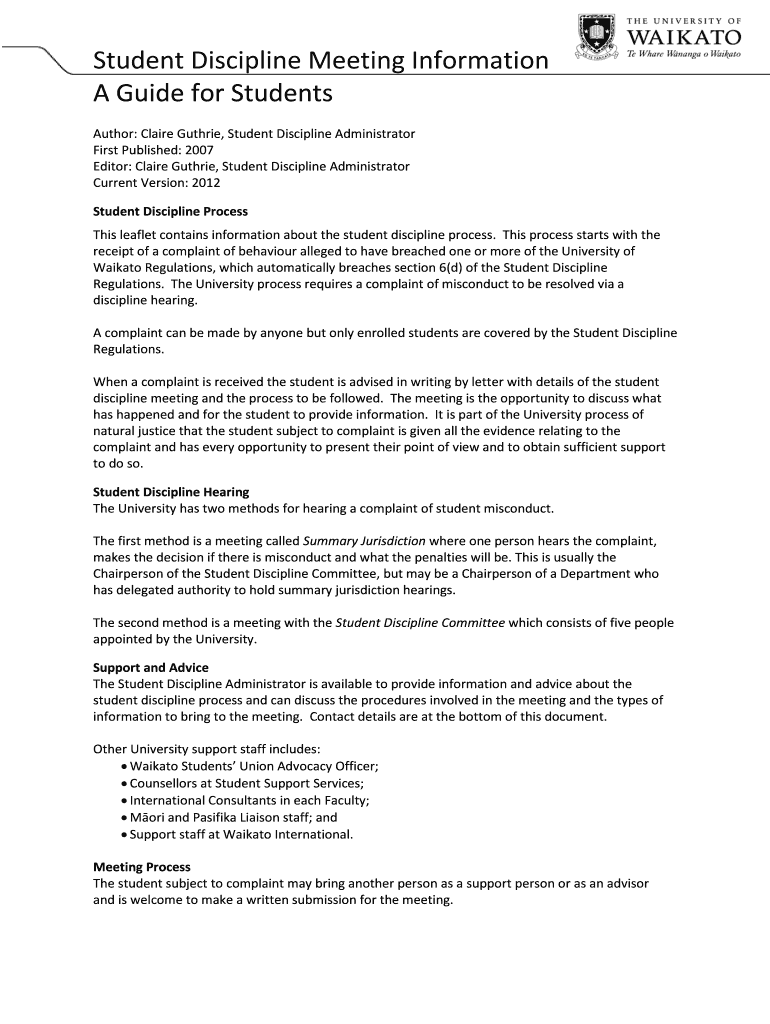
The document authored by Claire Guthrie, a Student Discipline Administrator, serves as a comprehensive guide outlining the student discipline process at educational institutions, such as the University of Waikato. Its primary purpose is to inform students about the procedures for handling complaints of misconduct, including plagiarism and cheating, while emphasizing the importance of due process. This document acts as a critical resource for students to understand their rights, responsibilities, and the support available to them throughout the disciplinary proceedings.
Steps to Complete the Form
- Initial Review: Students should thoroughly review the document to comprehend its structure and content.
- Procedure Acknowledgment: Understand the outlined procedures for misconduct hearings and the potential outcomes.
- Identify Support Systems: Recognize the types of support systems offered, such as advisory services or campus support groups.
- Complete Required Sections: Fill out any sections that require student's information or consent for participation in the process.
- Submission: Follow the stipulated method for submitting the form, which could be online or in-person at specified university offices.
Key Elements
- Due Process Emphasis: Ensures fair treatment during the disciplinary process.
- Types of Misconduct: Outlines examples of misconduct like plagiarism.
- Support Availability: Details available resources for students undergoing the process.
- Disciplinary Actions: Potential consequences and resolutions of misconduct cases.
- Contact Information: Provides details for reaching out to relevant administrative offices for further guidance.
How to Obtain the Form
Students can access the document through their university's official website or student portal. Additionally, copies might be available at the student affairs office or the office of the Student Discipline Administrator. If further guidance is required, contacting the department in charge of student discipline through university-provided contact information is advisable.
Who Typically Uses the Form
Primarily, this document is used by students facing disciplinary action due to alleged misconduct. However, it is also a valuable resource for university faculty, staff, and administrators involved in the disciplinary process. Legal advisors and student advocates might also reference this document to guide and support students through the disciplinary proceedings.


Legal Use
The document provides a legally sound outline of the student discipline procedure, ensuring compliance with institutional policies and relevant educational laws. It clarifies the rights and obligations of students and the institution, aiming to deliver a transparent and fair process in alignment with educational governance standards.
Important Terms Related to the Document
- Misconduct: Any behavior that violates the university's code of conduct, such as cheating or plagiarism.
- Due Process: The right to a fair and impartial hearing as part of the disciplinary actions.
- Advisor: A person who can accompany and assist a student during the disciplinary process.
- Appeal: The process by which a decision made in a disciplinary hearing may be reviewed or contested.
Digital vs. Paper Version
The document is likely available in both digital and paper forms. The digital version provides easy access and can be downloaded directly from the university's website. The paper version might be accessible at key university departments. Using the digital format offers the advantage of being readily accessible and easy to distribute, while the paper format may be necessary for formal situations requiring handwritten notices or signatures.
Who Issues the Document
The document is issued by the university's student discipline office, typically overseen by a Student Discipline Administrator like Claire Guthrie. This office is responsible for managing and conducting the disciplinary process according to university policies and regulations.
Disclosure Requirements
This document requires complete honesty and transparency from both students and administrators. Students must disclose relevant information pertinent to their case, while the university is obliged to provide all necessary details and justifications concerning the disciplinary actions being pursued.