






Definition and Purpose of the Compliance Document for - dbh govt
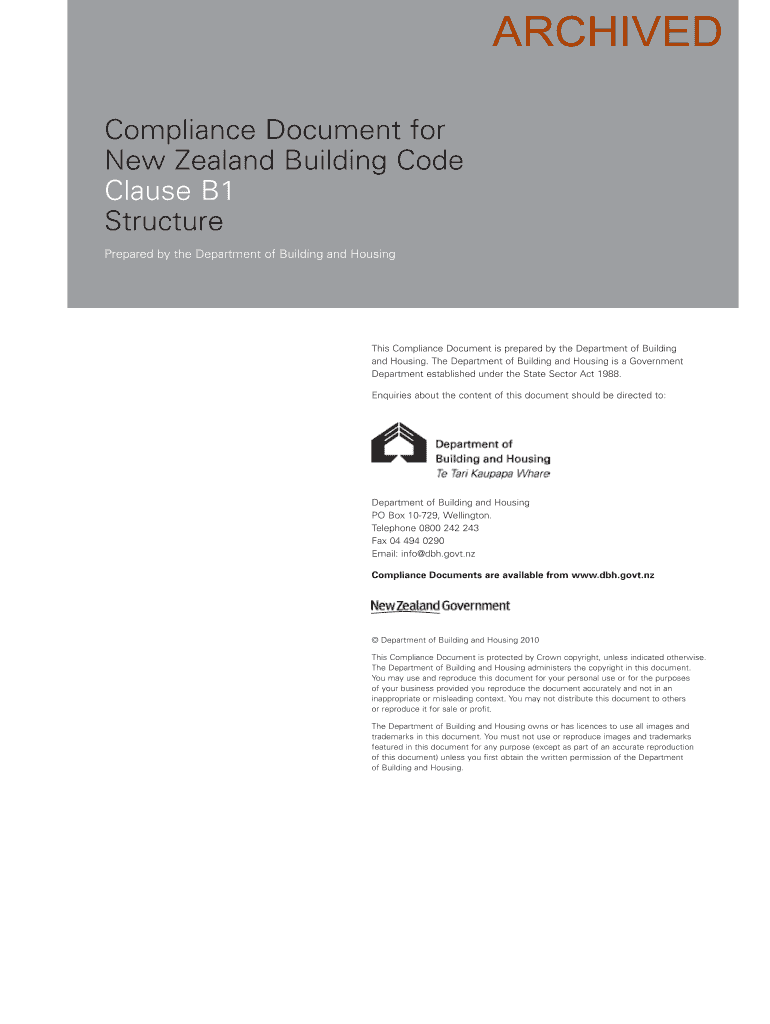
The "Compliance Document for - dbh govt" serves as a structured guide for ensuring adherence to specific regulations outlined by the Department of Building and Housing (DBH) in accordance with the New Zealand Building Code Clause B1. This document extensively covers the structural requirements necessary for compliance, providing standardized methods for evaluating these needs. The compliance document includes both acceptable solutions and verification methods applicable to diverse construction materials and techniques. Its primary goal is to ensure that building projects meet the required safety and structural standards, thereby reducing risks associated with non-compliance.
Key Objectives of the Compliance Document
- Establishing Compliance Methods: Provides detailed processes for achieving compliance with the building code, offering both acceptable solutions and verification methods.
- Updating Standards: Includes historical amendments to keep professionals informed about changes in legal requirements.
- Ensuring Safety: Emphasizes the importance of adhering to specified standards to maintain structural integrity and safety.
How to Use the Compliance Document for - dbh govt
Professionals can use this document as a reference tool to guide the execution of construction projects. It outlines the required steps to evaluate and verify compliance with the building codes. By following these processes, builders and architects can ensure their projects meet national standards. Whether constructing new buildings or altering existing structures, this guide serves as a foundational resource for project management in building and housing sectors.
Steps for Utilizing the Document
- Identify Relevant Sections: Determine which parts of the document apply to your specific project type.
- Follow Compliance Methods: Implement the suggested acceptable solutions or verification methods for your materials and techniques.
- Review Amendments: Keep up to date with any historical changes that could impact your project.
Key Elements of the Compliance Document for - dbh govt
The compliance document contains several crucial elements critical for achieving compliance in the building industry. Each section targets different areas of structural design and safety to offer comprehensive guidance and clarity on regulatory expectations.
Major Components
- Structural Design Actions: Provides guidelines for assessing forces and loads on building structures.
- Foundations: Details requirements and standards for foundation construction.
- Timber Barriers: Highlights standards for timber constructions, including barriers and framing.
- Additional Topics: Includes small chimneys and other related structural components.
Legal Use of the Compliance Document for - dbh govt
Utilizing the compliance document correctly is essential for legal compliance in construction projects. Adherence to the stipulated guidelines and solutions is a requirement to meet legal responsibilities and standards as prescribed by the Department of Building and Housing.
Required Legal Actions
- Adhering to Prescribed Standards: Ensure all building work aligns with the standards laid out in the document.
- Obtaining Permissions for Reproduction: Secure necessary permissions if intending to replicate any section of the document for use in training or educational setups.
Examples of Using the Compliance Document for - dbh govt
Real-world applications of this document include various construction scenarios where compliance is critical. The document serves as a trusted source for information on how to structurally design and execute projects safely and within legal constraints.
Practical Examples
- Commercial Buildings: Establishing compliance for high-load structures using specified materials.
- Residential Construction: Applying the document to ensure single-family homes meet safety codes.
- Renovations and Additions: Verifying existing structures during renovations for continued compliance with safety standards.
Software Compatibility and Interface
When working on compliance documentation, it's useful to ensure tools being used for documentation are compatible. DocHub's platform assists in the digitization and management of documents, including compliance paperwork, facilitating easy sharing and editing.
Supported Formats and Integration
- Document Formats: PDF, DOC, PPT, XLS, and TXT.
- Cloud Integration: Import and export files from Google Drive, Dropbox, and OneDrive.
- Accessibility: Available on desktop and mobile web browsers for ease of access across devices.
Important Terms Related to the Compliance Document for - dbh govt
Understanding some associated terms enhances comprehension of the compliance document and its context.
Key Terms
- Acceptable Solutions: Pre-approved methods and materials deemed compliant with building codes.
- Verification Methods: Processes for validating compliance when using alternative solutions.
- Structural Integrity: The ability of a structure to hold and support intended loads.
Penalties for Non-Compliance
Non-compliance with the regulations outlined in the compliance document can lead to serious repercussions both legally and financially.
Possible Consequences
- Fines and Penalties: Financial repercussions for failing to meet building standards.
- Project Delays: Potential halts in construction until compliance issues are resolved.
- Legal Action: Risk of legal disputes or cases arising from non-compliance incidents.
Who Typically Uses the Compliance Document for - dbh govt
Several key stakeholders in the building sector rely on this compliance document to guide their activities and ensure legal adherence in their projects.


Typical Users
- Architects and Engineers: Use the document to design and certify structurally sound buildings.
- Construction Managers: In charge of implementing the compliance measures on-site.
- Building Inspectors: Responsible for verifying adherence to the Standards and Codes during inspections.
These sections provide a comprehensive exploration of the compliance document, offering detailed insights applicable to professionals involved in building and housing projects.