





Definition & Meaning of Veterinary Medical Records Release Form
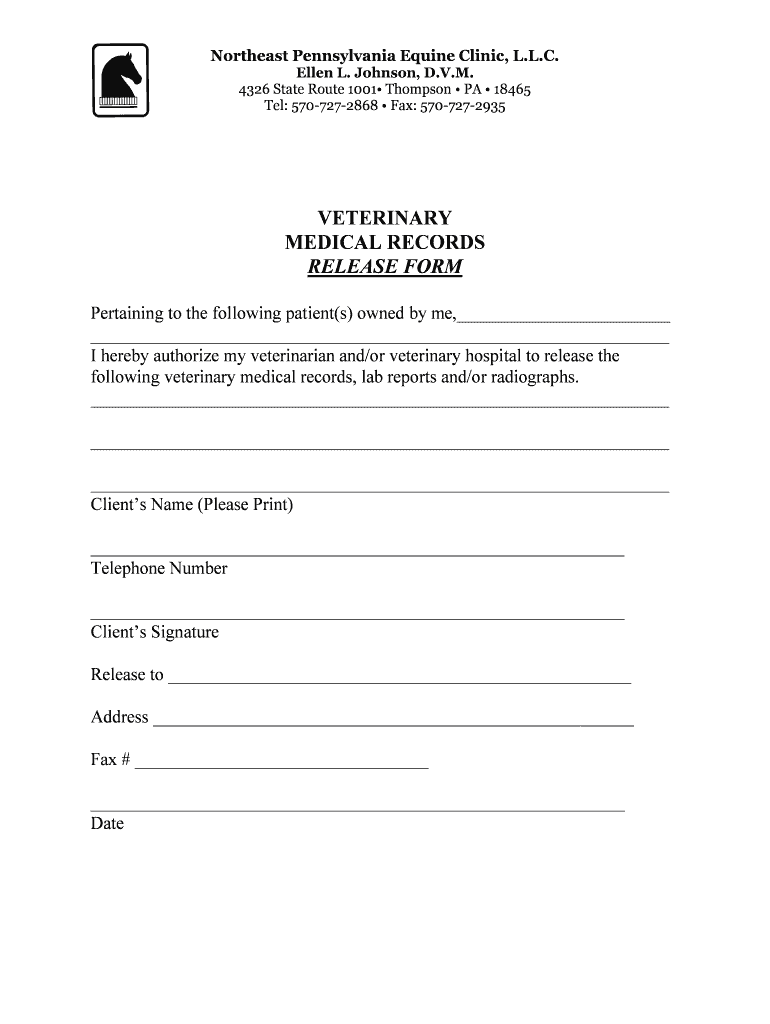
A veterinary medical records release form is a legal document that allows pet owners to authorize the transfer of their pets' medical records from one veterinary clinic to another. This form ensures that sensitive information, such as medical history, lab reports, and imaging studies, is shared legally and ethically, thereby protecting both the pet owner's privacy and the veterinary practice's liability. The release form is crucial for situations where a pet changes veterinarians or for specialized treatment that requires medical history from previous care providers.
Key Components of the Form
- Client Information: Details about the pet owner, including their name, address, and contact number.
- Pet Information: Identification of the pet, including its name, breed, age, and any unique identifiers.
- Recipient Information: Details about where the records should be sent, typically another veterinary clinic or animal hospital.
- Authorization Statement: A section where the pet owner explicitly permits the release of the medical records.
- Signature: The form must be signed by the pet owner to validate the authorization.
How to Use the Veterinary Medical Records Release Form
To utilize the veterinary medical records release form effectively, pet owners should follow a systematic approach. The first step is to ensure that the form is complete and accurate. This includes verifying that all necessary fields, such as client and pet information, are filled out correctly. Misrepresentations or errors can lead to delays or complications in obtaining medical records.
Step-by-Step Usage Instructions
-
Obtain the Form: The veterinary medical records release form can typically be obtained from the veterinary practice’s website or directly from the clinic.
-
Fill Out the Form: Include your contact information, the pet’s details, and the recipient's information to whom the records will be sent.
-
Review for Accuracy: Double-check all entries for accuracy to avoid rejection of the request.
-
Sign and Date: The form must be dated and signed to validate your authorization of the release.
-
Submit the Form: Deliver the completed form to the veterinary practice, either in person, by mail, or through electronic submission if supported.
Steps to Complete the Veterinary Medical Records Release Form
Completing the veterinary medical records release form involves several crucial steps that ensure compliance and accuracy. Following these steps systematically can help facilitate a smooth transfer of medical records.
Detailed Completion Instructions
-
Fill in Pet Owner Information: Enter your full name, mailing address, and contact number. This information is necessary for the veterinary clinic to identify and validate your request.
-
Provide Pet Details: List all identifying details about your pet, including its name, breed, species, and any registration numbers if applicable.
-
Designate the Recipient: Clearly state who will receive the records. This may include the name and address of another veterinary clinic or specialist.
-
Specify Record Types: If applicable, specify which types of records you want released, such as vaccination history, surgical records, or laboratory results.
-
Sign and Date: The last step is signing the document and dating it to affirm your consent for the information to be shared.
Why You Should Use the Veterinary Medical Records Release Form
Using a veterinary medical records release form is essential for several reasons. By explicitly providing authorization, pet owners can ensure that their pets receive continuity of care and that their medical history is accurately communicated.
Benefits of Using the Release Form
-
Continuity of Care: Ensures that new veterinarians have access to critical health information needed for effective treatment.
-
Legal Protection: Protects both the pet owner and the veterinary practice by clearly documenting consent for the sharing of sensitive information.
-
Privacy Assurance: Minimizes the risk of unauthorized access to medical records, thus maintaining the confidentiality of the pet’s health history.
Important Terms Related to Veterinary Medical Records Release Form
Understanding specific terms associated with the veterinary medical records release form can enhance clarity for pet owners and veterinary professionals alike.
Key Terms Defined
-
Confidentiality: The ethical principle of keeping the pet's medical information private, only disclosing it with the owner's consent.
-
HIPAA Compliance: The legal regulations that govern the privacy and security of medical records in the United States.
-
Authorization: The formal consent provided by a pet owner allowing their veterinary records to be shared.
-
Recipient: The entity or individual to whom the medical records are released, which may include other veterinary clinics, specialists, or pet owners.
Legal Use of the Veterinary Medical Records Release Form
The legal framework governing the use of a veterinary medical records release form is primarily influenced by the principles of privacy and consent.
Regulatory Compliance
-
HIPAA Regulations: While veterinary practices are not directly subject to HIPAA, they often choose to follow its guidelines to ensure best practices in protecting patient information.
-
State Laws: Each state may have its own regulations regarding veterinary medical records. Pet owners should be aware of these laws to ensure compliance.
-
Document Retention: Many states require that veterinary practices retain records for a designated period, influencing how records can be accessed and shared.
Examples of Using the Veterinary Medical Records Release Form
Using real-world examples helps illustrate the application of the veterinary medical records release form in various situations typical for pet owners and veterinary practices.
Practical Scenarios
-
New Vet Visits: When a pet owner decides to switch to a new veterinarian, completing the release form allows for the seamless transfer of the animal's complete medical history.
-
Specialist Referrals: If a pet requires specialized treatment (e.g., orthopedic surgery), the release form enables the primary vet to send necessary records to the specialist for informed care.
-
Accessing Records for Boarding: Many pet boarding facilities require access to vaccination records to ensure animals are appropriately protected, which can be facilitated through a release form.
By understanding the vital components and processes associated with the veterinary medical records release form, pet owners can successfully navigate their needs for transparency and continuity within veterinary care.