
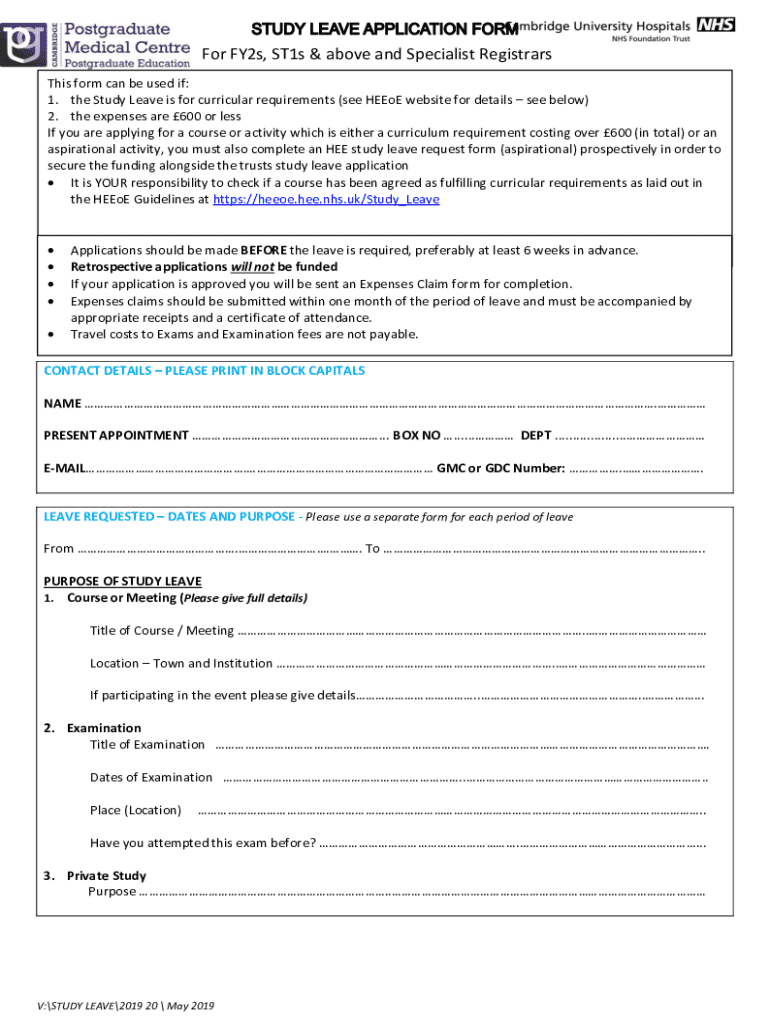







Definition and Purpose of the Study Leave Application Form
The Study Leave Application Form is a specialized document used primarily by medical professionals and other employees who seek to take time off from their regular duties for educational purposes. This form is typically used by trainee doctors such as FY2s, ST1s, and Specialist Registrars to apply for authorized absences needed to attend courses, conferences, or exams relevant to their training and career development. The form ensures that leave is requested in a formal and structured manner, detailing the planned educational activities and obtaining the necessary approvals.
Steps to Complete the Study Leave Application Form
Completing the Study Leave Application Form involves a series of steps designed to ensure a comprehensive and accurate submission.
-
Personal Details: Fill out your name, contact information, and job title. This section may also require your department details to link the application to the correct supervisory and administrative units.
-
Leave Details: Specify the dates for which the leave is requested. Include start and end dates, along with the duration expressed in days.
-
Educational Activity Description: Provide a detailed description of the educational activities you plan to undertake. This could include the name of the course, conference, or examination, and its relevance to your current role or career progression.
-
Financial Outlays: Itemize any costs associated with the study leave, such as tuition fees or travel expenses, ensuring compliance with funding limits. This might involve specifying if additional funds are being sought or if costs are covered by the organizing body.
-
Authorization Signatures: Obtain signatures from necessary parties, such as your immediate educational supervisor and departmental head, to confirm approval. The form might require multiple signatures to ensure agreement across departments involved.
How to Obtain the Study Leave Application Form
Obtaining the Study Leave Application Form can be straightforward depending on your institution's processes.
-
Institutional Intranet: Many medical institutions provide access to these forms via their internal networks. Log in to your university or hospital's intranet portal, and navigate to the HR or education department's section.
-
Department Administration: Your department's administrative office often holds physical or digital copies of necessary forms. A quick visit or a call to the admin office can help you obtain the form.
-
Email Request: Some facilities may allow you to request the form via an official work email. Reach out to the education or HR department for guidance.
-
Online Resources: If your institution has a central web resource, you may download the form directly if available.
Key Elements of the Study Leave Application Form
The Study Leave Application Form contains several critical sections to ensure comprehensive information is collected:
- Applicant Information: Name, position, department, and contact information.
- Details of the Leave: Dates, duration, and purpose.
- Educational Activity Detail: Detailed information about the event or course.
- Cost Analysis: Breakdown of expected expenses and funding requests.
- Approvals and Signatures: Sections for obtaining necessary administrative consents.
Each element serves to validate the necessity and logistical aspects of the leave and ensures all parties are informed and in agreement with the applicant’s plans.
Legal Use and Compliance
The legal use of the Study Leave Application Form is critical for maintaining organizational compliance and ensuring that the processes adhere to institutional policies and legal standards.
-
Adherence to Policy: Ensure that the applications follow specific guidelines set forth by the institution, aimed at managing staff resources efficiently.
-
Signature Requirements: Some forms have binding conditions based on signatures from specific roles within the organization, underscoring the need for official approvals.
-
Funding Compliance: Ensuring that funding does not exceed institutional limits helps to maintain financial oversight and prevents unauthorized or excessive use of departmental budgets.
Required Documents for Submission
Completing the application process necessitates gathering several supporting documents:
- Proof of Course Enrollment or Invitation: Documents confirming your participation in the educational activity.
- Previous Study Leave Records: If applicable, records of previous leaves to provide context for recurring patterns or approvals.
- Budget Details and Justifications: Documentation supporting financial aspects of the leave, ensuring expenses align with guidelines.
- Approval Documents: Previously gained approvals, such as emails or signed documents, validating necessary permissions.
Who Typically Uses the Study Leave Application Form
The form is primarily used by:
- Medical Trainees: Including FY2s, ST1s, and Specialist Registrars, who need to attend various educational activities to meet their curriculum requirements.
- Academic Personnel: Faculty or educators who are on a program that includes study elements.
- Research Fellows: Particularly those engaged in cutting-edge research where additional training or conferences are necessary.
The nature of use varies with professional scenarios, but the goal remains the same—the pursuit of educational advancement and compliance with training requirements.


Examples of Using the Study Leave Application Form
Consider these scenarios:
-
A Specialist Registrar seeking to attend an international conference on cardiac surgery would use the form to request and validate study leave for specified dates, accompanied by a detailed budget and itinerary.
-
An FY2 doctor needing to attend a mandatory exam might apply for leave using the form, highlighting the exam’s role in their professional progression and ensuring compliance with educational mandates.
-
A department-wide training initiative where multiple staff members require simultaneous leave for professional development, handled collectively to ensure logistical efficiency.
These examples underscore the form’s flexibility in addressing educational needs across various professional stages.




