






Definition and Purpose
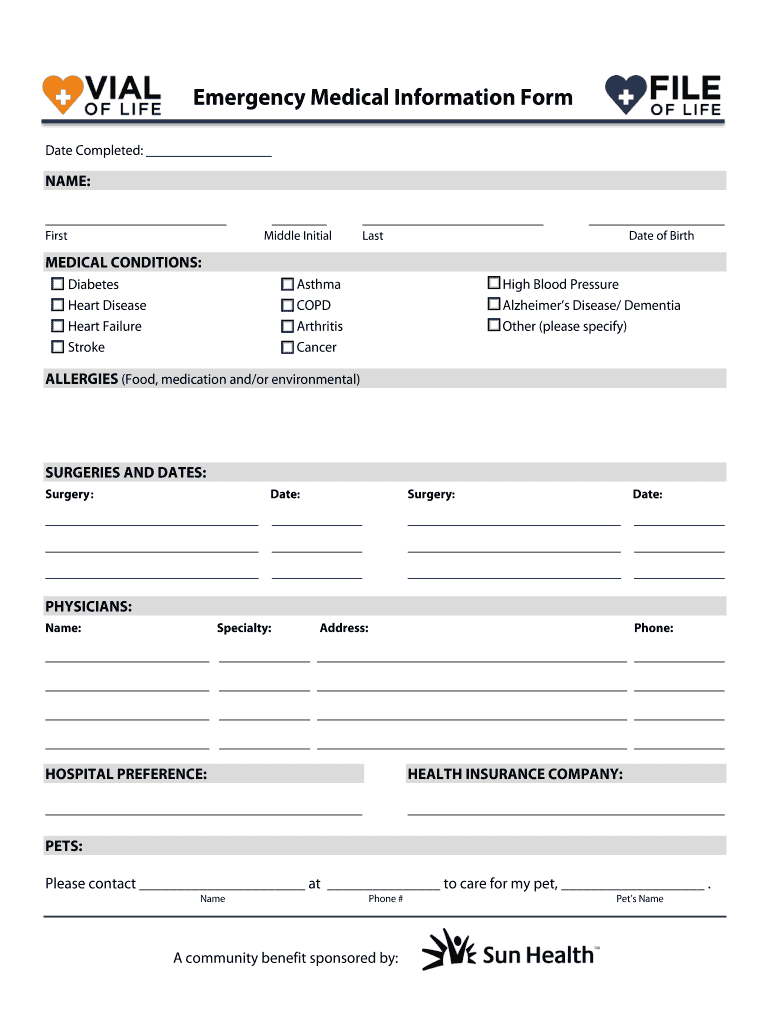
The "Emergency Medical Information Form" is a vital document for capturing crucial health details about an individual. This form is specifically designed to include personal information, medical conditions, allergies, past surgeries, physician contacts, hospital preferences, health insurance details, pet care instructions, emergency contacts, prescribed medications, and advance directives. The primary purpose of this form is to make sure that essential health data is readily available in case of an emergency, ensuring informed decision-making in critical situations.
Steps to Complete the Emergency Medical Information Form
Filling out the Emergency Medical Information Form involves a few critical steps to ensure completeness and accuracy. This section outlines the entire process for completing the form effectively:
-
Personal Information: Start by entering the fundamental personal details, including full name, date of birth, and social security number, to uniquely identify the individual.
-
Medical Conditions and Allergies: Document any existing medical conditions that might impact emergency treatment. It is equally important to list all known allergies to avoid adverse reactions.
-
Medications and Surgeries: Provide a comprehensive list of current medications, including dosage and frequency. Additionally, note any significant past surgeries with dates and outcomes.
-
Emergency Contacts: Specify at least two emergency contacts. This should include their names, relationship to the individual, and phone numbers to reach them promptly in a crisis.
-
Physician and Hospital Preferences: Include the primary physician's contact information and preferred hospitals for treatment. This information can guide medical personnel in providing consistent care.
-
Health Insurance Details: Record insurance provider details, including policy numbers, to facilitate billing and authorization of care costs.
Key Elements of the Emergency Medical Information Form
Understanding the essential components of the Emergency Medical Information Form ensures that users gather all necessary information. Key elements include:
- Text Fields: Used for inputs like names, addresses, and detailed descriptions.
- Checkboxes: Helpful for indicating conditions, allergies, and other lists.
- Dropdown Menus: Used for selecting predefined options for efficiency.
- Signature Fields: Allows for digital or handwritten signatures, providing legal acknowledgment and verification.
Who Typically Uses the Emergency Medical Information Form
This form is commonly utilized by various individuals and organizations to promote safety and preparedness:
- Individuals with chronic illnesses or known health risks, who need quick access to their medical information during emergencies.
- Elderly individuals, often with complex medical histories that require swift access to comprehensive health data.
- Caregivers and medical professionals, using the form to ensure they have the necessary information for emergency interventions.


Why You Should Use the Emergency Medical Information Form
Having an Emergency Medical Information Form on hand is crucial for several reasons:
- Emergency Response: It facilitates quick and informed decision-making by first responders and healthcare providers.
- Continuity of Care: Ensures that ongoing care aligns with existing medical history and preferences.
- Peace of Mind: Offers individuals and families assurance that all pertinent information is documented and accessible when needed.
Legal Use of the Emergency Medical Information Form
The Emergency Medical Information Form not only supports healthcare provision but also has legal aspects:
- Data Protection: It's vital to store this form securely to protect sensitive medical and personal information in compliance with privacy laws.
- Legal Directives: Documenting advance directives and power of attorney within the form can impact treatment decisions legally.
Digital vs. Paper Version
Both digital and paper versions of the Emergency Medical Information Form offer unique advantages:
- Digital Forms: Allow for easy updates, rapid sharing, and secure storage. They can be encrypted for heightened security while ensuring accessibility across devices.
- Paper Forms: Provide a tangible backup that can be readily available for emergency personnel when electronic devices fail or are inaccessible due to technical issues.
Software Compatibility
While developing the Emergency Medical Information Form digitally, compatibility with multiple platforms is crucial:
- DocHub: Provides a comprehensive suite for editing and managing these forms. It permits integration with Google Workspace, simplifying document access and updates.
- Other Software: Include options like Adobe Acrobat and Microsoft Word, enabling users to fill out, save, and print forms without resorting to entirely digital solutions.
Examples of Using the Emergency Medical Information Form
Real-world scenarios demonstrate the form's utility:
- Travel Situations: A traveler with known allergies carries a completed form to ensure treatments are informed and appropriate during an overseas trip.
- School Enrollment: Parents fill out the form to provide schools with medical details concerning their children's health requirements.
- Workplace Emergency Protocols: Employers require employees to submit an Emergency Medical Information Form to prepare safety protocols.
By ensuring the collection of precise information and following structured protocols, the Emergency Medical Information Form plays a foundational role in safeguarding health in emergencies.