






Definition & Meaning
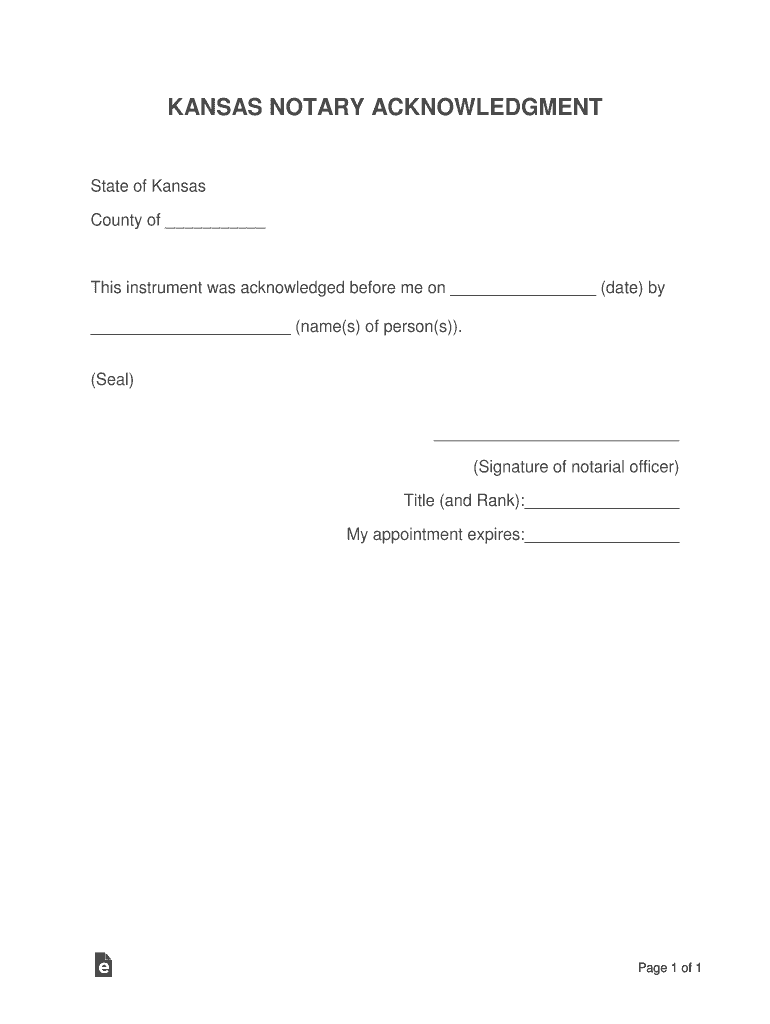
The Kansas Notary Acknowledgment is a legal document used to certify that an individual has acknowledged their signature in the presence of a notarial officer. This form is crucial in verifying the identity of the signer and confirming that they signed the document willingly. A notary public uses this acknowledgment to attest that the individual appearing before them has identified themselves and executed the document of their own volition. Such acknowledgment is a standard requirement for certain legal documents to ensure their authenticity and enforceability.
How to Use the Kansas AcknowledgmentsIndividualUS Legal Forms
To effectively use the Kansas Notary Acknowledgment form, follow these steps:
- Preparation: Ensure that the document requiring acknowledgment is complete and accurately reflects the parties' intentions.
- Identification: The individual whose signature needs acknowledgment must present valid identification to the notary public. This step confirms their identity.
- Presentation: Present the document to a notary public, ensuring it is unsigned at this point.
- Signature and Acknowledgment: In the presence of the notary, the individual should sign the document. Alternatively, the notary can confirm the pre-existing signature.
- Certification by Notary: The notary will complete the acknowledgment section, which includes their signature, official notary seal, and certificate details.
- Documentation: The notarized document is now considered acknowledged and can be used to support legal proceedings or transactions.
Steps to Complete the Kansas AcknowledgmentsIndividualUS Legal Forms
Completing the Kansas Notary Acknowledgment involves the following key steps:
- Collect Identification: Verify that you have a valid, government-issued ID such as a driver’s license or passport.
- Prepare Your Document: Ensure the document that requires acknowledgment is fully completed and ready for signing.
- Find a Notary: Locate a registered notary public. This can often be done at your local bank, mailing service center, or through online services offering remote notarization.
- Sign in Presence: Some forms require signing in front of the notary, while others may allow pre-signing. Confirm with the notary how they prefer to witness the signing.
- Pay Fees: Be prepared to pay any applicable notary fees. These generally range according to state guidelines.
- Receive Acknowledgment: The notary will fill out the acknowledgment, providing their title, signature, and seal.
Key Elements of the Kansas AcknowledgmentsIndividualUS Legal Forms
The Kansas Notary Acknowledgment form contains several key elements:
- Date of Acknowledgment: This specifies when the acknowledgment was made.
- Name of the Signer: Accurately identifies the individual whose signature is being acknowledged.
- Notary’s Signature and Seal: The notary must affix their signature and seal to validate the acknowledgment.
- Expiration of Notary’s Commission: Clearly indicates when the notary’s commission is set to expire, ensuring their authority is current.
- Declaration: A statement by the notary affirming that the signer appeared before them and acknowledged executing the document.
Legal Use of the Kansas AcknowledgmentsIndividualUS Legal Forms
The Kansas Notary Acknowledgment form serves multiple legal purposes:
- Verification of Signature: Confirms that the individual willingly signed the document, which is essential for legal documents like deeds, powers of attorney, or affidavits.
- Protection Against Fraud: Offers a layer of security by ensuring that the signer's identity is verified and reduces the risk of forgery.
- Legal Enforceability: Many legal and financial institutions require notarized documents before acceptance, enhancing their enforceability.
State-Specific Rules for the Kansas AcknowledgmentsIndividualUS Legal Forms
When executing a Kansas Notary Acknowledgment, adhere to these state-specific regulations:
- Identity Verification: Kansas law requires a notary to obtain satisfactory evidence of the signer's identity, typically through government-issued identification.
- Notarization Fee: The fee for notarial services in Kansas is state-regulated. Be sure to verify the current maximum fees allowed.
- Jurisdiction Limits: A Kansas notary can only perform notarizations within the state borders and must comply with Kansas notarial laws.
- Record Keeping: Some notaries maintain a journal of all notarizations as part of best practices, although not explicitly required by Kansas law.
Who Typically Uses the Kansas AcknowledgmentsIndividualUS Legal Forms
The Kansas Notary Acknowledgment is typically used by:
- Legal Professionals: Attorneys and paralegals rely on these acknowledgments for validating documents related to property transfers, estate planning, and contractual agreements.
- Real Estate Agents: To notarize documents that involve property transactions, ensuring that deeds of trust and mortgage documents are legally binding.
- Individuals: Anyone seeking to have a legal document such as a power of attorney or affidavit recognized for official purposes.
- Financial Institutions: Banks and lenders require notarized documents for loans and credit-related agreements to minimize the risk of disputes and fraud.