






Definition & Meaning
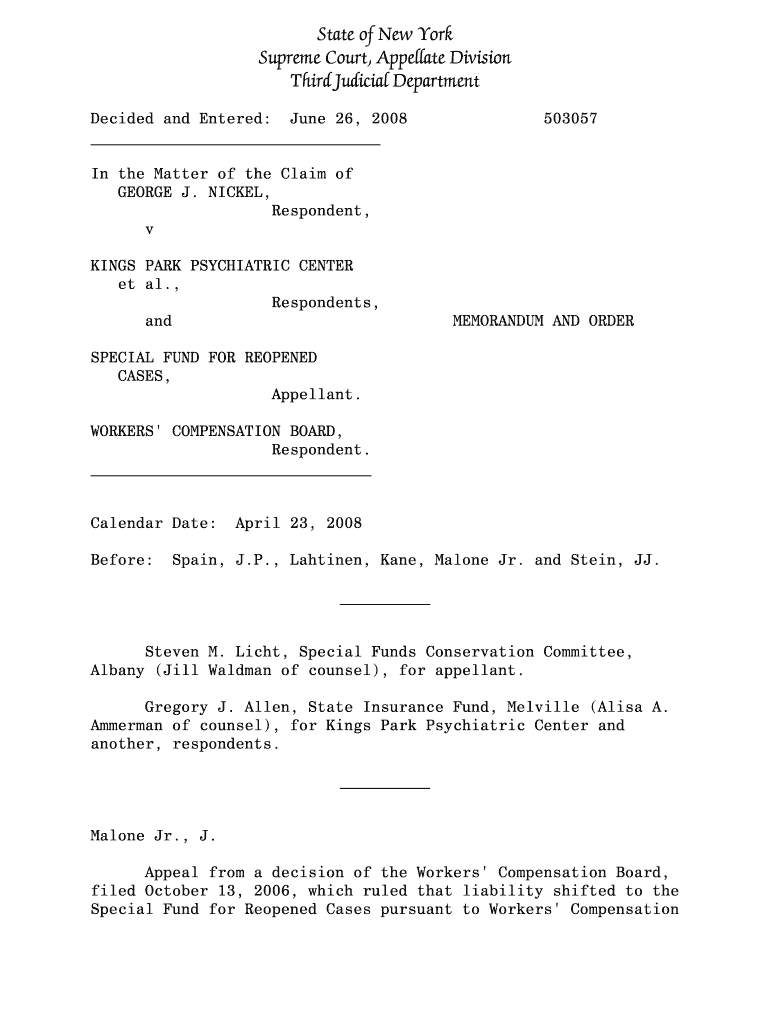
The "KINGS PARK PSYCHIATRIC CENTER - decisions courts state ny" relates to legal proceedings involving the Kings Park Psychiatric Center in New York state. Primarily focusing on court decisions, this encompasses a range of cases from appeals to decisions by various judicial bodies in New York. Understanding these court decisions is crucial for legal professionals, historians, or individuals connected to the institution through employment or treatment history. With a backdrop in the legal framework of New York, these documents provide insight into judicial interpretations and applications of law involving mental health care institutions.
Legal Use of the Court Decisions
These documents serve as critical references for legal practitioners, offering precedents that can guide future cases involving psychiatric centers or mental health law. They illustrate how courts in New York handle issues related to mental health care, often impacting policies or practices at similar institutions. Legal professionals reference these decisions during litigation or policy development to ensure compliance with established judicial interpretations, making these documents an essential resource for legal strategy and case preparation.
Steps to Access the Decisions
-
Identify Specific Cases: Start by pinpointing the cases or decisions relevant to your interest or legal requirements.
-
Access through Legal Databases: Utilize legal databases like Westlaw, LexisNexis, or state court websites that house these decisions.
-
Request from Court Archives: Visit or contact New York state court archives for accessing physical records if digital availability is incomplete.
-
Consult Legal Counsel: Engage with an attorney who has proficiency in New York court rulings related to mental health for detailed insights and interpretations.
Who Typically Uses These Court Decisions
These documents are primarily used by:
- Attorneys: For case law research and drafting legal arguments.
- Judges and Legal Scholars: To reference in legal reasoning and scholarly analysis.
- Historians and Researchers: Investigating the history or evolution of mental health law.
- Policy Makers: Using decisions to craft laws or reforms in mental health services.
- Mental Health Professionals: To understand the legal landscape impacting care delivery within institutions.


Important Terms Related to the Decisions
- Appellate Division: A specific division within the New York Supreme Court dealing with appeals.
- Workers' Compensation Law § 25-a: A statute referring to the transfer of liability under specific conditions.
- Precedent: Legal decisions that influence future case outcomes.
- Remittitur: The process of sending a case back to a lower court from a higher court for further action.
Examples of Court Decisions
Cases related to the Kings Park Psychiatric Center cover a wide array of issues. For example, appeals involving workers' compensation claims or legal discourse on the center's operational practices. Each decision provides a factual and legal basis that is invaluable for understanding the application of law in these contexts. Such examples serve as educational material in both legal and mental health education frameworks.
State-Specific Rules
New York has unique legal standards and laws impacting how court decisions are made regarding psychiatric centers. The state's adherence to distinct mental health statutes can affect how similar cases are addressed differently in other jurisdictions. Understanding these nuances can have profound implications for case strategy and institutional policy formulation within the state.
Key Elements of the Court Decisions
These decisions often include:
- Facts of the Case: Details about the parties involved, legal questions presented, and the foundational elements of the dispute.
- Judicial Reasoning: An analysis of the legal arguments, statutes involved, and judicial precedents considered.
- Final Rulings and Orders: The court's decision, including any actions required by involved parties or lower courts.
Each component provides a comprehensive view of how decisions are formulated, offering transparency into the judicial process.
State-by-State Differences
Courts in different states may differ in their decisions based on state-specific laws and judicial precedents. While New York might have specific rulings on psychiatric centers, other states' decisions can differ significantly due to local governance and legal standards. Comparing these differences is vital for multi-jurisdictional legal practices and understanding regional variations in mental health law.
Versions or Alternatives
While court decisions are static records, interpretations can evolve through subsequent rulings or legal reforms. As legal frameworks advance, newer decisions may replace or reinterpret older rulings. Keeping abreast of these changes is essential for legal professionals to maintain accurate and effective legal strategies.
Digital vs. Paper Version
Access to these decisions can vary; many are available digitally through court websites or third-party legal databases, offering ease of access and search functionality. However, physical copies may still be preserved in archives or libraries, reminiscent of historical legal research methods. Depending on the practitioner's preference or necessity, either format can be utilized for effective research and referencing.
Eligibility Criteria for Document Access
Most court decisions are public records in the U.S. and can be accessed by anyone interested, barring specific sealed cases. Legal professionals, researchers, and the general public are free to access these through various platforms, subject to specific repository procedures or subscription models on legal research platforms.