






Definition & Meaning
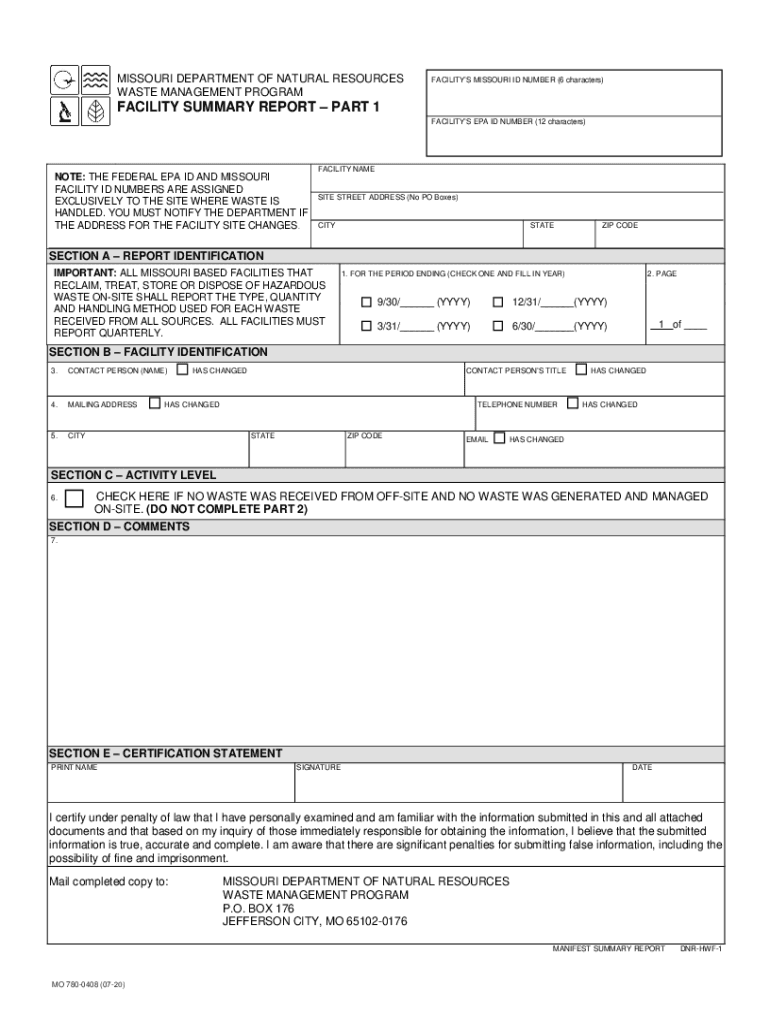
The MO is a form used by the Missouri Department of Natural Resources specifically designed for facilities involved in the management of hazardous waste. It serves as a comprehensive guide and reporting mechanism to ensure that facilities adhere to state regulations concerning hazardous waste. The form collects detailed information about the types and quantities of waste received, treated, stored, or disposed of on-premises. By completing this form, organizations help maintain compliance with environmental standards and contribute to the safe management of hazardous materials within Missouri.
How to Use the MO - Missouri Department of Natural Resources
Completing the MO involves several steps to ensure accurate and thorough reporting. Facilities must gather data regarding their hazardous waste activities, including information on the nature and volume of waste handled. This data is then systematically entered into the form’s various sections, such as facility identification, activity levels, and waste types. Once completed, the document is reviewed for accuracy before submission. The form's use is crucial in maintaining compliance with state regulations, and it may need to be filed quarterly to keep up with reporting timelines prescribed by the Missouri Department of Natural Resources.
Steps to Complete the MO - Missouri Department of Natural Resources
- Gather Facility Information: Start by collecting all relevant facility details, including identification numbers and contact information.
- Record Waste Activities: Document all activities related to hazardous waste management, such as receipt, treatment, storage, and disposal.
- Detail the Waste Types: Clearly specify the types of waste managed, using precise classifications as required by state guidelines.
- Certify Accuracy: Ensure the information is accurate and includes the necessary certification statements to verify the data provided.
- Submit the Form: File the completed form with the Missouri Department of Natural Resources within the stipulated deadline.
Why Should You Use the MO - Missouri Department of Natural Resources
Utilizing the MO is vital for facilities dealing with hazardous waste in Missouri to remain compliant with state regulatory requirements. Regular use of this form ensures that facilities are transparent about their waste management practices, reducing the risk of legal issues or environmental harm. Moreover, by completing this form, organizations can avoid potential penalties associated with non-compliance, promote safe handling and disposal practices, and uphold public and environmental health standards.
Key Elements of the MO - Missouri Department of Natural Resources
- Facility Identification: Essential for linking reported data to the correct organization.
- Activity Levels: Captures the operational scope regarding hazardous waste.
- Waste Identification: Details on specific types and amounts of waste managed.
- Certification Statements: Official declarations attesting to the accuracy of information provided.
Legal Use of the MO - Missouri Department of Natural Resources
The MO serves as a legal document under Missouri state law, requiring accurate representation of hazardous waste management activities. Facilities are legally obliged to complete and submit this form following specific regulations and timelines. Failure to provide truthful and complete information can result in significant penalties, underscoring the importance of diligence and integrity in the form's completion.
Penalties for Non-Compliance
Non-compliance with the MO filing requirements can result in severe consequences for facilities. Penalties may include fines, legal actions, or stricter regulatory oversight by the Missouri Department of Natural Resources. Repeated failures to comply can escalate enforcement measures and potentially affect a facility's operational license, highlighting the critical nature of timely and correct form submission.
Required Documents
To accurately complete the MO, facilities should have access to various internal documents, such as waste shipment records, treatment logs, storage data, and prior compliance reports. Having these documents on hand ensures that all data entered into the form is verifiable and precise, which is essential for regulatory compliance and environmental stewardship.