01. Edit your form online
Type text, add images, blackout confidential details, add comments, highlights and more.

Type text, add images, blackout confidential details, add comments, highlights and more.

Draw your signature, type it, upload its image, or use your mobile device as a signature pad.

Send it via email, link, or fax. You can also download it, export it or print it out.
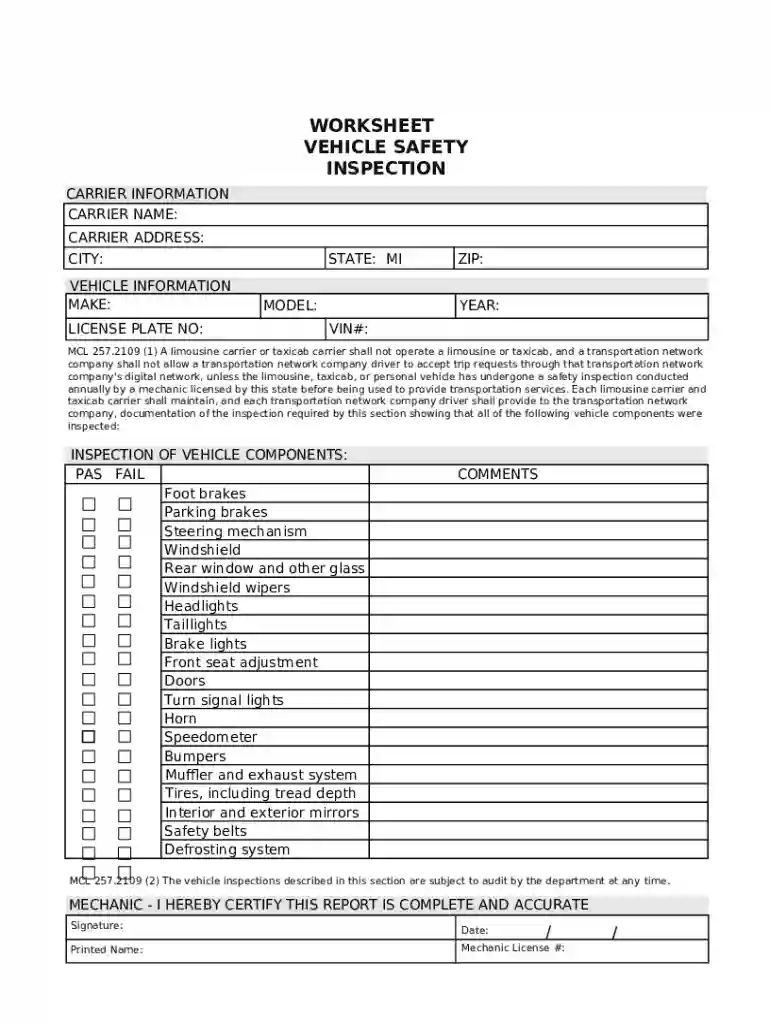
The Vehicle Safety Inspection Worksheet is a comprehensive form designed to ensure that limousine and taxicab carriers in Michigan meet state safety protocols. This annual inspection is conducted by a licensed mechanic and encompasses a wide array of vehicle components to ascertain their suitability for safe transportation services.
Mechanics use this form to document the condition of critical systems like brakes, lights, and safety belts, each of which must comply with state standards. The worksheet serves as both a guideline and a record, helping carriers maintain documented proof of compliance, which may be subject to audit by the relevant department. This measure ensures that passengers are transported safely, and the vehicles remain roadworthy.
The utilization of the Vehicle Safety Inspection Worksheet involves a systematic approach to evaluating a vehicle's safety standards. The process is typically initiated by a carrier who schedules an inspection with a licensed mechanic. The mechanic then follows the checklist provided in the worksheet to assess various components of the vehicle.
Pre-Inspection Preparation: The mechanic sets the context for the inspection by reviewing the previous inspection reports and preparing necessary tools.
Component Evaluation: Each vehicle component listed on the worksheet, such as brakes and lights, is methodically inspected. The mechanic annotates any deficiencies or items that require servicing.
Documentation: After the evaluation, the worksheet is filled out in detail, describing the condition of each component, recommended actions, and compliance status.
Verification: Once completed, the mechanic signs off on the worksheet, providing a record of the vehicle's safety status. This document is then preserved by the carrier for future reference and possible audits.
Completing the Vehicle Safety Inspection Worksheet is a meticulous process intended to ensure complete adherence to safety standards. The process comprises several key steps:
Initial Inspection: Thoroughly check each component as listed in the worksheet.
Detailed Observation: Note the condition of every part, using the worksheet to ensure no items are overlooked.
Evaluation Criteria: Use a scoring system or pass/fail criteria to rate the condition of each item, ensuring clarity in results.
Repair and Re-inspection: Arrange repairs for any deficiencies noted. Once addressed, re-evaluate to ensure compliance.
Final Review and Sign-off: Once all components meet standards, the mechanic signs the document, confirming compliance.
Record Maintenance: The carrier retains a copy of the completed worksheet for future audits or checks.
The primary users of the Vehicle Safety Inspection Worksheet are licensed mechanics, vehicle inspectors, and fleet managers of limousine and taxicab carriers. This document is crucial for individuals responsible for maintaining safety standards within transportation services.
Licensed Mechanics: Tasked with conducting the inspection and ensuring vehicles adhere to state safety laws.
Fleet Managers: Utilize the worksheet to manage the inspection schedule and ensure their vehicles are in compliance.
Regulatory Auditors: Use these worksheets during audits to confirm compliance with safety regulations.


Understanding the terminology related to the Vehicle Safety Inspection Worksheet is essential for accurately completing and interpreting it. Key terms include:
Licensed Mechanic: An officially certified professional authorized to conduct vehicle safety inspections.
Compliance Status: Refers to whether a vehicle meets the specified safety regulations and standards.
Deficiency: Any noted issue or failing in the vehicle's safety systems that requires repair or adjustment.
Audit: An official examination of records to check compliance with prescribed standards.
Adhering to the Vehicle Safety Inspection Worksheet is a legal requirement in Michigan, intended to uphold the safety standards of commercial passenger vehicles. Thus, compliance is critical for both legal and safety considerations.
The worksheet's completion documents compliance with safety statutes, serving as an official record protecting carriers from potential liabilities. This document supports legal defense in the event of accidents or regulatory scrutiny by providing evidence of proactive safety measures.
The Vehicle Safety Inspection Worksheet includes several pivotal components that ensure thorough safety evaluations:
Brakes: Examines the integrity and function of all braking systems.
Lights: Ensures that all lighting fixtures, including headlights and indicators, are operational.
Safety Belts: Verifies that all seat belts are functional and unobstructed.
General Vehicle Body: Assesses body condition and structural integrity for safety compliance.
Each element is scrutinized individually to certify compliance with state safety protocols.
The Vehicle Safety Inspection Worksheet is structured according to Michigan's state-specific laws and regulations, ensuring that all commercial vehicles meet the safety requirements outlined by the state.
Annual Inspections: Mandate that inspections are conducted annually for all commercial passenger vehicles.
Licensed Personnel Only: Only certified mechanics are authorized to conduct the inspections and sign off on the worksheet.
Documentation Requirement: Carriers are obligated to retain the completed worksheet for a specified period, subject to regulatory audits.
These regulations ensure that both the safety of the public and compliance with state laws are prioritized.
At DocHub, your data security is our priority. We follow HIPAA, SOC2, GDPR, and other standards, so you can work on your documents with confidence.