






Definition and Meaning
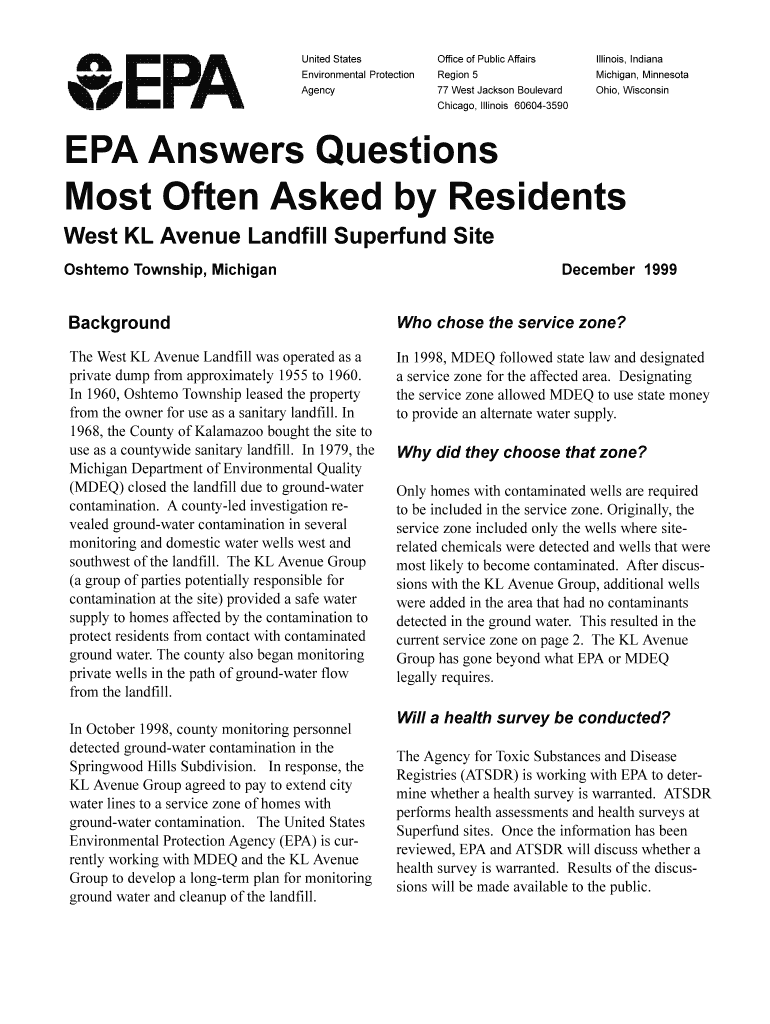
The "EPA Answers Questions Most Often Asked By Residents - US - epa" form serves as a comprehensive information resource intended for residents seeking clarity on EPA activities and regulations. It addresses frequently asked questions regarding environmental policies, health impacts, and ongoing projects related to environmental protection. This document is essential for residents wanting to understand how EPA initiatives affect their community and environmental health.
The form includes detailed explanations of various EPA programs, offering insights into how they operate, their goals, and the outcomes they strive to achieve. It also demystifies complex regulatory jargon, making it accessible to individuals without a legal or environmental science background.
How to Use the Form
Residents can use the "EPA Answers Questions Most Often Asked By Residents - US - epa" form to gather information on several critical areas concerning environmental policies and regulations. Here’s how you can utilize this form effectively:
-
Identify Topics of Interest: Start by identifying the sections within the form that address your specific questions or concerns.
-
Understanding Terminology: Pay close attention to explanations of terms and acronyms commonly used in EPA communications. This will ensure a thorough understanding of the material.
-
Follow References and Further Reading Suggestions: The form often includes recommendations for further reading to provide a deeper dive into complex issues.
-
Utilize Contact Information: If questions remain after reviewing the form, use the provided contact details to reach out to EPA representatives for more detailed answers.
-
Stay Updated: Note any updates or changes in policy or information highlighted in the form to remain informed about new developments.
Steps to Complete the EPA Answers Questions Form
Completing the "EPA Answers Questions Most Often Asked By Residents - US - epa" involves specific steps to ensure all necessary sections are addressed:
-
Gather Information: Collect any relevant data or personal queries that you want the form to clarify. This includes specifics about local environmental concerns or regulatory questions.
-
Review Sections Thoroughly: Go through each section, ensuring that you read related topics to obtain a well-rounded understanding.
-
Contact EPA Officials if Needed: If the form requires personal insights or clarifications, make use of the contact options listed to communicate with an EPA official.
-
Take Notes: As you review the form, take notes on sections of particular interest or those that may require further personal action or research.
Key Elements of the Form
The "EPA Answers Questions Most Often Asked By Residents - US - epa" form contains several key components that are crucial for comprehensive understanding:
- FAQs: Direct answers to common questions, providing clarity on environmental policies.
- Glossary of Terms: Definitions of technical jargon used throughout the document.
- Contact Information: Details on how to get in touch with EPA representatives for unresolved inquiries.
- Case Studies and Real-World Scenarios: Examples illustrating the applications of EPA policies in various contexts.
Who Typically Uses the Form
Typically, the "EPA Answers Questions Most Often Asked By Residents - US - epa" is utilized by:
- Local Residents: Seeking information on how EPA regulations impact their area.
- Community Leaders: Needing comprehensive data to inform community decision-making processes.
- Environmental Advocates: Looking for detailed explanations to support their advocacy work.


Important Terms Related to the Form
Several important terms are frequently referenced in the form, which are crucial for full comprehension:
- Superfund Sites: Areas designated by the EPA as contaminated with hazardous waste requiring cleanup.
- Groundwater Monitoring: The process by which the EPA assesses the quality of underground water resources.
- Regulatory Compliance: Adherence to laws and guidelines established by environmental authorities.
State-specific Rules
The document also elaborates on how state-specific rules interact with federal EPA regulations. Here’s what you should know:
- Different States, Different Requirements: Each state may have additional guidelines that enhance or alter federal EPA standards.
- Local Variations in Policy Implementation: There can be slight modifications in how policies are enforced based on regional environmental conditions.
Examples of Using the Form
Practical examples showcase how the form can be effectively used in different scenarios:
- Case Study of a Contaminated Site: A resident uses the form to understand groundwater contamination impacts at a local Superfund site.
- Community Action Planning: A neighborhood group refers to the form to strategize around mitigating a specific environmental hazard.
These comprehensive coverage points provide residents with a robust understanding of EPA operations and their role in enhancing community environmental health.