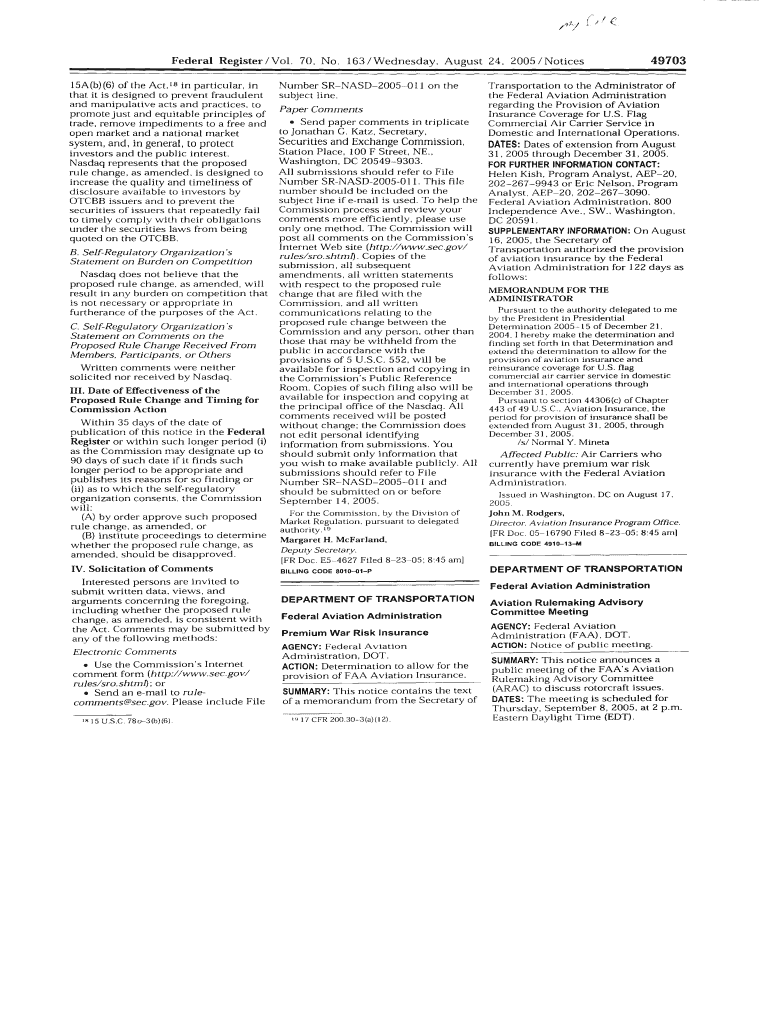







Definition & Meaning
The "B Self-Regulatory Organization's Statement on Burden on - FAA" is a formal document issued by self-regulatory bodies in the aviation industry. It outlines the perceived burdens imposed by Federal Aviation Administration (FAA) regulations. Understanding this document is vital, as it provides insight into the compliance expectations and operational challenges faced by organizations within the regulatory framework of the FAA. This statement serves as a crucial reflection of the ongoing dialogue between regulatory agencies and industry participants regarding rulemaking, safety, and efficiency.
Key Components
- Burden Identification: The document clearly identifies specific regulations considered burdensome by the self-regulatory organization.
- Regulatory Impact: It details how these regulations affect operational efficiency within the aviation industry.
- Proposed Changes: There may be recommendations for regulatory adjustments to alleviate the identified burdens.
How to Use the B Self-Regulatory Organization's Statement on Burden on - FAA
To utilize the statement effectively, industry professionals should read the document thoroughly to comprehend the challenges and recommendations outlined. It's crucial for aviation companies to analyze how these points apply to their operations:
- Review Regulatory Implications: Determine how the identified burdens align with your organization's regulatory responsibilities.
- Assess Operational Impact: Evaluate how suggested regulatory changes might improve or affect your current operational processes.
- Engage in Industry Dialogue: Use this document as a foundation to participate in broader industry discussions, advocating for practical regulatory changes.
Practical Application
- Internal Audits: Utilize the statement to identify areas for compliance improvement.
- Policy Development: Incorporate the recommendations into policy reviews and development strategies.
- Training Programs: Update training materials to align with any potential regulatory changes.
Steps to Complete the B Self-Regulatory Organization’s Statement on Burden on - FAA
Completing the statement involves a detailed analysis of regulatory burdens and providing documented evidence supporting these claims. This process typically includes:
- Data Collection: Gather data on current regulatory impacts on your operations.
- Analysis: Examine the data to identify areas where FAA regulations create significant burdens.
- Documentation: Prepare a detailed report outlining these burdens, supported by evidence and specific case studies.
- Submission: Follow the designated submission process outlined by the issuing self-regulatory organization.
Tips for Accurate Completion
- Comprehensive Data: Ensure the data collected is both qualitative and quantitative.
- Clear Format: Present information in a coherent and structured manner.
- Specific Examples: Include case studies or examples that highlight documented burdens.
Legal Use of the B Self-Regulatory Organization's Statement on Burden on - FAA
Legally, this statement is used as a formal communication tool between the self-regulatory organizations and the FAA. Its primary function is to inform the FAA of industry concerns regarding existing regulations. By utilizing this document, organizations can legally aim to influence regulatory changes.
Compliance and Legal Implications
- Advocacy Tool: Leverage the statement in advocacy efforts to propose changes in regulations.
- Regulatory Feedback: It functions as a formal feedback mechanism to engage with regulatory bodies.
Examples of Using the B Self-Regulatory Organization's Statement on Burden on - FAA
This statement is employed across various scenarios to highlight regulatory burdens and propose actionable solutions. Here are some examples:
- Case Study Analysis: An airline might use data and case studies to show how specific FAA regulations increase operational costs.
- Industry Surveys: Industry-wide surveys can illustrate common regulatory challenges faced by aviation companies.
Real-World Scenarios
- Advancing Safety Protocols: An organization may use the statement to negotiate for regulatory changes that enhance safety without increasing operational complexity.
- Streamlining Procedures: Proposals may focus on streamlining administrative processes to reduce compliance costs.
Required Documents
When preparing the statement, certain documents and information sources are essential:
- Operational Reports: These detail how FAA regulations affect day-to-day activities.
- Financial Statements: Highlight the economic impact of these regulatory burdens.
- Compliance Records: Present past compliance efforts and their outcomes.
Supporting Documentation
- Incident Reports: Provide evidence of issues caused by regulatory pressures.
- Surveys and Feedback: Gathered from employees and stakeholders to support claims.
Who Typically Uses the B Self-Regulatory Organization's Statement on Burden on - FAA
The primary users of this document are entities operating within the aviation industry that fall under FAA regulations. These include:
- Airlines: Seeking regulatory adjustments to improve operational efficiency.
- Maintenance Organizations: Addressing burdensome safety protocols.
- Aviation Associations: Representing multiple stakeholders to advocate for industry-wide regulatory reform.
By understanding and correctly using this document, these entities aim to influence positive regulatory changes in collaboration with the FAA.