






Understanding Attachment 1 - Performance of Sounding-Weight Coatings
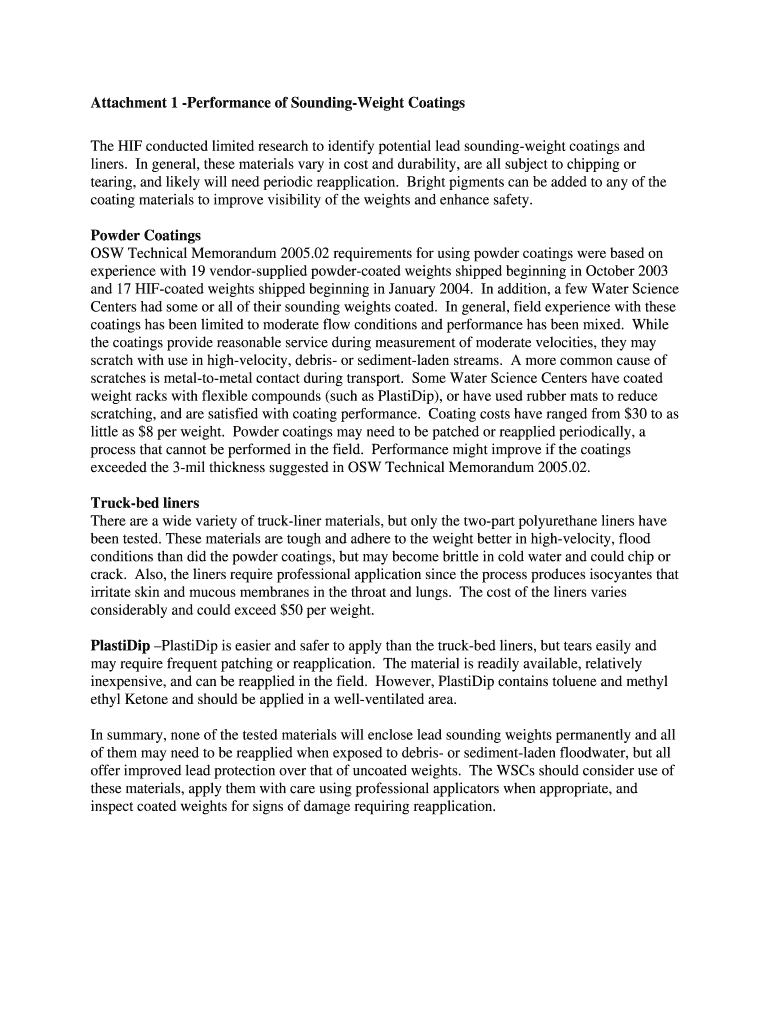
Attachment 1 focuses on the performance and application of various coatings used for lead-sounding weights, such as powder coatings, truck-bed liners, and PlastiDip. The document provides insights into the costs, durability, and maintenance requirements of these coatings. Given the harsh environmental conditions these weights are exposed to, the guide stresses the need for periodic reapplication to maintain effectiveness and safety.
How to Use the Attachment
Using the Attachment 1 requires understanding the applications and benefits of the coatings it describes. It covers essential steps for selecting the appropriate coating based on specific needs, such as environmental conditions, budget constraints, and maintenance capabilities. Practical application examples are provided to aid users in making informed decisions, ensuring that users can effectively implement the guidance offered by the document.
Obtaining the Attachment 1
Attachment 1 is typically available through official US Geological Survey (USGS) channels or specific professional networks that focus on hydrological measurements and equipment. The document may also be accessed through collaborations with organizations involved in water data collection and analysis, making it an essential tool for professionals in these fields.
Completing the Form
Step-by-step instructions guide users through completing the necessary sections of the Attachment 1, ensuring all vital information is captured accurately. The form requires input on coating selection, application procedures, and maintenance schedules. Users will also need to detail any adaptations made for specific environmental factors, ensuring a comprehensive approach to managing sounding weights.
Detailed Steps:
- Select Coating Type: Choose the most suitable coating based on environmental exposure and durability needs.
- Fill Out Application Procedures: Include detailed methods for applying the chosen coating.
- Document Maintenance Schedule: Outline regular checks and reapplications to be performed.
Importance of the Attachment
This document is crucial for improving safety standards and compliance measures concerning lead exposure in aquatic environments. By providing guidelines on coating applications, it helps organizations minimize lead contamination risks and maintain operational efficiency. It plays a vital role in ensuring that sounding weights are safely and effectively used in data collection activities.
Typical Users of the Attachment
The primary audience includes researchers and professionals in hydrology and environmental science, particularly those working within or in collaboration with the USGS. These individuals rely on the attachment to support their efforts in reducing lead exposure and improving the longevity and performance of their equipment.
Critical Terms and Definitions
The Attachment introduces several important terms related to its use:
- Sounding Weights: Lead-based weights used underwater for depth measurement.
- Coatings: Protective layers applied to the weights to prevent lead leachate.
- Maintenance Schedule: Planned intervals for checking and reapplying coatings.
Legal Use and Compliance
The Attachment ensures that all sounding weight operations align with legal regulations, particularly concerning environmental protection and safety protocols. It provides guidance on handling, application, and documentation practices essential for compliance with federal and state regulations on lead use and environmental safety.
Key Elements Covered in the Attachment
Attachment 1 provides comprehensive coverage of the critical elements in sounding weight maintenance and usage:
- Cost Analysis: Examination of the financial impact of different coating options.
- Durability Metrics: Understanding the expected lifespan of coatings.
- Safety Protocols: Guidelines for handling and applying coatings safely.
State-Specific Considerations
While the Attachment provides a national standard, it acknowledges potential variations based on state-specific regulations and environmental conditions. Users are encouraged to complement the document’s guidelines with local legal requirements to ensure full compliance and effectiveness in their specific operational environment.
By retaining engagement with these sections, individuals and organizations can maximize the utility of Attachment 1, effectively managing sounding weights in their respective environmental and operational contexts.