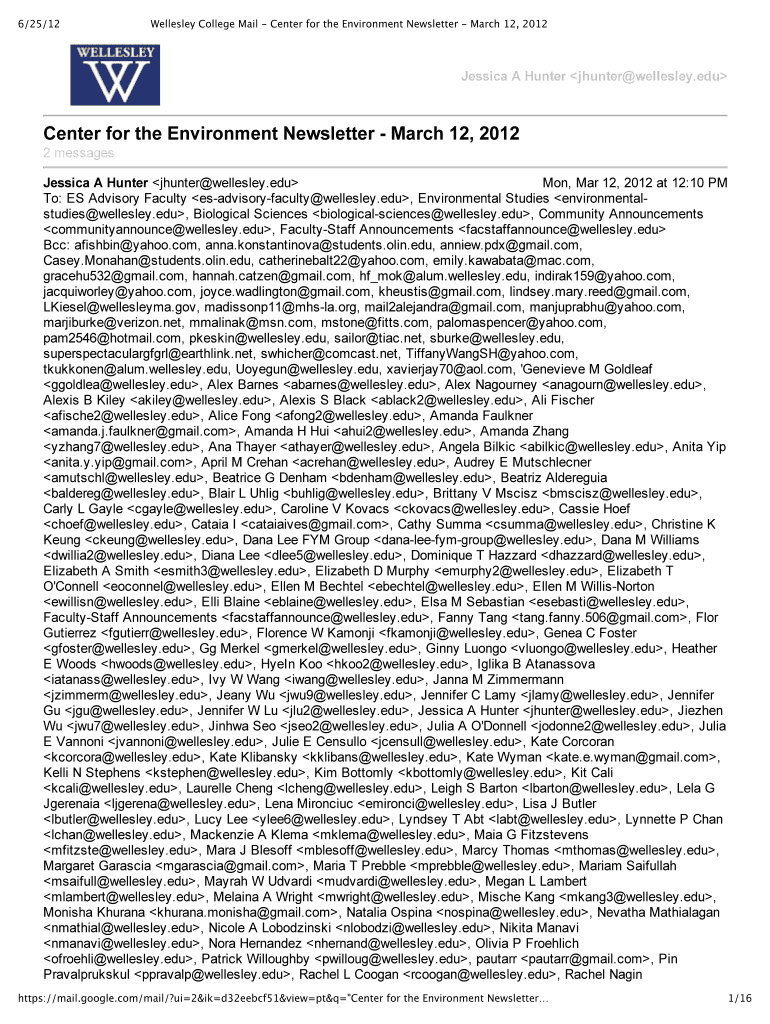







Definition and Purpose of the Wellesley College Environment Newsletter
The "6 25 12 Wellesley College Mail Center for the Environment Newsletter" is an informational publication aimed at engaging students and faculty in environmental initiatives. Originating from Wellesley College, it provides updates on sustainability events, job opportunities, and internships within environmental fields. The newsletter serves as a resource to connect the academic community with crucial information on conservation efforts, supporting the College’s commitment to environmental education.
- Informational Updates: The newsletter includes sections on upcoming environmental conferences, job openings, and other important announcements related to sustainability. This ensures that students and faculty are kept informed of the latest developments in the field.
- Career Development: By highlighting internships and job opportunities, the newsletter aids students in navigating career paths within the environmental sector, offering guidance on how to pursue these opportunities.
Accessing the Wellesley College Newsletter
Obtaining the "6 25 12 Wellesley College Mail Center for the Environment Newsletter" involves various methods depending on one's affiliation with Wellesley College. Here are typical ways to access this publication:
- College Mail Center: The newsletter is distributed via the Wellesley College mail center, ensuring that all members of the college community have regular and convenient access.
- Digital Access: It may be available online through the college's website or student portal, allowing remote access for those who prefer a digital format.
Steps to Utilize the Newsletter Effectively
To make the most out of the newsletter’s content, follow these steps to stay engaged with Wellesley’s environmental initiatives:
- Regular Reading: Subscribe to updates or access the newsletter regularly to keep up with new information and events related to sustainability.
- Active Participation: Attend events and participate in opportunities mentioned in the newsletter to enhance your understanding and involvement in environmental activities.
Target Audience for the Newsletter
The newsletter primarily targets students and faculty within Wellesley College, but its content is valuable to anyone interested in environmental issues. It aims to include:
- Students: Particularly those studying environmental sciences or related fields who are keen on engaging with sustainability topics.
- Faculty Members: Individuals seeking to incorporate sustainability into their teaching or research.
Important Terminologies and Concepts
The "6 25 12 Wellesley College Mail Center for the Environment Newsletter" covers a range of terms and concepts essential for readers to fully grasp the content:
- Sustainability: Initiatives aimed at promoting sustainable practices, reducing environmental footprints, and supporting long-term ecological balance.
- Conservation: Efforts and strategies aimed at protecting natural resources, including flora and fauna, to prevent degradation of environments.
Legal Aspects and Compliance
While the newsletter primarily serves an educational purpose, it’s crucial to understand the following aspects to ensure compliance with institutional and legal standards:
- Intellectual Property: Content and images within the newsletter are protected under Wellesley College’s intellectual property policies.
- Data Privacy: Handling of information and participation in initiatives must adhere to college policies and any applicable privacy laws.
Key Elements to Focus On
To extract the maximum benefit from the newsletter, pay attention to the following elements:
- Call for Sustainability Participation: Announcements that encourage direct involvement in sustainability efforts, often detailing the steps to participate or contribute.
- Event Details: Information on upcoming events, workshops, and seminars that provide hands-on learning opportunities in environmental subjects.
Software and Tools for Engagement
To enhance interactions with the newsletter and related activities, the following digital tools may be of use:
- Collaborative Platforms: Tools like Google Workspace to join collaborative environmental projects highlighted in the newsletter.
- Social Media: Channels where updates and announcements are shared, allowing broader community engagement beyond college boundaries.
This structured and detailed overview of the newsletter elucidates its role within Wellesley College and beyond, providing vital information for students, faculty, and anyone interested in advancing sustainability and environmental science.