01. Edit your form online
Type text, add images, blackout confidential details, add comments, highlights and more.

Type text, add images, blackout confidential details, add comments, highlights and more.

Draw your signature, type it, upload its image, or use your mobile device as a signature pad.

Send it via email, link, or fax. You can also download it, export it or print it out.
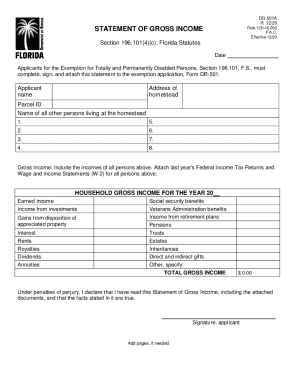
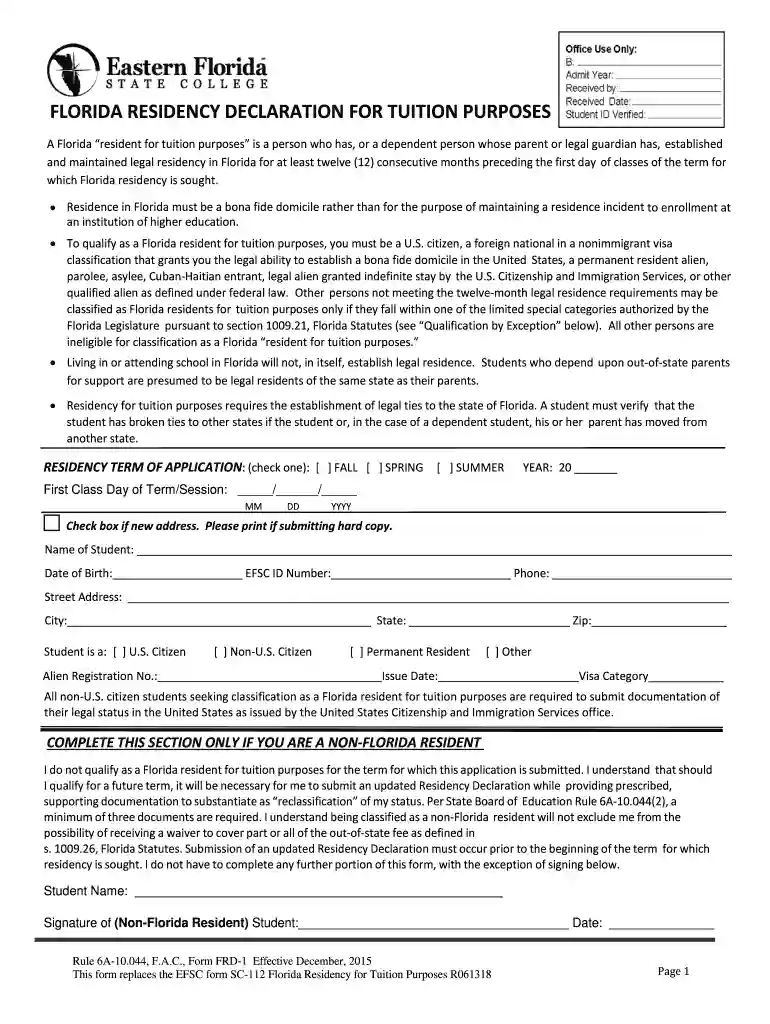
The "Florida Residency Declaration for Tuition Purposes - Eastern" is an important form that determines a student's eligibility for in-state tuition rates at public educational institutions in the state of Florida. It identifies whether a student qualifies as a Florida resident by assessing their legal residency status. To be considered a Florida resident for tuition purposes, individuals must typically have lived in the state for at least 12 consecutive months prior to enrollment. This helps institutions manage tuition fees appropriately and ensure that those benefiting from reduced tuition rates legitimately qualify for them.
Completing the "Florida Residency Declaration for Tuition Purposes - Eastern" form involves several steps to accurately verify residency status. Here’s a detailed guide to help navigate the process:
Collect Necessary Documentation: Gather evidence such as a Florida driver's license, voter registration card, or lease agreements demonstrating 12 months of residency.
Determine Financial Independence/Dependency: Identify if you’re a dependent or independent student, as this affects required documentation.
Complete Personal Information: Fill in your personal details, including full name, address, date of birth, and social security number, ensuring all information is accurate.
Attach Supporting Documents: Attach all required proof of residency and identification documents to the form.
Review the Form: Double-check all sections of the form for completeness and accuracy before submission.
Understanding the eligibility criteria for the form is crucial for determining whether a student's residency status aligns with the requirements for in-state tuition rates.


The declaration form requires various documents to validate residency claims. These documents must affirm 12 months of legal Florida residency.
The legal application of the "Florida Residency Declaration for Tuition Purposes - Eastern" extends to verifying a student's right to access in-state tuition fees. This document is legally binding and requires accurate representation of facts. Misrepresentation may result in denial of residency status or other penalties outlined by state law.
Understanding specific terminology helps in correctly completing and interpreting the form’s requirements. Here are key terms related to the Florida residency declaration:
Florida has specific rules and guidelines tailored to establishing residency for tuition purposes, which differ from other states. Here are some unique aspects:
Each state has different criteria based on legislative mandates. What qualifies as residency evidence in Florida may not apply elsewhere.
The "Florida Residency Declaration for Tuition Purposes - Eastern" can be submitted through various methods, depending on institutional processes:
We've got more versions of the florida residency declaration for tuition purposes - Eastern form. Select the right florida residency declaration for tuition purposes - Eastern version from the list and start editing it straight away!
At DocHub, your data security is our priority. We follow HIPAA, SOC2, GDPR, and other standards, so you can work on your documents with confidence.