







Definition & Meaning
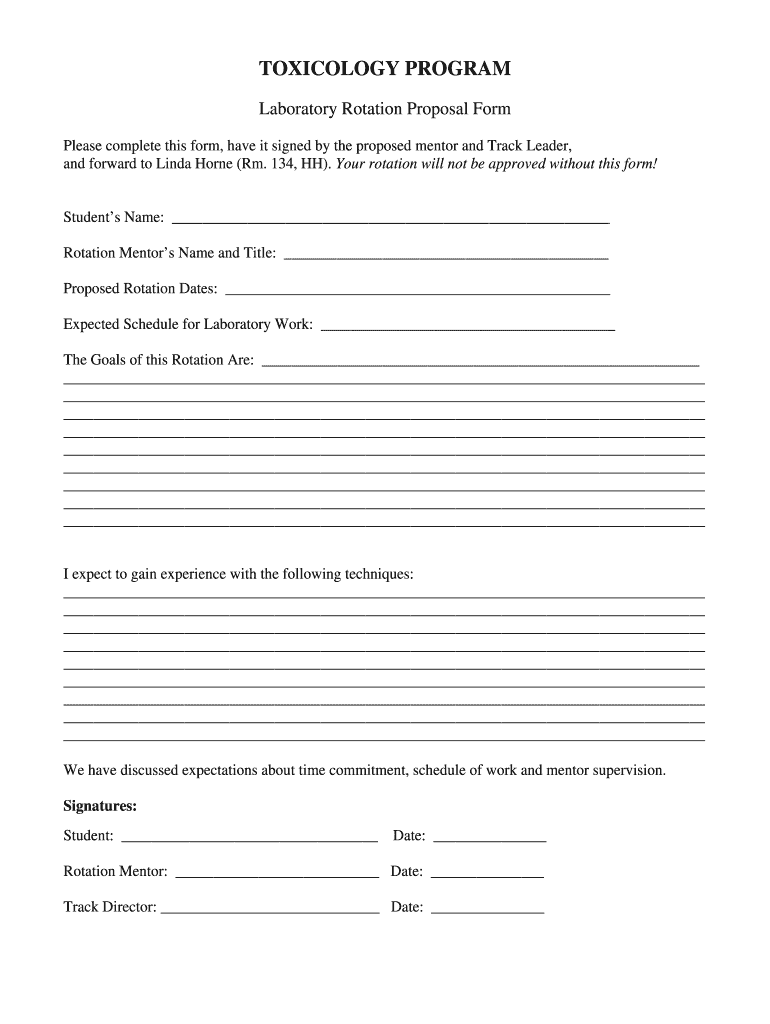
The Laboratory Rotation Proposal Form in the Life Sciences department at the University of Maryland is a structured document designed to facilitate the planning and approval of student laboratory rotations within a toxicology program. This form requires students to specify the details of their proposed rotations, including the objectives, methodologies, and expected outcomes. The form acts as a contractual agreement between the student, their rotation mentor, and the track director, ensuring that all parties understand and agree upon the rotation's intentions and scope before beginning.
How to Use the Laboratory Rotation Proposal Form
Utilizing the Laboratory Rotation Proposal Form is straightforward but requires careful attention to detail to ensure that all aspects of the proposed rotation are comprehensively documented. Students should begin by gathering information about their intended rotation, such as the laboratory they will join, the techniques they aim to learn, and the specific projects they will undertake. This information will be input into specific sections of the form, which must then be reviewed and endorsed by the assigned mentor and the track director.
Steps to Complete the Laboratory Rotation Proposal Form
- Gather Required Information: Collect details about the rotation, including objectives and expected methodologies.
- Fill Out the Form: Enter the rotation details into the form, ensuring accuracy and completeness.
- Obtain Signatures: The student, rotation mentor, and track director must all sign the form to confirm agreement.
- Submit the Form: Once signed, submit the form to the appropriate department for approval.
Key Elements of the Laboratory Rotation Proposal Form
The form contains several critical components essential for successful approval:
- Student Information: Includes name and program details.
- Rotation Details: Specifies the lab, mentor, and duration of the rotation.
- Goals and Objectives: Outlines the specific aims of the rotation.
- Expected Techniques: Details the methodologies and skills to be developed.
- Signatures: Areas designated for the student, mentor, and director to sign, indicating consent.
Who Typically Uses the Laboratory Rotation Proposal Form
This form is primarily used by life sciences graduate students enrolled in the toxicology program at the University of Maryland. It is also relevant for faculty members, including rotation mentors and track directors, who oversee and guide students through their laboratory experiences. The form facilitates communication and agreement between all parties involved in the rotation process.


Important Terms Related to the Form
- Rotation: A set period during which a student works in a laboratory to gain practical experience and skills.
- Mentor: A faculty member who supervises and guides the student during their rotation.
- Track Director: The official responsible for the administration and oversight of the academic program.
Required Documents for Form Submission
Students must submit the completed Laboratory Rotation Proposal Form alongside any supporting materials that may be requested by the department. This could include a detailed project outline or documentation of prior coursework relevant to the proposed rotation.
Submission Methods
The form can be submitted either online via the university's student portal or in-person to the department office. Be sure to check the specific submission guidelines provided by the department to ensure compliance with their preferred method.
Legal Use of the Laboratory Rotation Proposal Form
Using the form legally requires adherence to university and departmental policies. Students must ensure that the information provided is accurate and truthful, as the form serves as a formal agreement between the student and the university. Unauthorized alterations or falsifications could result in disciplinary action following the academic integrity guidelines of the University of Maryland.




